2026/09/28
When a restaurant buyer sends a spec sheet that reads "wicker bar stools," the first question should be: do you mean natural rattan woven in a wicker pattern, or a synthetic PE weave that only looks like rattan? That distinction changes the quote by 30–60%, the maintenance schedule, and whether the seating can stay on a covered patio or must move indoors every night.
Core conclusion
Rattan is the raw material — a solid climbing palm vine. Wicker is the weaving method and the resulting woven structure. You can have rattan wicker, synthetic wicker, paper wicker, or willow wicker. For indoor dining and bar seating, natural rattan over a hardwood frame is a practical choice when weave density and joinery are specified. For open-air or humid commercial use, all-weather synthetic wicker usually wins on maintenance, but it gives up the tactile character, repairability, and natural aging of real rattan.
Content
Rattan is the stem of a climbing palm, harvested mainly in Southeast Asia. It is solid, not hollow like bamboo, which is why it can be steam-bent into curved chair backs and bar stool frames. Cane is the thin outer skin peeled from the same vine; it is used for seat weaving, binding, and decorative panels. When furniture is sold as "rattan," the structural frame may be rattan poles, while the seat and back are cane or split rattan woven in a wicker pattern.
Natural rattan reacts to humidity. In a dry, climate-controlled dining room it can last for years with minimal attention. In a humid coastal restaurant, it may swell, loosen at joints, and attract mildew unless the finish and frame construction are specified for that environment. A practical procurement tolerance: request a moisture content range of 12–15% at shipment, and ask for kiln-dried or heat-treated rattan to reduce insect risk during ocean freight and storage.
Solid core
Rattan poles can be shaped into arcs and curves without the splitting common in hollow bamboo. This is why curved backrests and bent bar stool frames are realistic in rattan.
Cane is not a different plant
Cane is the outer layer of the rattan vine. A cane seat and a rattan frame can come from the same plant, which is why retail listings often use the terms interchangeably.
Finishing changes the service life
Unsealed rattan takes on stains and odors. A lacquer, oil, or water-based topcoat changes cleanability and color stability, especially in food-service settings.
Wicker is a weaving technique. The word does not name a plant. A wicker chair can be woven from rattan, willow, bamboo strips, paper cord, or extruded synthetic polymer. The weave pattern — open plain weave, close twill, herringbone, or wrapped binding — determines ventilation, visual texture, and how much material sits between the sitter and the frame.
For contract furniture, the most important wicker specification is not the pattern name. It is the weave density and the core material. A tight, 8–12 mm pitch weave over a solid hardwood frame feels firmer and resists sagging better than a loose decorative weave over softwood or MDF. Ask for the frame species, joinery method (mortise-and-tenon, dowel, or screw-and-glue), and the number of weave strands per 10 cm if the supplier can provide it. Detailed material and construction questions are covered in our rattan furniture procurement guide.
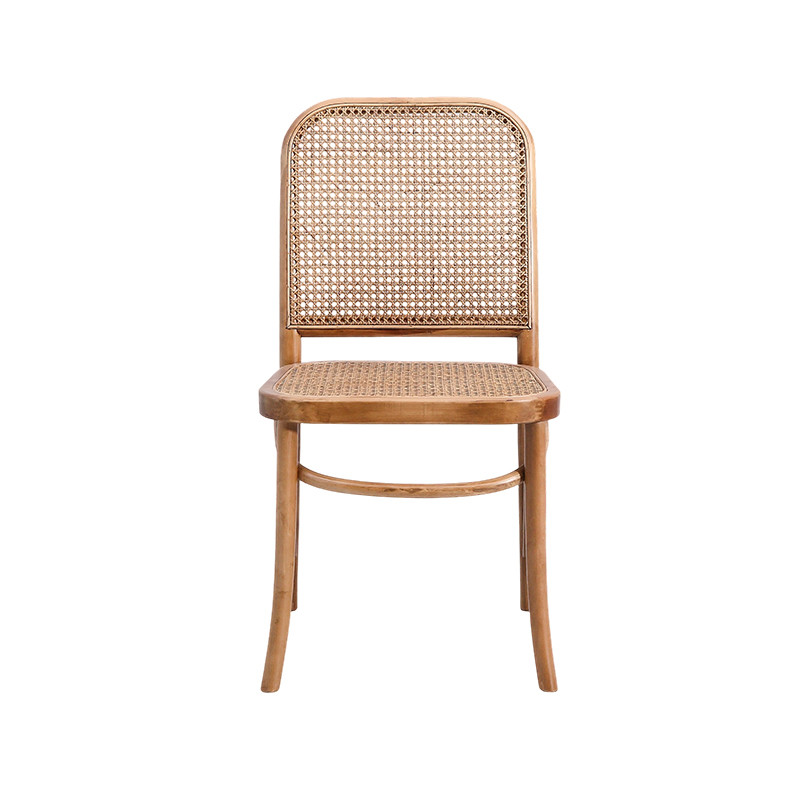
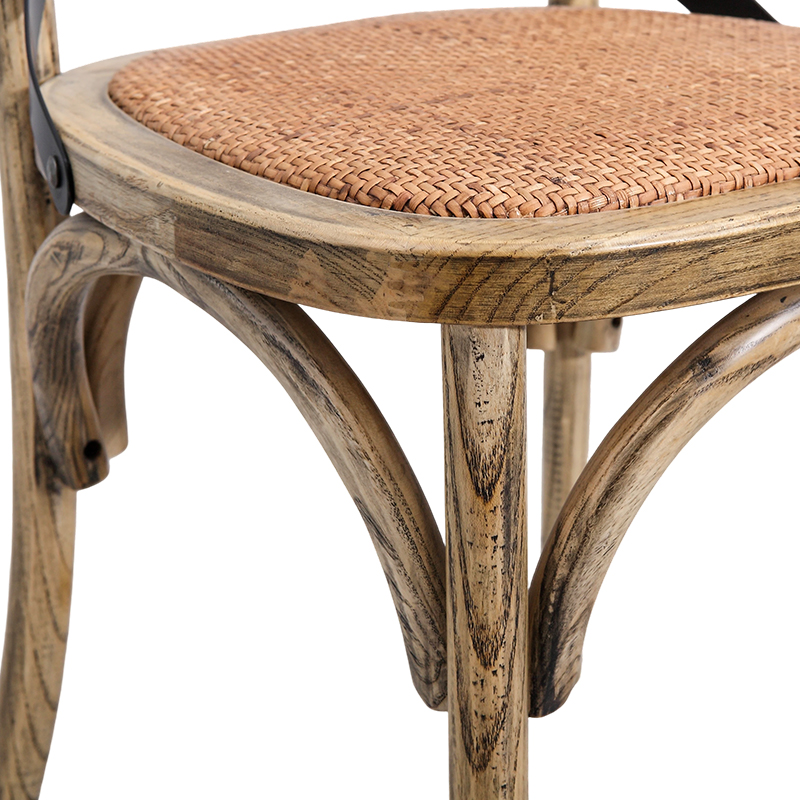 Cross Back Dining Chair with Rattan MatThe Cross Back Dining Chair is crafted from solid oak timber, offering both durability and natural beauty. Its sturdy frame is complemented by a finely woven rattan se...View Product →
| Specification | Natural rattan wicker | Synthetic all-weather wicker |
|---|---|---|
| Material source | Climbing palm vine; cane from the same plant | Extruded PE, PVC, or polyurethane strands |
| Appearance | Natural tonal variation; develops patina | Uniform color; UV stabilizers reduce fading |
| Moisture behavior | Absorbs and releases moisture; needs sealing | Does not absorb water; dries quickly |
| Repairability | High — single strands can be replaced by hand | Low to moderate — damaged extruded strands are hard to match |
| Indoor suitability | Excellent in controlled humidity | Good, but may look less warm in dining rooms |
| Outdoor suitability | Covered patios only; not for direct rain | Designed for open-air and humid conditions |
| Relative cost | Moderate — labor-intensive weaving | Moderate to high — raw polymer and mold costs |
Two variables explain most field failures in woven seating: weave density and frame material. Weave density determines how load is distributed across the seat and back. Frame material determines whether the chair holds its geometry after repeated use. The chart below shows relative service-life scores from typical commercial dining and bar applications.
Tight weave + hardwood frame
Tight weave + softwood frame
Loose weave + softwood frame
Loose weave + MDF frame
The procurement lesson is straightforward. If a quote for "wicker dining chairs" looks unusually low, check the frame. A softwood or MDF core under a loose weave may pass a showroom test but fail in a busy restaurant within a year. For bar stools, add lumbar support and a footrest to the specification; these two features reduce the load that users place on the weave when they push back from the counter.
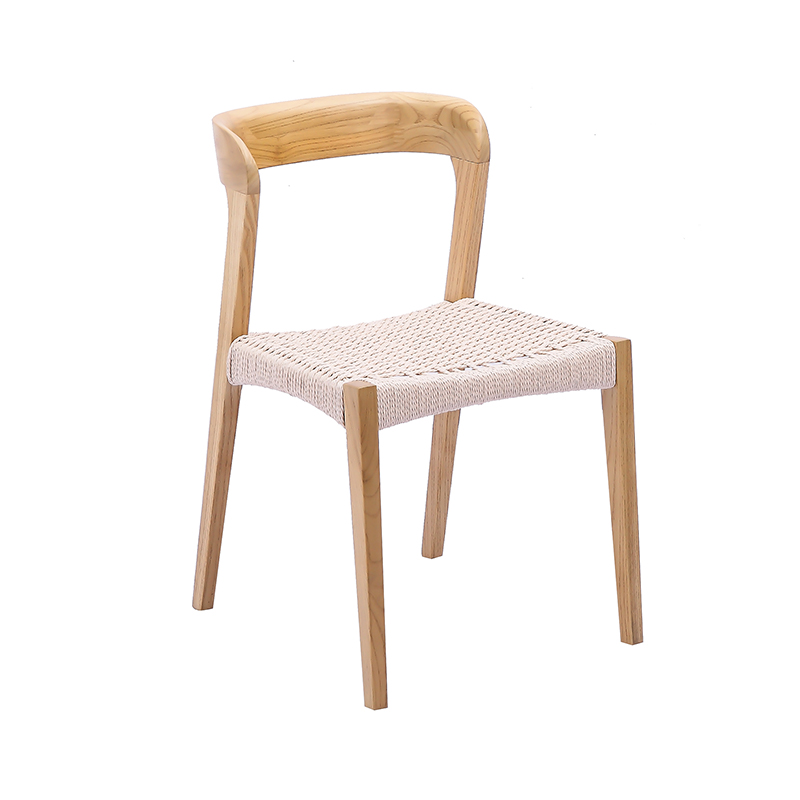
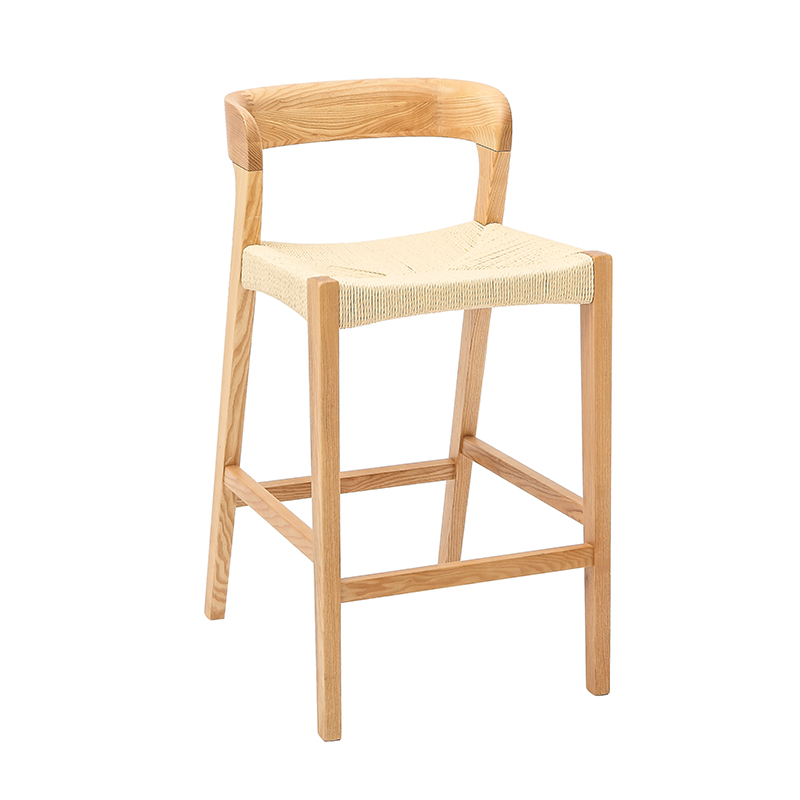
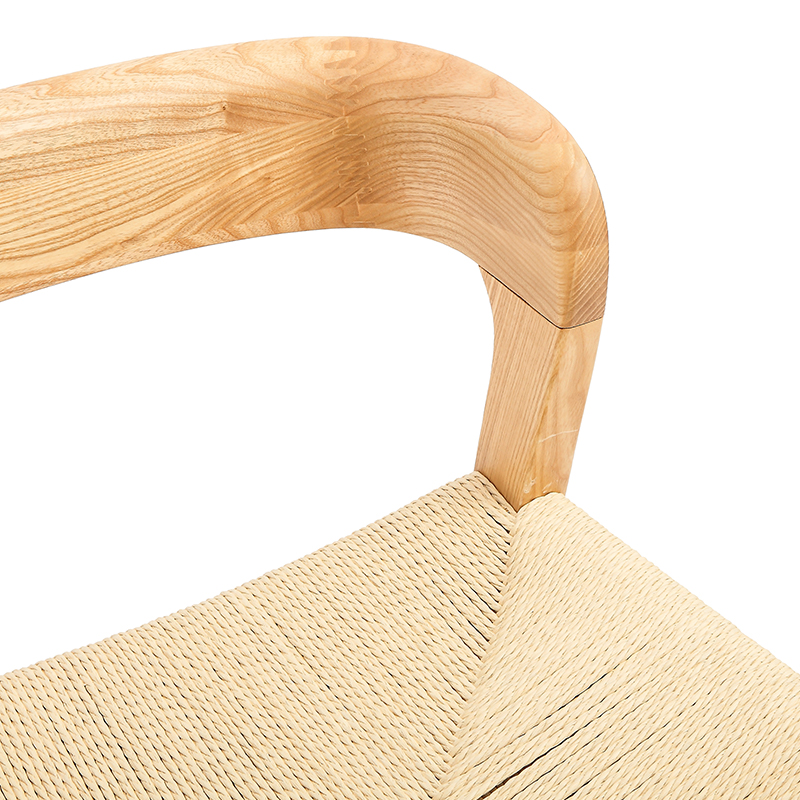 Rope Woven Bar Stool with Lumbar SupportThis bar stool features a sturdy rubberwood frame with a natural finish, showcasing a minimalist yet warm and organic aesthetic. The backrest is thoughtfully designed ...View Product →
Woven chairs and bar stools do not sell into one market. They split across residential dining, hospitality, café and bar, and outdoor living. The chart below shows a typical distribution for a mid-sized woven furniture manufacturer serving Europe, North America, and Southeast Asia.
Indoor dining and café seating — 38%
Residential dining and sunrooms — 30%
Hotel and bar counter seating — 20%
Covered outdoor and balcony — 12%
This distribution matters for specification. A chair designed for a climate-controlled dining room does not need the same UV package or drainage strategy as a bar stool that sits on a covered terrace. Buyers who ignore the end-use split often overpay for weather protection indoors or under-specify finish for coastal projects.
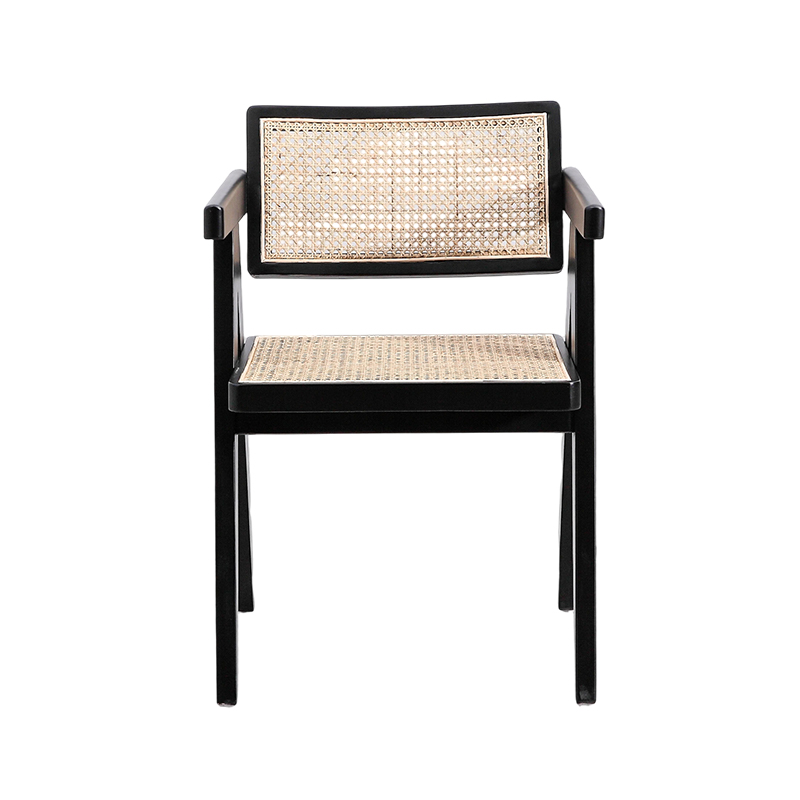
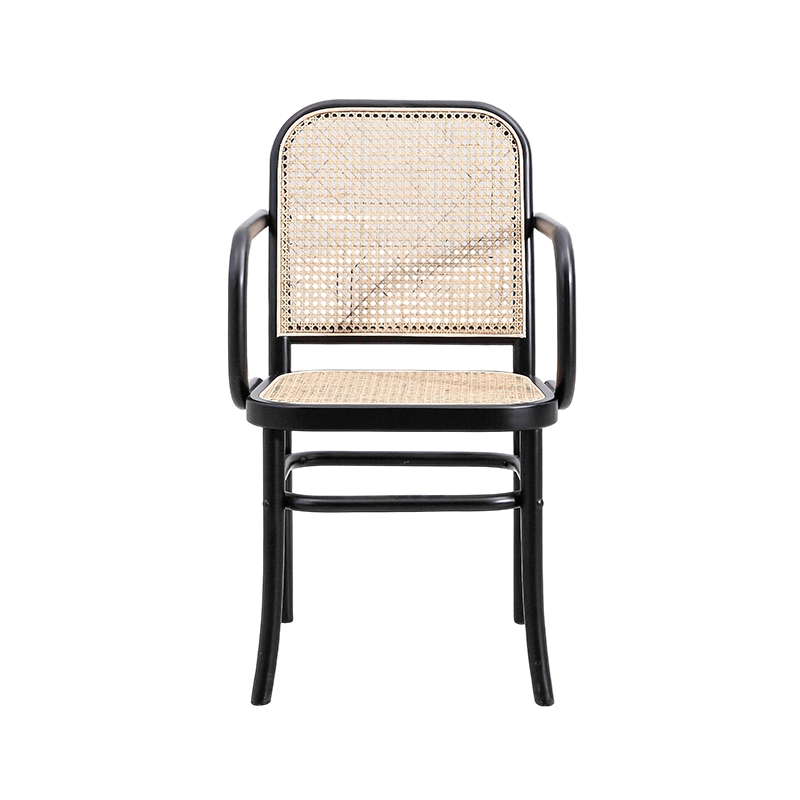
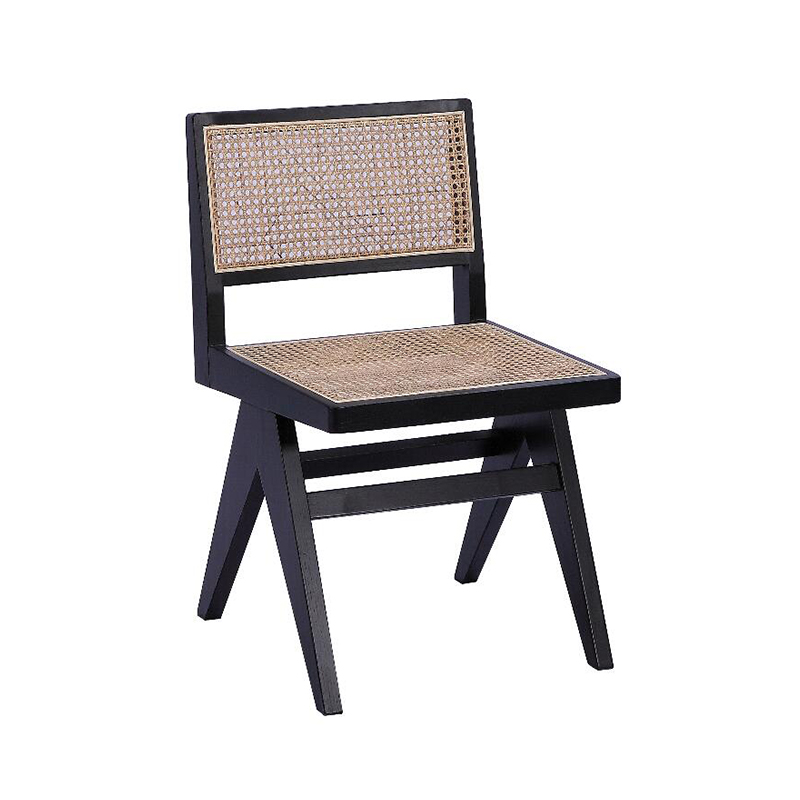
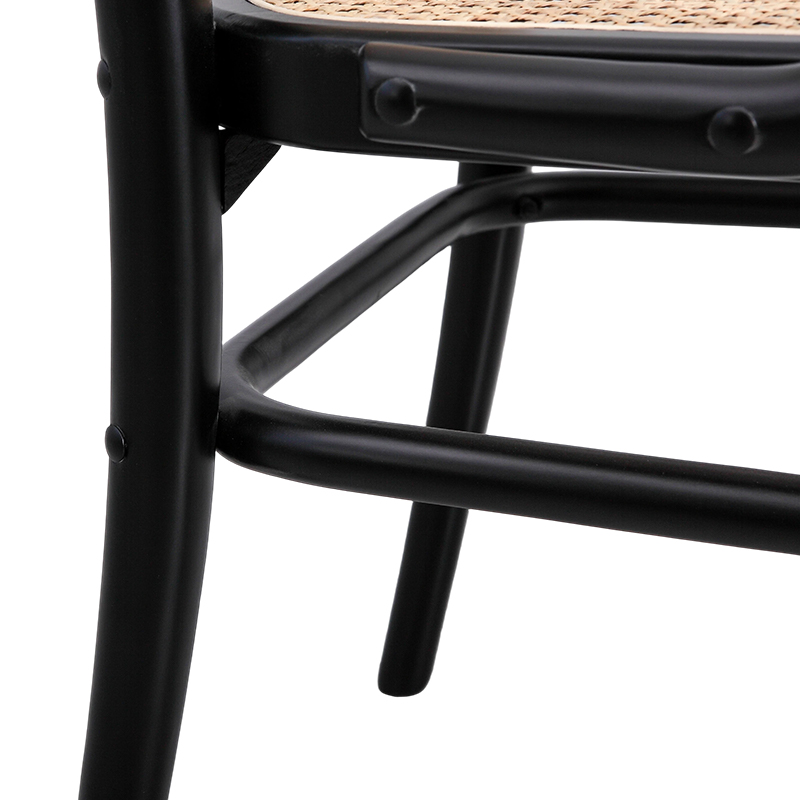 Black Frame Woven Rattan Wood ChairThis Black Frame Woven Rattan Wood Chair combines modern design with natural elements, featuring a sleek and minimalist silhouette that fits well in various home and c...View Product →
Natural rattan and wicker furniture carry a few procurement risks that do not show up in a showroom. First, moisture and insects: untreated rattan can harbor powder-post beetles, so heat treatment or fumigation certificates matter for cross-border shipments. Second, fire performance: for commercial dining and hotel projects, ask whether the finish and foam meet local flammability requirements. Third, cleaning: natural rattan should be dusted with a soft brush and kept away from prolonged standing water. Synthetic wicker can be rinsed, but harsh solvents may dull the surface.
Sustainability is another factor. Rattan grows quickly compared with hardwood trees, and it can be harvested without killing the host tree in managed forests. Our sustainability approach focuses on responsible sourcing, durable construction, and repairable design rather than disposable woven look-alikes.
Choosing between rattan and wicker is not a choice between two plants. It is a choice between a material and a method, and then between natural and synthetic execution. Specify the exposure, the frame, the weave, and the finish — and the terminology stops being a source of confusion. It becomes a useful checklist for comparing quotes that look identical on the surface but behave very differently after the first year of use.




Innovation Oriented, Quality As Life.
Feel free to reach our if you want to collaborate with us, or simply have a chat.
Become a Client 
Product Category
Wood Upholstered Chair
Woven Wood Chair
Wood Bar Stools
Wood Table
FSC Certified Wood Chairs
Wooden Rattan Chairs
Solid Wood Dining Chair
Modern Wooden Dining Chair
Contact Information
 +86-571-63521858
+86-571-63525898
 furniture@hzchangshun.com
emilypeng@hzchangshun.com
 No. 88, Zhumufan, Yushan Township, Fuyang District, Hangzhou City, Zhejiang Province, China


 EN
EN

 English
 中文简体
中文简体 Español