Our Collections
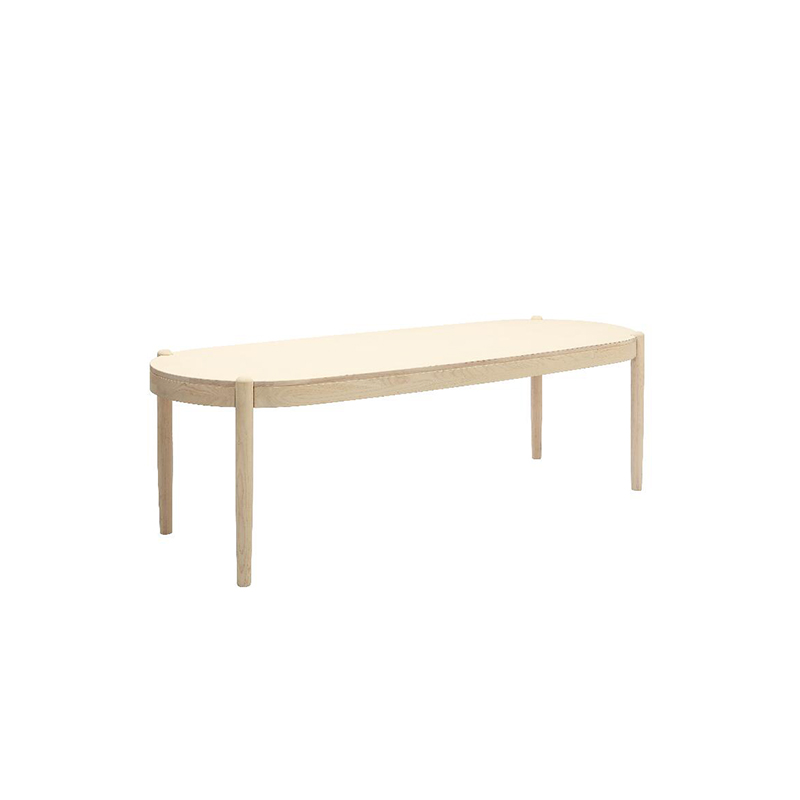
Wood Table
A good wooden table is more than just a simple piece of furniture; it perfectly blends aesthetics and practical functionality. Its unique natural texture and warm feel imbue a space with vitality and a sense of storytelling.
Wooden tables come in a wide variety of styles, easily adapting to any interior. If you prefer a clean, crisp atmosphere, a Nordic or modern minimalist style is ideal. These typically feature sleek lines, showcasing the beauty of the wood's natural texture. For a more rugged style, an industrial style seamlessly combines wood with ironwork, creating a uniquely retro feel. For those enamored with traditional culture, a classical Chinese-style wooden table, with its solemn, symmetrical shape and meticulously crafted details, creates a calm and elegant atmosphere.
About Changshun
Your Trustworthy Company
Hangzhou Changshun Furniture Co., Ltd. is an integrated manufacturer and trading company engaged in the design, development, production, and sales of wooden and rattan chairs and tables. Wooden Table Manufacturers and OEM Solid Wood Dining Table Factory in China.
Our products emphasize meticulous design and utilize eco-friendly materials to ensure safety and health. Additionally, we provide premium after-sales service to address any issues during use, ensuring customers enjoy a worry-free shopping experience.
With over two decades of dedicated effort, Hangzhou Changshun Furniture Co., Ltd. has successfully expanded its market to Europe, North America, Southeast Asia, and the Middle East, earning consistent acclaim from clients. Supply Custom Wood Dining Table, OEM Wood Table. Backed by strong technical expertise, advanced production equipment, a professional workforce, and high-quality products and services, the company has become a high-quality enterprise in Zhejiang Province's furniture manufacturing industry. Our products enjoy a strong reputation in international markets and have won the trust and support of a broad customer base.
Industry knowledge
Hangzhou Changshun Furniture Co., Ltd. is an integrated manufacturer and trading company producing wooden and rattan tables and chairs in Fuyang, Zhejiang, China. Our Wood Table manufacturer programme covers solid wood dining tables, oval family tables, contract and OEM wood tables built to drawing or sample.
We handle design, development, production and export under one operation, so specification detail stays intact from sample approval through bulk delivery. The range serves residential dining, hospitality, restaurant and retail distribution programmes across Europe, North America, Southeast Asia and the Middle East.
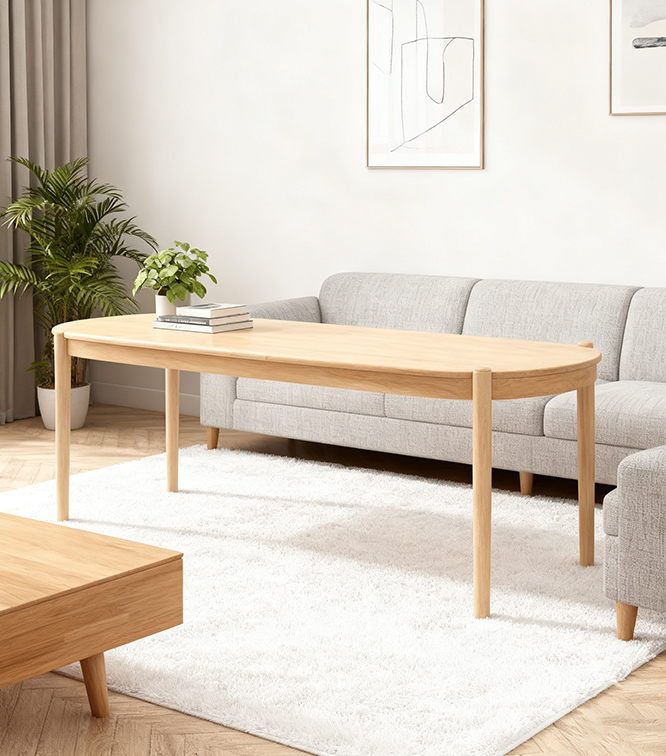
Our wood table production centres on solid wood dining tables and family tables, with the oval family wooden dining table as a representative platform. Tops are built from selected solid timber, precision polished, and finished with rounded edges that soften the profile and reduce impact risk in family and hospitality settings.
Tables are configured around the working point of the project: seating count, room footprint, tabletop thickness, leg profile, extension requirement and finish system. The same frame logic supports dining, café, bar-height and contract variants.
| Range | Typical Form | Application Fit | Key Configuration Variables |
|---|---|---|---|
| Solid wood dining table | Rectangular, oval, round | Residential dining, retail programmes | Top thickness, edge profile, leg style, finish |
| Oval family table | Oval top, tapered legs | Family dining, compact rooms | Length, width, seating count, corner radius |
| Contract / hospitality table | Fixed or extendable | Hotels, restaurants, cafés | Extension mechanism, base stability, finish durability |
| OEM / custom wood table | Drawing or sample based | Private label, distributor ranges | Dimensions, timber species, colour panel, packaging |
Timber choice drives hardness, grain character and long-term behaviour under daily use. We work with species such as white oak, black walnut, beech and rubberwood, matching the species to the traffic level and price position of the programme rather than to appearance alone.
For volume orders we can supply cross-section samples or production footage showing joint construction, so the internal build matches the approved sample before the run is released.
Our oval family wooden dining table is produced at W2400 × D900 × H750 mm, a working point that seats a family group while keeping the footprint compact in narrow rooms. Other lengths, widths and heights are configured per project.
Tabletop thickness in production typically runs from 20 mm to 40 mm. Tops of 35–40 mm suit wide spans without a centre support and signal premium positioning, while 28–32 mm often balances mid-to-high-end retail price points against ocean freight weight.
The finish determines daily maintenance and how well the table tolerates spills, heat and cleaning. We produce both penetrating oil and film-forming systems, selected against the destination market and the end user's maintenance habits.
Quality control runs across five stages: raw material inspection, prototype testing, in-process inspection, finished product inspection and final pre-shipment inspection. Each stage is documented so that appearance, performance and durability criteria are checked against the approved sample.
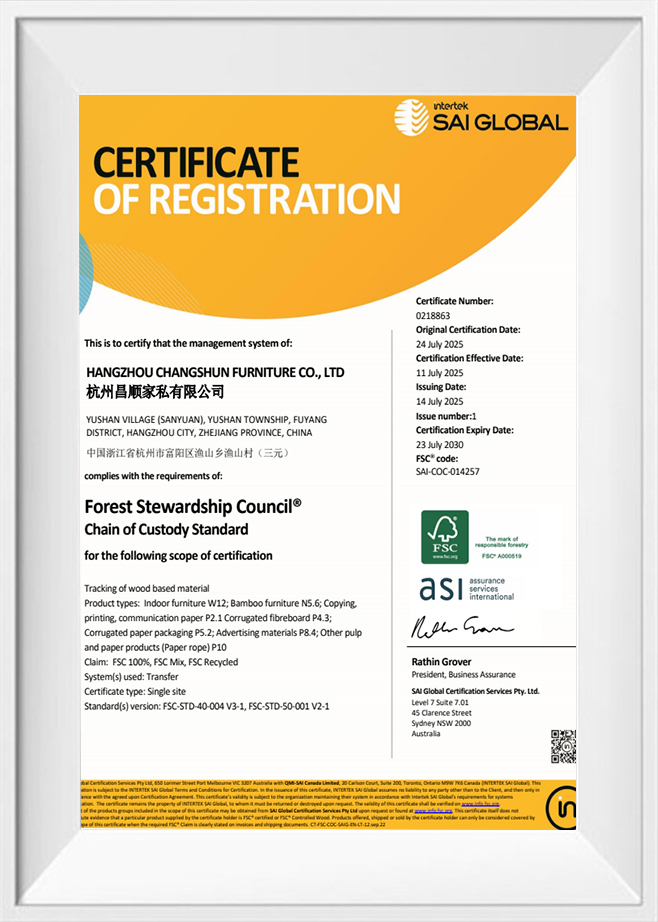
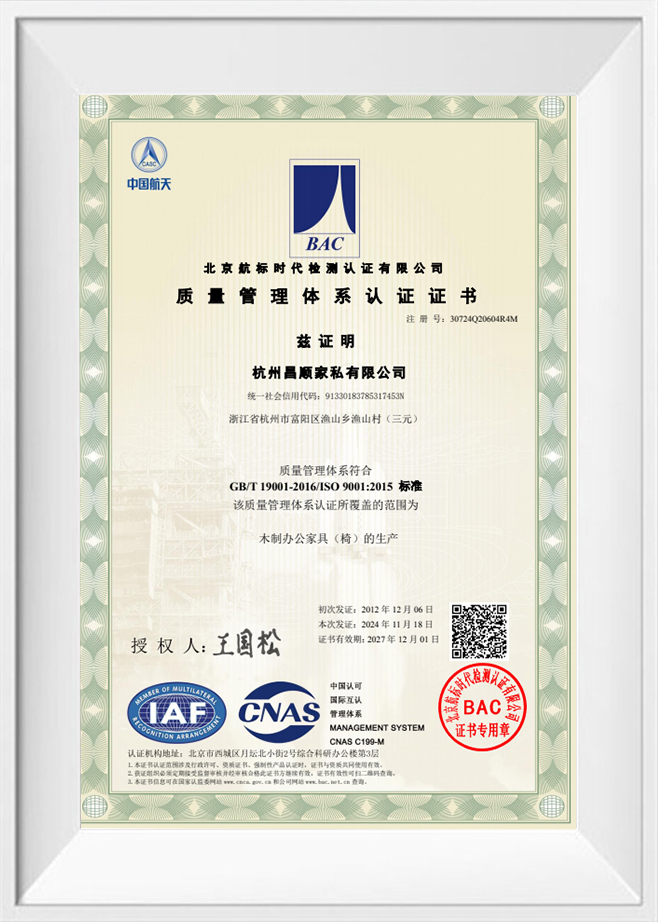
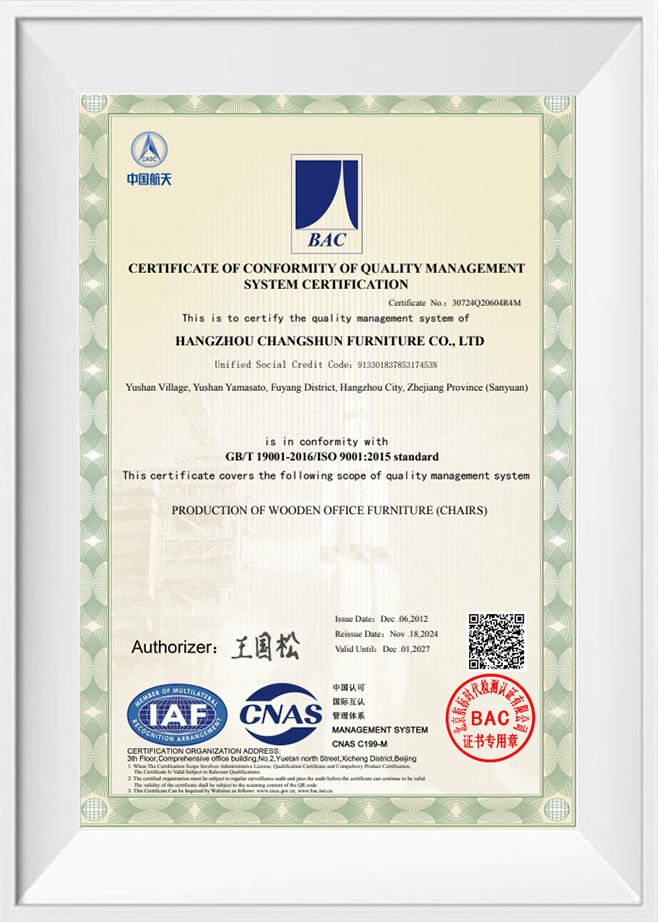
Our facility holds quality management system certification and registration documentation, and our wood chair and table lines are supported by FSC-certified material sourcing. Extension hardware and moving parts are function-tested before packing, and pre-shipment inspection can include a functional test record for extendable models.
Export packaging for solid wood tables includes corner foam protection and a full carton wrap. Tops longer than 120 cm receive internal bracing to limit flex damage during container loading and transshipment, which is a common cause of damage claims on multi-leg routes.
We quote FOB, CIF or CNF terms as agreed, with a 30% deposit before production and the 70% balance against documents; T/T is standard and L/C is acceptable. Spare hardware and replacement components for extension mechanisms can be included in the delivery scope for distributor programmes.
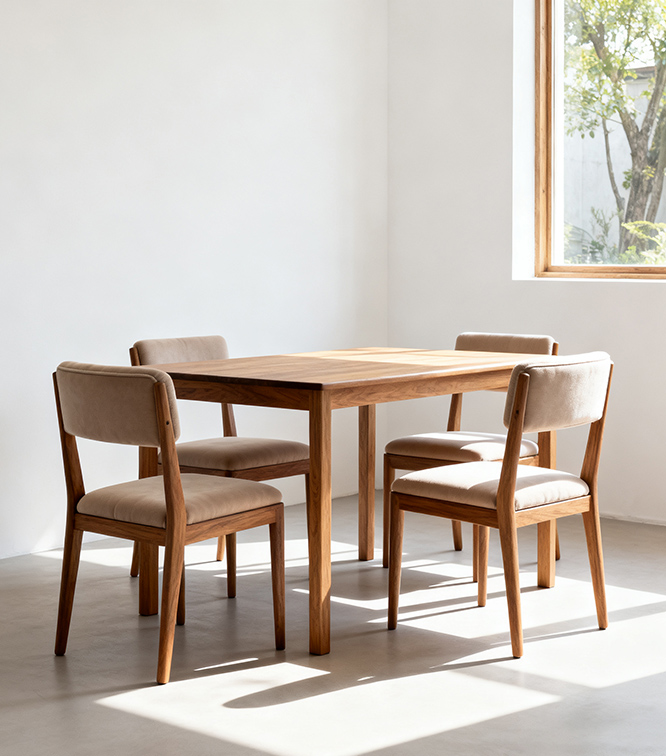
Table programmes are usually specified alongside seating, and we produce the matching chair and stool ranges in the same factory. This keeps timber tone, finish sheen and leg proportions consistent across a dining set.
We prepare a configuration and quotation from the working point of the project rather than from a catalogue number. The following inputs let us confirm structure, finish and packaging in one pass.
| Input | What It Determines |
|---|---|
| Dimensions and seating count | Top size, span, leg section, apron depth |
| Timber species and grade | Hardness, grain character, cost position |
| Finish type and colour panel | Sheen, maintenance profile, batch colour tolerance |
| Extension or fixed top | Mechanism type, QC test scope, packing method |
| Destination market and route | Compliance documentation, packaging bracing, trade term |
| Quantity and delivery schedule | Line allocation across blanking, production, painting and packing |
Our oval family wooden dining table is produced at W2400 × D900 × H750 mm, and we build rectangular, oval and round tops to project dimensions. Tabletop thickness is normally 20–40 mm, with 28–32 mm a common balance between premium feel and freight weight.
Yes. We develop and produce from customer drawings or samples, including OEM wood tables and custom wood dining tables for private label and distributor ranges. Our sampling team works directly with the customer to confirm dimensions, joinery and finish before a production run.
We produce in white oak, black walnut, beech and rubberwood, among other species. Selection is matched to the traffic level, grain preference and price position of the programme, with moisture content controlled during kiln drying to limit seasonal movement.
Five stages apply: raw material inspection, prototype testing, in-process inspection, finished product inspection and final pre-shipment inspection. Our facility holds quality management system certification, and FSC-certified material sourcing supports our wood table and chair lines.
We quote FOB, CIF or CNF as agreed. Mass production orders carry a 30% deposit before production and a 70% balance against documents; T/T is standard and L/C is acceptable. Products ship mainly to Europe, North America, Southeast Asia and the Middle East.
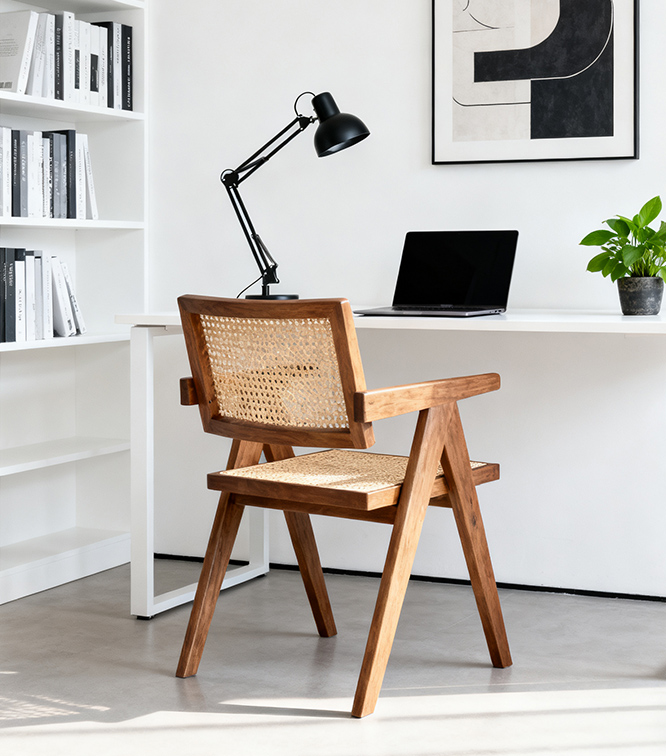
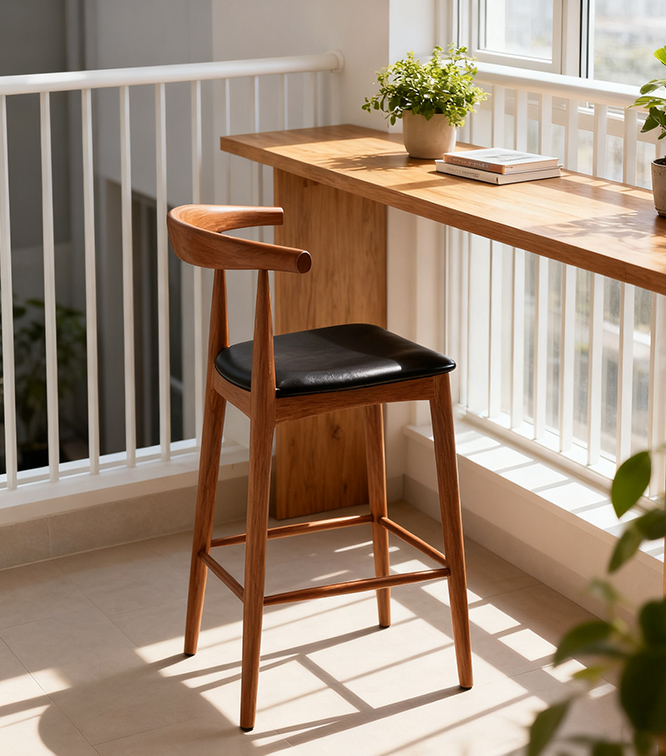
Yes. Tables, upholstered dining chairs, woven wood chairs and bar stools are produced in the same facility, so timber tone, finish sheen and leg proportions stay consistent across a complete dining set.




Innovation Oriented, Quality As Life.
Feel free to reach our if you want to collaborate with us, or simply have a chat.
Become a Client 
Product Category
Wood Upholstered Chair
Woven Wood Chair
Wood Bar Stools
Wood Table
FSC Certified Wood Chairs
Wooden Rattan Chairs
Solid Wood Dining Chair
Modern Wooden Dining Chair
Contact Information
 +86-571-63521858
+86-571-63525898
 furniture@hzchangshun.com
emilypeng@hzchangshun.com
 No. 88, Zhumufan, Yushan Township, Fuyang District, Hangzhou City, Zhejiang Province, China


 EN
EN

 English
 中文简体
中文简体 Español