Our Collections
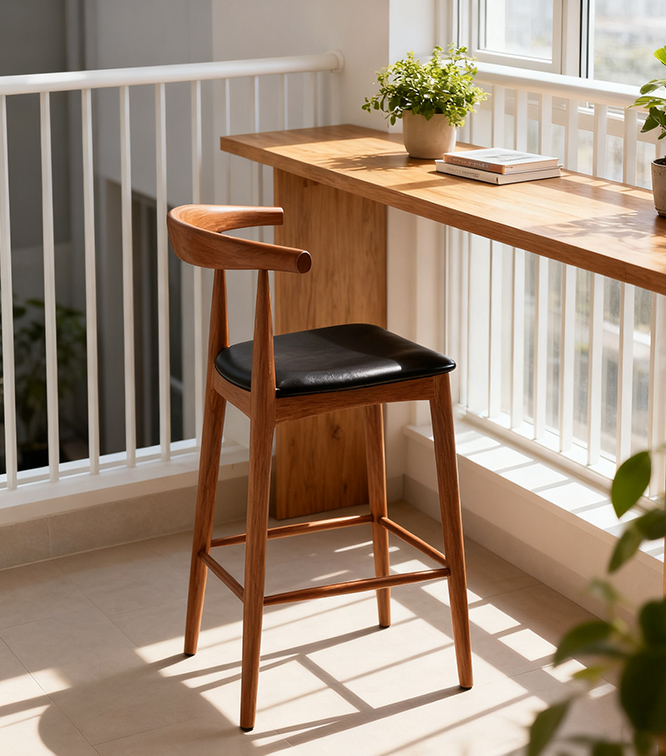
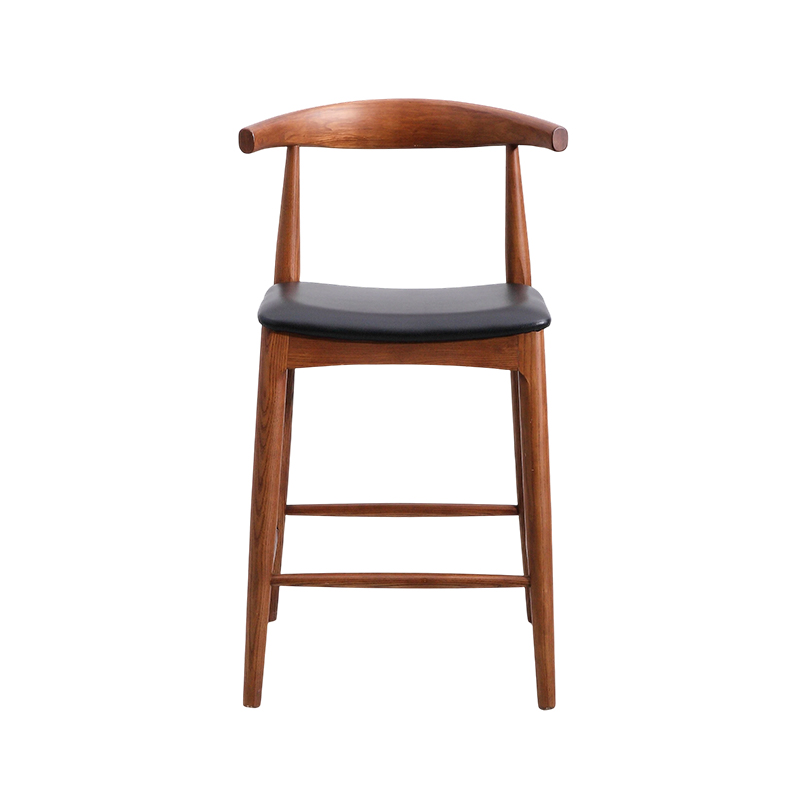
Wood Bar Stool
The Wood Bar Stool series brings together sculptural seating and relaxed elegance, tailored for casual dining, kitchen counters, and modern social spaces. These stools blend ergonomic curves with tactile materials, offering both style and comfort in elevated settings.
Designed with attention to posture and support, the series features details like gently dipped seats that contour to the body, as well as supportive backrests and lumbar features. Whether you prefer a fully open stool or one with a curved leather back, the designs adapt seamlessly to diverse environments.
The collection also explores the expressive potential of mixed materials. Rope weaving and leather seating surfaces not only enhance texture but also introduce a subtle layer of craftsmanship that elevates the natural wood base.
Compact yet substantial, these stools are ideal for balancing function and aesthetic. They reflect a clean, modern sensibility while embracing the honest warmth of traditional woodworking, creating a versatile presence in any bar or kitchen setting.
About Changshun
Your Trustworthy Company
Hangzhou Changshun Furniture Co., Ltd. is an integrated manufacturer and trading company engaged in the design, development, production, and sales of wooden and rattan chairs and tables. Wooden Bar Stools Manufacturers and OEM Wood Bar Stools Factory in China.
Our products emphasize meticulous design and utilize eco-friendly materials to ensure safety and health. Additionally, we provide premium after-sales service to address any issues during use, ensuring customers enjoy a worry-free shopping experience.
With over two decades of dedicated effort, Hangzhou Changshun Furniture Co., Ltd. has successfully expanded its market to Europe, North America, Southeast Asia, and the Middle East, earning consistent acclaim from clients. Supply Custom Wooden Bar Stools, Wood Bar Stools for sale. Backed by strong technical expertise, advanced production equipment, a professional workforce, and high-quality products and services, the company has become a high-quality enterprise in Zhejiang Province's furniture manufacturing industry. Our products enjoy a strong reputation in international markets and have won the trust and support of a broad customer base.
Industry knowledge
Hangzhou Changshun Furniture Co., Ltd. is a China-based manufacturer of solid wood bar stools, producing seating for kitchen counters, restaurant bars, cafés, hotel lounges and residential social spaces. Our Wood Bar Stool range covers backless dipped-seat stools, backrest models, rope-woven stools with lumbar support and leather-seat stools with curved backrests, all built on solid hardwood frames.
We operate an integrated manufacturing and trading model from Fuyang, Zhejiang, with four production lines covering blanking, production, painting and packaging. Our bar stool programs support OEM development from customer drawings or samples, with species, seat height, finish and upholstery treated as configurable variables.
The series is organized around seat geometry and back support rather than a single silhouette. Each model shares a solid wood frame, non-slip foot pads and a sanded, sealed surface, but differs in how the seat contours to the body and how much lumbar support it provides.
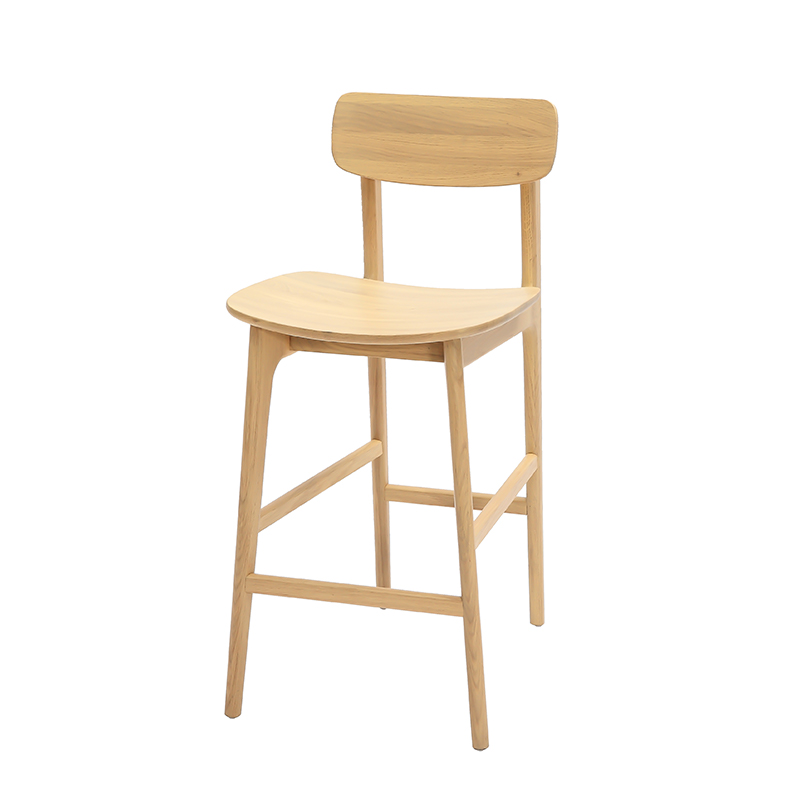
Curved seat dip with a lumbar-supporting backrest. 46 × 57 × 95.5 cm. Suited to café and bar settings where posture support matters.
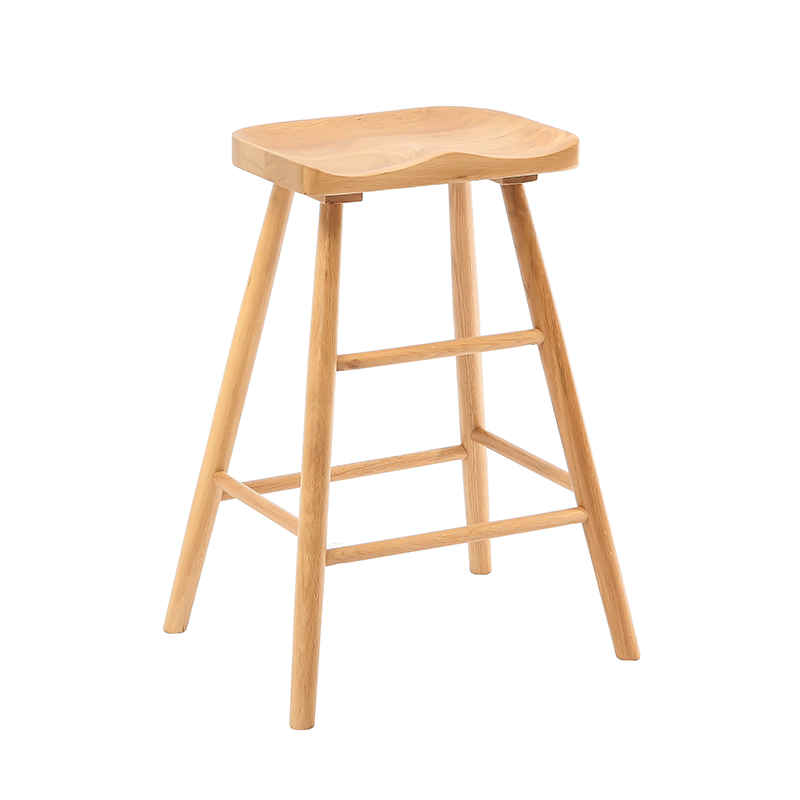
Dipped seat contoured to the hips. 49 × 39 × 67 cm. Lightweight and portable for flexible seating layouts.
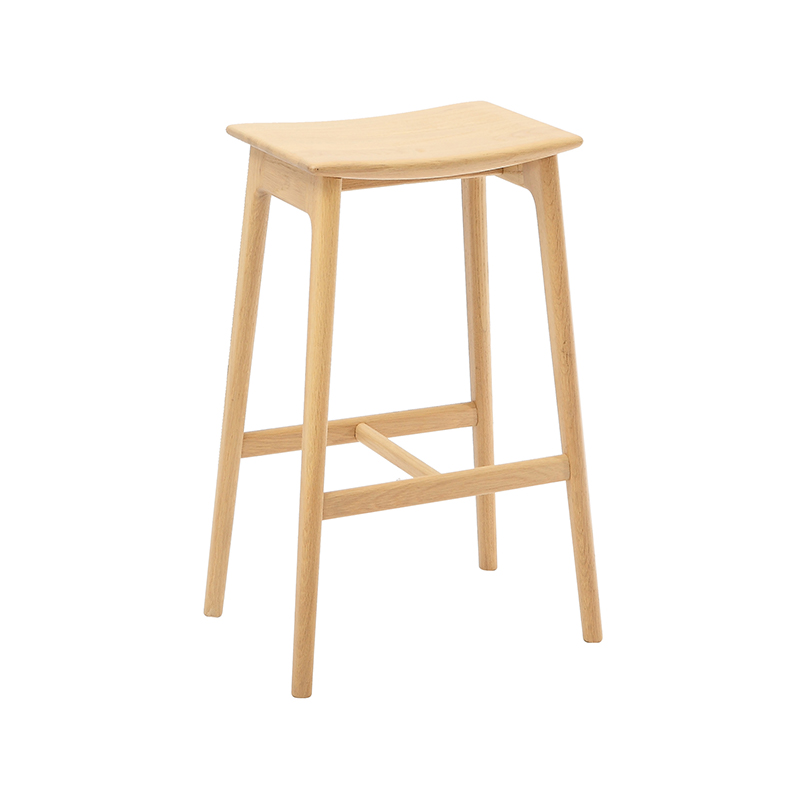
Concave ergonomic seat on a four-legged frame. 44 × 30 × 68 cm. Fits counters and high dining tables.
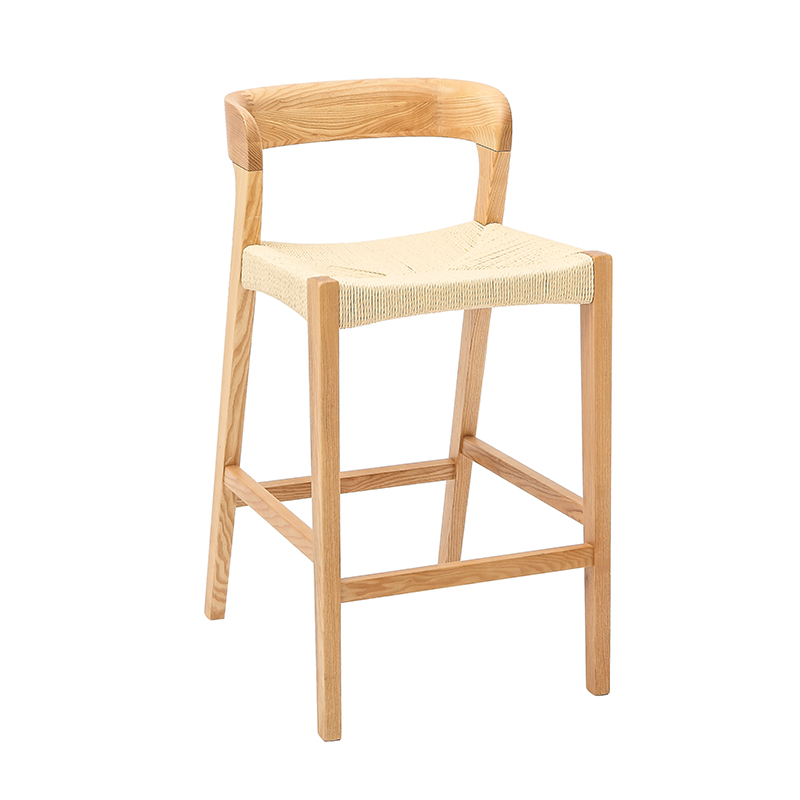
Woven rope back with lumbar support, adding texture and breathability to the solid wood base.
Leather seating surface with a curved backrest for a more upholstered, contract-oriented look.
Related seating families share the same frame logic and finishing standards: Wood Upholstered Chair, Woven Wood Chair and Wood Table.
The most common specification error in bar stool procurement is a mismatch between seat height and counter or bar surface height. Because solid wood frames are fixed-height rather than adjustable, the height category must be confirmed before tooling and production. We work to a 250–300 mm clearance between the seat surface and the underside of the counter, which gives comfortable thigh clearance without forcing the user to reach upward.
| Stool Category | Seat Height Range | Compatible Surface Height | Typical Application |
|---|---|---|---|
| Counter Height | 580–650 mm | 880–950 mm | Kitchen islands, breakfast bars, residential counters |
| Bar Height | 660–760 mm | 960–1,050 mm | Restaurant bars, pub counters, commercial bar tops |
| Extra Tall / Spectator | 780–850 mm | 1,050–1,150 mm | High tables, stadium seating, specialty commercial |
Footrest placement is validated on all models through seated user testing at multiple height percentiles before production tooling is finalized. The ergonomically correct footrest height is approximately 300–350 mm above floor level for counter-height stools and 400–450 mm for bar-height versions, measured to the top surface of the rung.
A bar stool seat sits 650–760 mm above the floor, compared with roughly 450 mm for a dining chair. The longer lever arm means leg-to-seat-rail and leg-to-footrest joints must resist approximately 40–70% more bending force than an equivalent dining chair joint. Our construction responds to that load case directly.
During sample approval, a deliberate sideways force applied to the seat on a hard floor reveals whether joint geometry and adhesive application are adequate. A small amount of give is normal in wood construction; audible creaking or visible joint movement under moderate hand pressure indicates insufficient section size or tenon depth.
Species choice balances hardness, weight and visual character. The footrest rung is a high-contact zone subject to constant abrasion from shoe soles, so harder closed-grain timbers are preferred for that component in commercial environments. Weight affects both repositioning in venues and freight cost per container.
| Species | Janka Hardness | Character and Best Fit |
|---|---|---|
| Beech | ~1,300 lbf | Excellent steam-bending response; uniform grain accepts stain evenly. Volume export production. |
| Ash | ~1,320 lbf | Pronounced open grain, superior shock resistance. High-traffic commercial environments. |
| Oak | 1,290–1,360 lbf | Strong European and North American market preference; natural tannins give moderate moisture resistance. |
| Rubberwood | ~980 lbf | FSC-certifiable plantation timber, consistent grain, cost-effective mid-market option. |
| Walnut | ~1,010 lbf | Premium brown tones and distinctive figure; better suited to residential than high-traffic commercial use. |
We offer species selection as a configurable variable in our OEM bar stool programs, allowing buyers to optimize for weight, hardness and visual character against their market and logistics requirements.
Bar stool finishes face a different wear profile than dining chair finishes. The footrest accumulates concentrated abrasive wear from shoe contact, and users climbing on create repeated lateral scuffing across the front seat edge. Specifying the same coating system across both categories is a common oversight that leads to premature deterioration.
Standard furniture lacquer at 60–80 microns is appropriate for dining chair seats and backrests but will wear through to bare wood on a commercial bar stool footrest within months of heavy use.
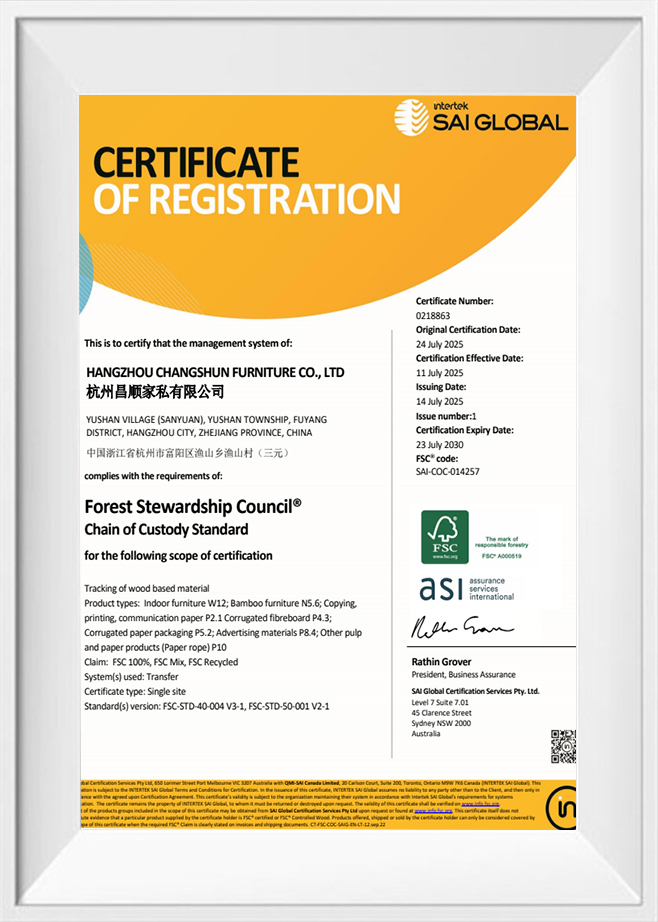
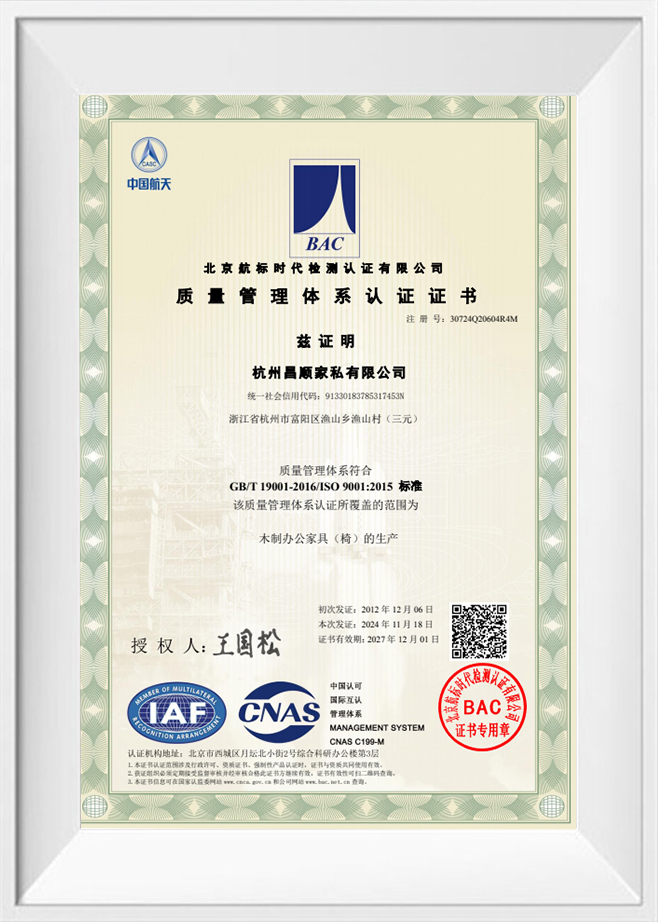
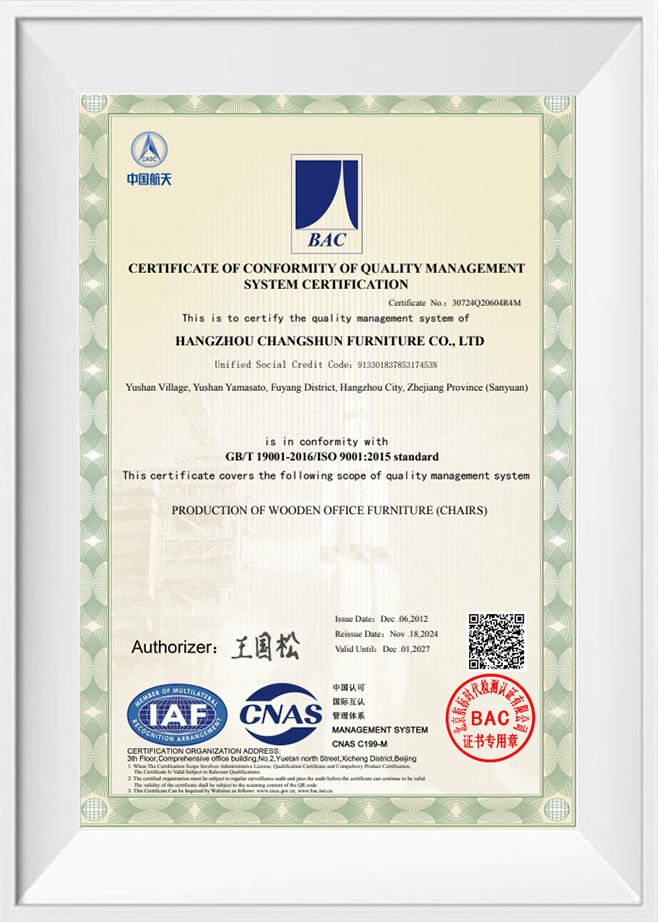
Our quality system follows five stages: raw material inspection, prototype testing, in-process inspection, finished product inspection and final pre-shipment inspection. QC staff are placed at each step to maintain consistent quality and protect the delivery schedule. The company holds ISO quality management system certification and operates an ERP system for supply chain coordination.
For project orders, we prepare documentation covering dimensions, species, finish specification, upholstery details and packaging configuration. Sample approval precedes mass production, and pre-shipment inspection confirms appearance, performance and durability against the approved sample.
To prepare an accurate bar stool configuration and quotation, we work from the following project inputs. The more precisely these are defined, the faster we can confirm tooling, sampling and production scheduling.
We reply to inquiries within 12 hours on working days. Payment terms are confirmed at quotation stage, with FOB, CIF and CNF transaction methods available; mass production typically proceeds on a 30% deposit with 70% balance against documents.
We produce counter height (580–650 mm), bar height (660–760 mm) and extra tall (780–850 mm) stools. The correct category depends on your counter or bar surface height, and we confirm the clearance between seat and counter underside before production.
Yes. As an integrated manufacturer and trading company, we develop and produce from customer drawings or samples in addition to our standard catalog. Our sampling team works directly with customers on prototype development and approval.
Beech, ash, oak, rubberwood and walnut are available, each with different hardness, weight and grain character. Ash and beech are preferred for footrest components in commercial-grade stools because their hardness resists localized abrasion.
For commercial hospitality environments we specify two-component polyurethane or catalyzed lacquer at 100–120 microns dry film thickness on footrest zones, with chemical resistance testing against alcohol-based cleaners as part of sample approval.
Five stages apply: raw material inspection, prototype testing, in-process inspection, finished product inspection and final pre-shipment inspection. QC staff are placed at each step, and the company holds ISO quality management system certification.
We reply within 12 hours on working days. Payment terms are confirmed at quotation stage, with FOB, CIF and CNF methods available. Mass production typically proceeds on a 30% deposit with 70% balance against documents; T/T is standard and L/C is also acceptable.




Innovation Oriented, Quality As Life.
Feel free to reach our if you want to collaborate with us, or simply have a chat.
Become a Client 
Product Category
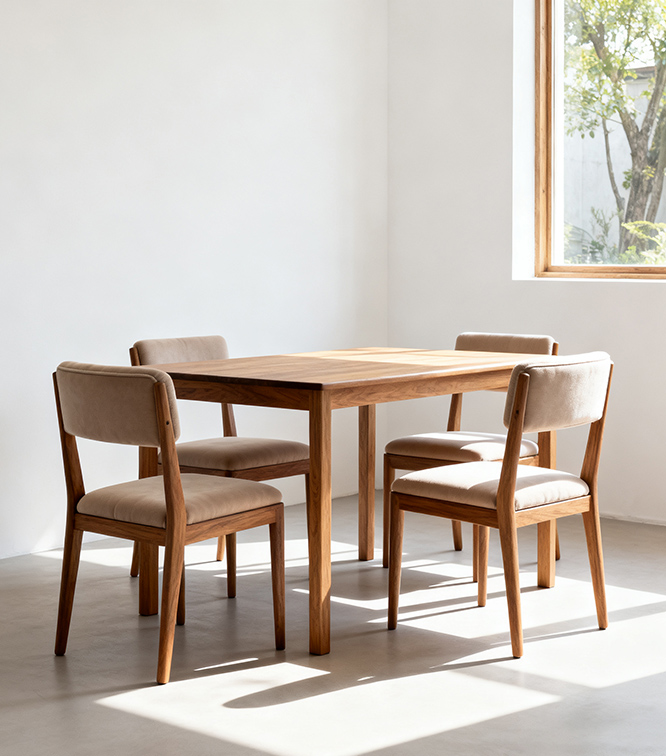
Wood Upholstered Chair
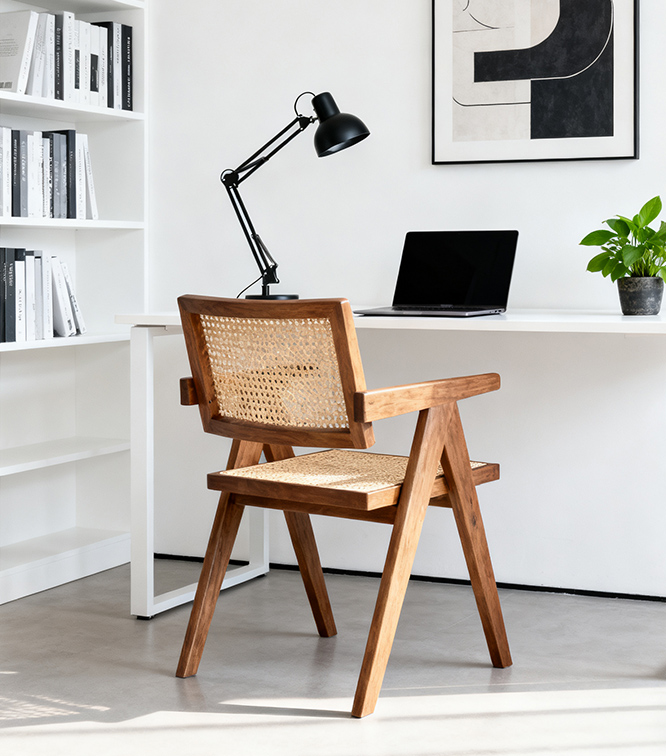
Woven Wood Chair
Wood Bar Stools
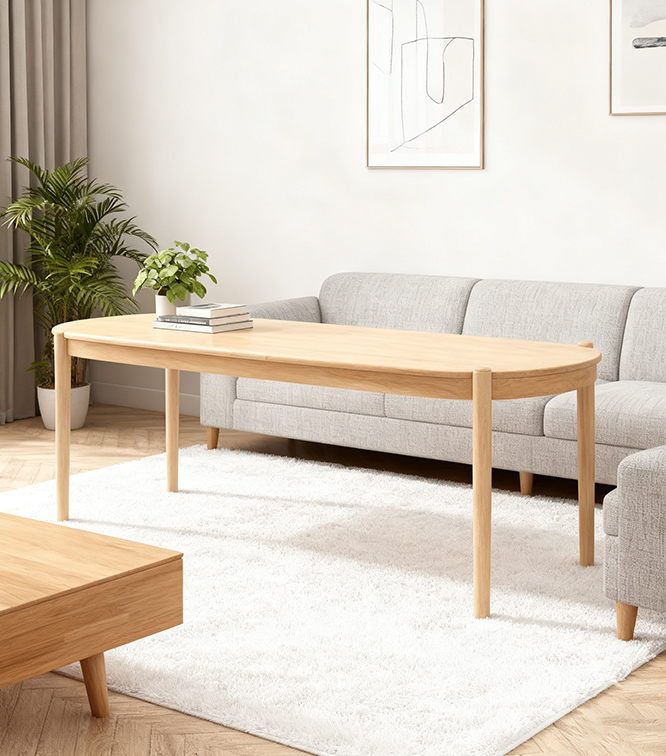
Wood Table
FSC Certified Wood Chairs
Wooden Rattan Chairs
Solid Wood Dining Chair
Modern Wooden Dining Chair
Contact Information
 +86-571-63521858
+86-571-63525898
 furniture@hzchangshun.com
emilypeng@hzchangshun.com
 No. 88, Zhumufan, Yushan Township, Fuyang District, Hangzhou City, Zhejiang Province, China


 EN
EN

 English
 中文简体
中文简体 Español