2026/09/14
You know the sound: a chair leg scraping the floor at the wrong angle, followed by a guilty look at the finish. Within a few weeks, the spot under a dining chair turns from glossy to matte, then to a web of fine scratches. As a furniture manufacturer that has produced and shipped wooden chairs and bar stools since 2006, we hear this complaint constantly — and almost every case is preventable.
Here is the conclusion before the details. You protect a wood floor from chair legs with four layers that work together: the right floor protector for each chair, clean and smooth chair feet, chair geometry that reduces scraping leverage, and a short maintenance routine that keeps both pads and finish healthy. Skip one layer, and the others fail sooner.
Bottom line: use thick felt pads or felt-backed glides on chairs that move daily, replace them before they harden, avoid hard plastic caps on wood floors, and choose chairs with stable, slightly oversized feet when buying new furniture.
Content
Chair legs damage wood floors through three distinct mechanisms, and each needs a different preventive response.
The floor finish matters as much as the chair. A thin matte polyurethane scratches sooner than a cured multi-coat finish, and soft domestic oak dents more easily than dense tropical species. In every case, the load the chair places on the surface is the variable you can control.
Most floor protectors fall into six groups. The comparison below rates them on the factors that actually predict floor damage.
Floor protectors are the second line of defense. The first is the chair itself. When we engineer chairs at our Hangzhou factory, floor interaction is a design parameter, not an afterthought. Three characteristics matter most.
A chair with a wider, braced base transfers less horizontal force to the floor because the frame resists rocking. When a person leans, a stable chair lifts its opposite leg cleanly; a flexible frame drags the leg across the finish. Scissor-leg chairs such as the Scissor Leg Wood Chair with Woven Rattan are among the gentlest on floors, because the splayed legs widen the support footprint without adding weight.
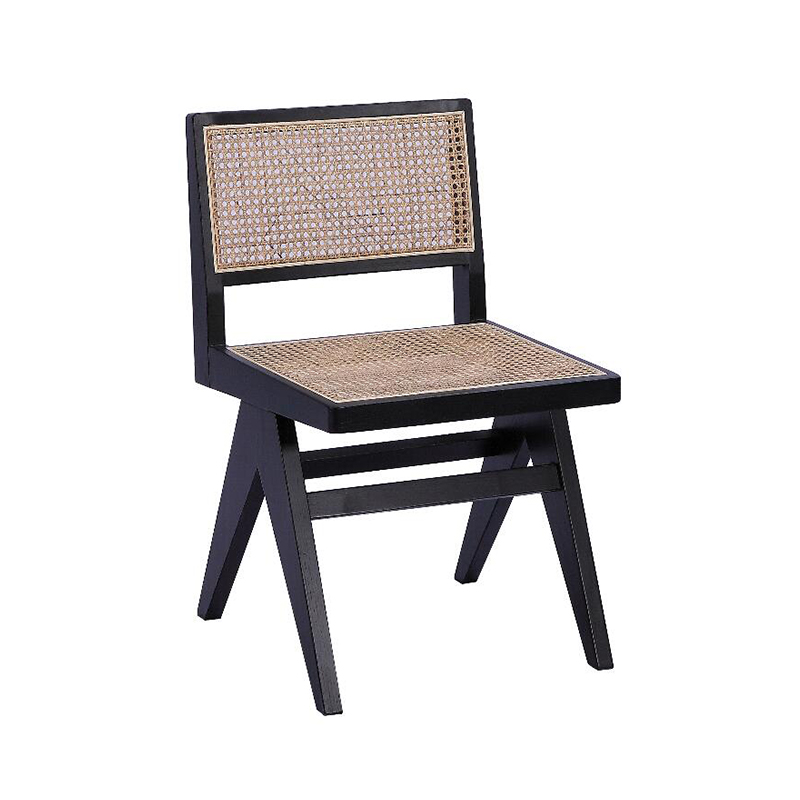 Scissor Leg Wood Chair with Woven Rattan SeatThis mid-century-inspired chair uses a solid birch frame and splayed scissor legs to widen its support footprint, reducing rocking and floor stress. Its flat foot design helps felt pads stay attached, making it a gentle choice for finished floors.View Product →
The leg's contact area determines both denting and how well a protector stays attached. A flat, slightly oversized foot holds a felt pad firmly; a sharp edge pushes the pad aside and exposes wood. Factory-installed glides are the silent differentiator: they are fixed to a clean, dried foot with a matched adhesive, so they stay put longer than any aftermarket stick-on pad.
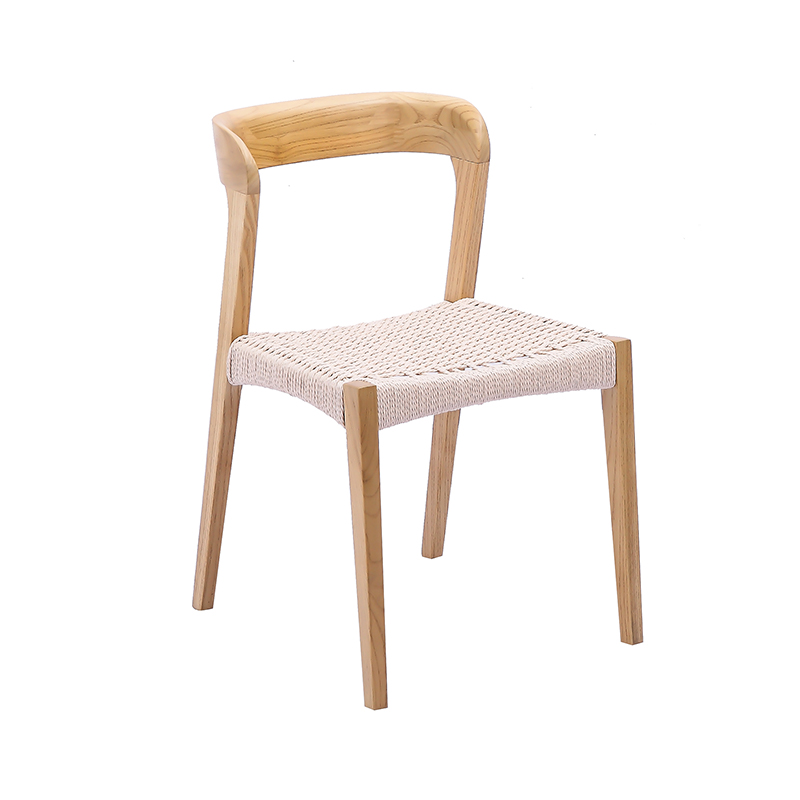
Lighter chairs get slid instead of lifted, and heavy chairs dent when slammed back. Chairs that reduce mass through braced construction, like a cross-back dining chair with a rattan mat, keep stiffness without unnecessary load. The way a chair transfers weight to the floor is one of the least discussed but most consequential parts of chair design.
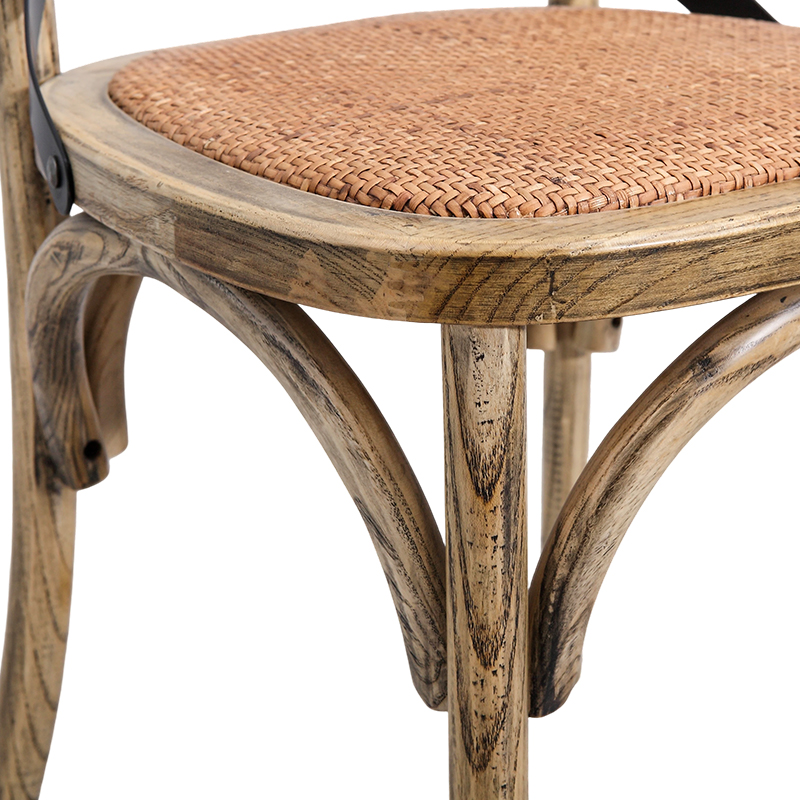 Cross Back Dining Chair with Rattan MatMade of solid oak with a woven rattan seat, this chair combines stiffness with lighter weight. Its braced cross back reduces flex and horizontal force, helping protect floors while still offering a stackable option for flexible storage.View Product →
Beyond the protector choice, four factors quietly worsen floor damage.
Inspection data from furniture returns shows where the damage actually comes from:
Floor protection priorities differ by room because chair behavior differs. Across residential and light-commercial dining spaces, damage clusters in five zones.
The dining area dominates because a chair is pulled back and pushed in several times per meal. The back legs rotate on the floor while bearing the sitter's weight, concentrating both grit and pressure in a small arc. Office chairs add a different risk: rolling wheels compact debris into the finish. Kitchen-counter stools rank third because people often slide off the seat sideways, scraping two legs across the floor at once.
Choosing protectors does not have to be complicated. Work through this order:
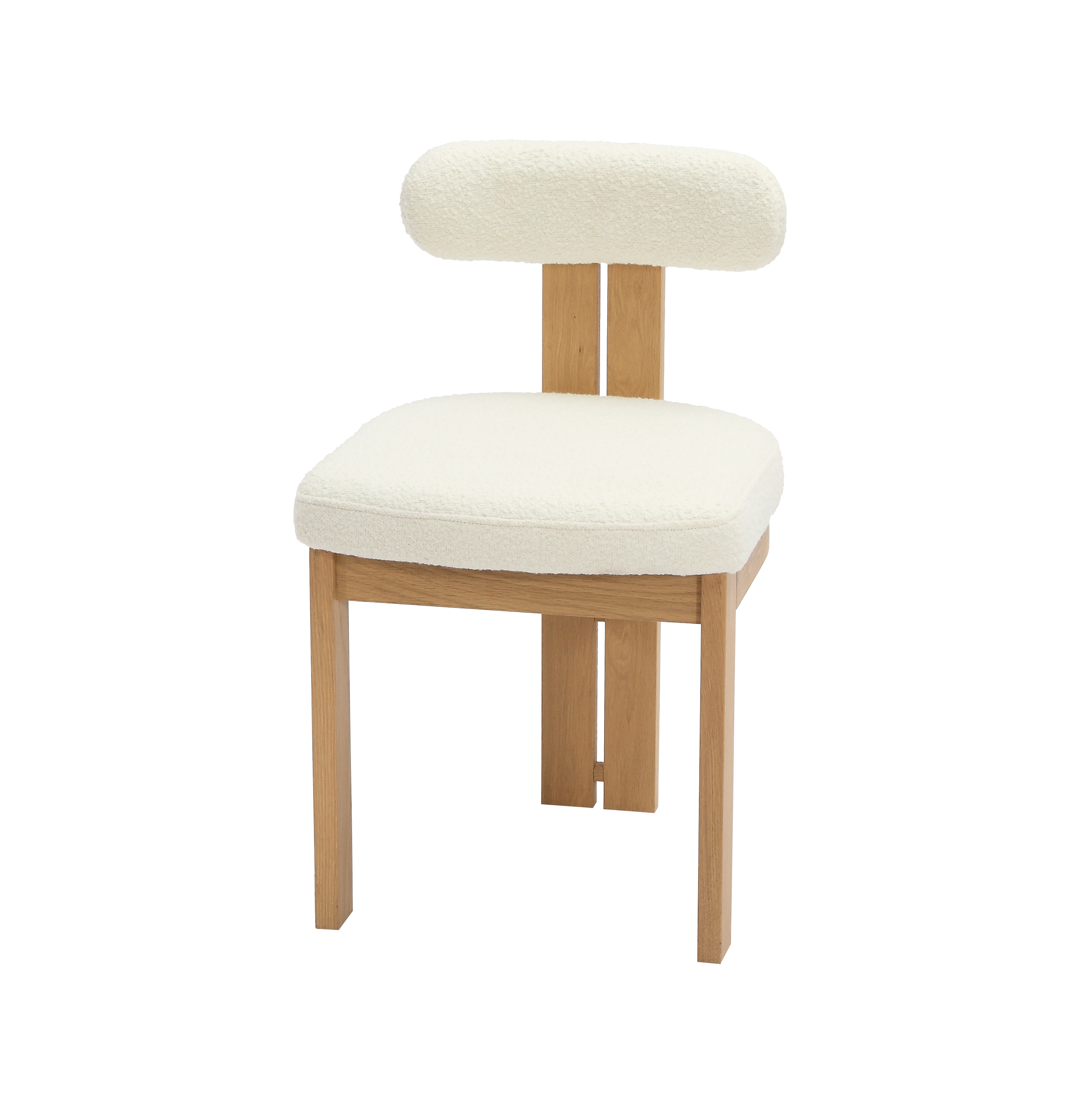
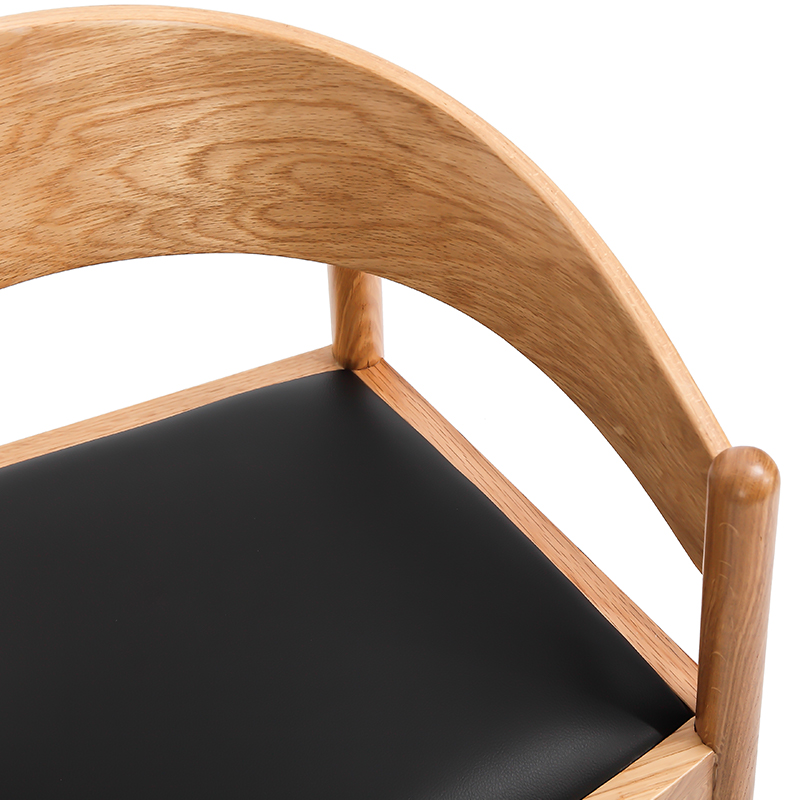 Dining Upholstered Chair with PU Seat CushionThis oak-framed armchair features a padded PU leather seat for easy maintenance and comfort. Its stable, well-balanced form suits dining areas where floor protection matters, and the durable seat keeps its shape during daily use.View Product →
For a typical home dining set, the cost difference between protecting four legs properly and refinishing one hardwood floor is roughly 1 to 50. The protectors are nearly free in comparison; the real risk is forgetting to maintain them.
Floor protection is a maintenance discipline, and furniture quality plays a role. Here is what we build into our process as an ISO-certified manufacturer — and what you can check at home.
Wood floors and chair legs are not natural enemies. Between the right protector, a structurally sound chair, and a maintenance habit that takes under a minute a month, the finish under your table can stay intact for the furniture's entire service life.




Innovation Oriented, Quality As Life.
Feel free to reach our if you want to collaborate with us, or simply have a chat.
Become a Client 
Product Category
Wood Upholstered Chair
Woven Wood Chair
Wood Bar Stools
Wood Table
FSC Certified Wood Chairs
Wooden Rattan Chairs
Solid Wood Dining Chair
Modern Wooden Dining Chair
Contact Information
 +86-571-63521858
+86-571-63525898
 furniture@hzchangshun.com
emilypeng@hzchangshun.com
 No. 88, Zhumufan, Yushan Township, Fuyang District, Hangzhou City, Zhejiang Province, China


 EN
EN

 English
 中文简体
中文简体 Español