2026/09/07
Think about the last time you compared dining chairs online. The listing probably promised a solid wood frame, and the most comfortable-looking cushion was what made you stop scrolling. The problem is that the cushion is only a cover. The parts that keep a chair solid for ten years—legs, aprons, stretchers, joints, and the base under the seat—are the same parts that never appear in a product photo. This guide walks through every important part of a chair, explains what each one does, compares how the part list changes across chair types, and gives you a practical checklist for inspecting quality before you buy.
Key takeaway: a chair is three systems in one assembly. The support system (legs, rails, stretchers, seat frame) carries the weight. The contact system (seat, backrest, armrests) shapes your posture. The protection layer (finish, glides, cushioning) absorbs daily abuse. Check all three and you close off the major comfort and durability risks.
Content
Instead of memorizing twenty part names, think of a chair as three stacked layers. The support layer starts under the seat: four legs, an apron that connects the legs to the seat frame, and stretchers that tie the legs near the floor. The contact layer is what your body presses against—seat surface, backrest, and armrests. Their shape and angle determine whether you feel alert or fatigued after a meal. The protection layer includes the finish on wood parts, glides under the feet, and the fabric or foam that takes daily wear. A chair can fail in any of the three, but most premature failures trace back to the support layer.
The seat carries the largest share of body weight, so its structure matters more than the upholstery you touch. In a wooden chair, the seat board or seat frame sits under the seat surface; the apron is the front rail that joins the legs beneath it, while small corner blocks add rigidity at the inner corners. If the seat is woven, the frame is the structural hero and the rattan or rope weave is a flexible contact surface; the tightness and density of that weave determine how quickly the seat sags. Some modern wood chairs shape the seat itself with a dip and a curved front edge to distribute pressure more evenly. A hip-fitting seat profile is worth testing in person because it changes the comfort equation without adding any cushioning.
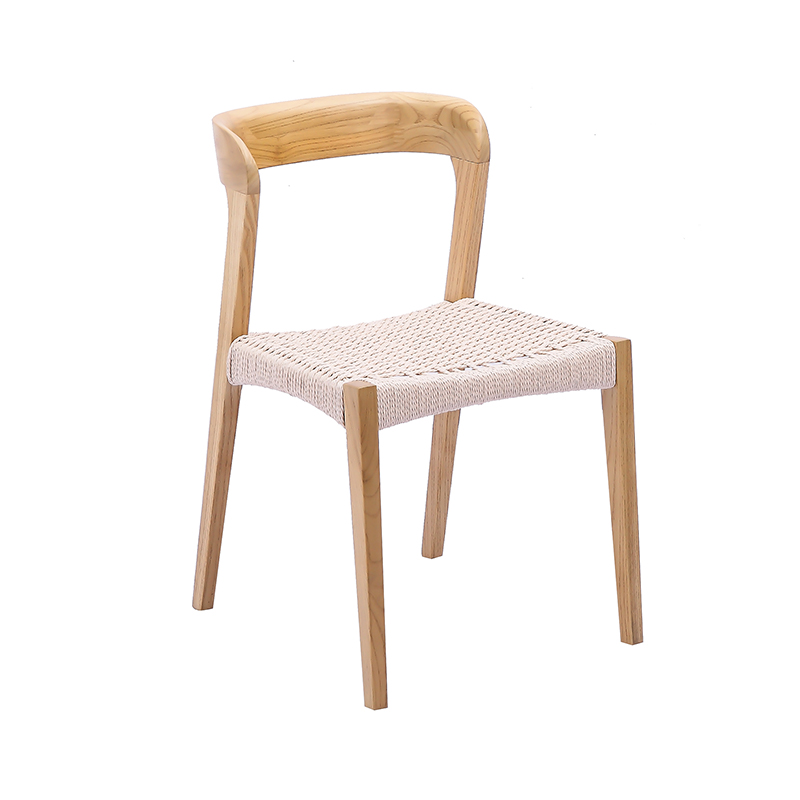
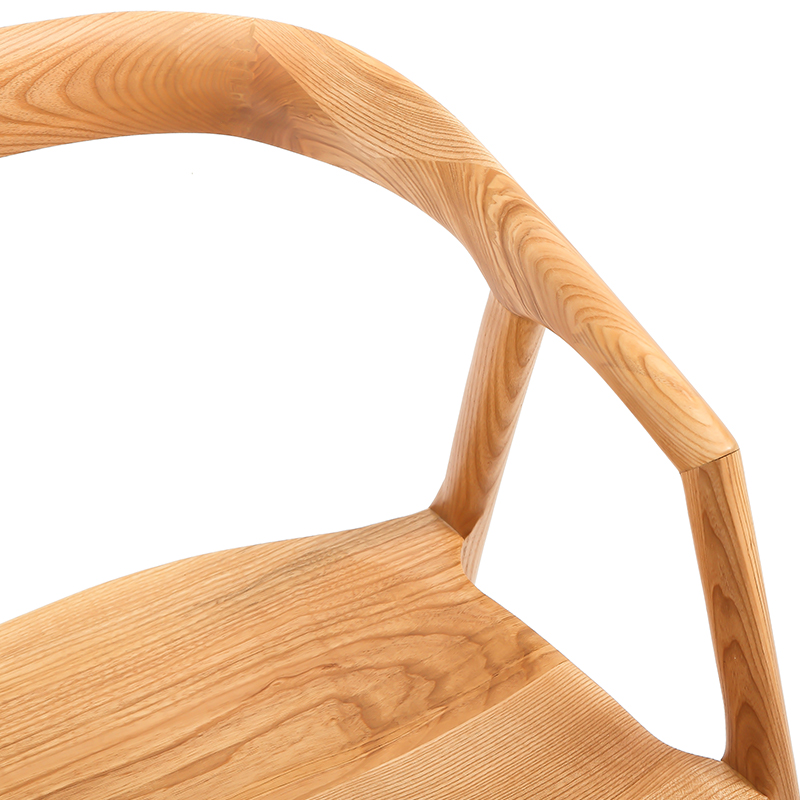 Solid Wood Chair with Hip-Fitting Dipped SeatThis chair's subtly curved seat is shaped to follow the hips, which helps distribute pressure and reduce strain during long sitting sessions. Its polished solid wood build and rounded edges make it a practical choice worth considering for ergonomic comfort.View Product →
Two vertical back posts rise from the seat frame, and a horizontal rail connects them at the top or middle. Slats or a solid panel on that rail give your spine something to rest against. The height and curve of the panel create lumbar support: a low back ends at mid-spine and leaves the arms free, while a high back supports the shoulders but needs a curve that matches your spine. In upholstered chairs, the same framework gets padding and sometimes a molded lumbar roll. In wood and rattan chairs, comfort comes from the shape of the panel itself, so run your hand along the curve before buying. Because chair proportion can directly affect posture, it is worth reading how chair proportion affects daily comfort before you settle on a back height.
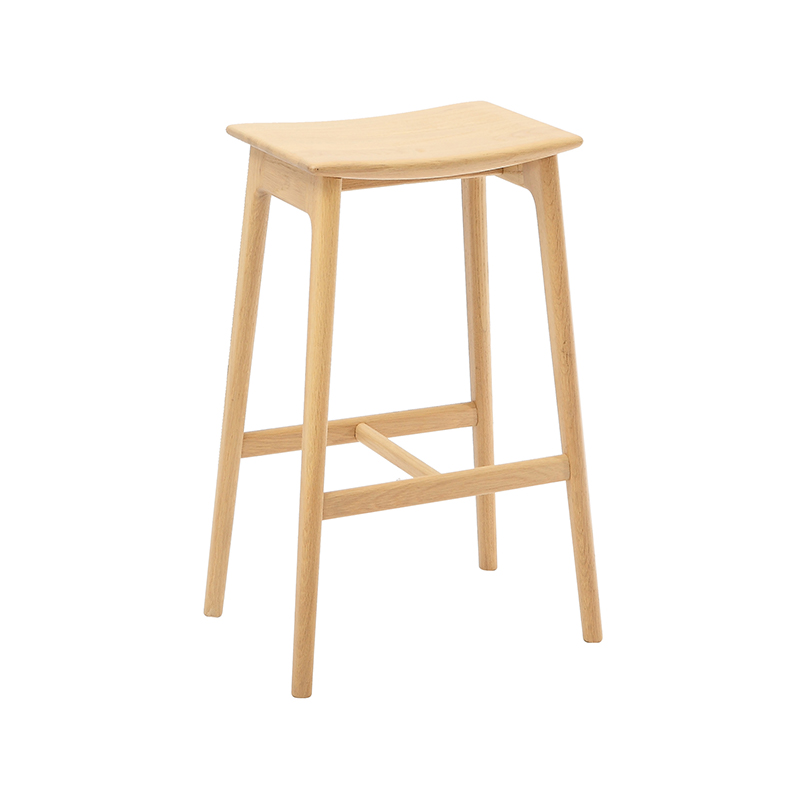
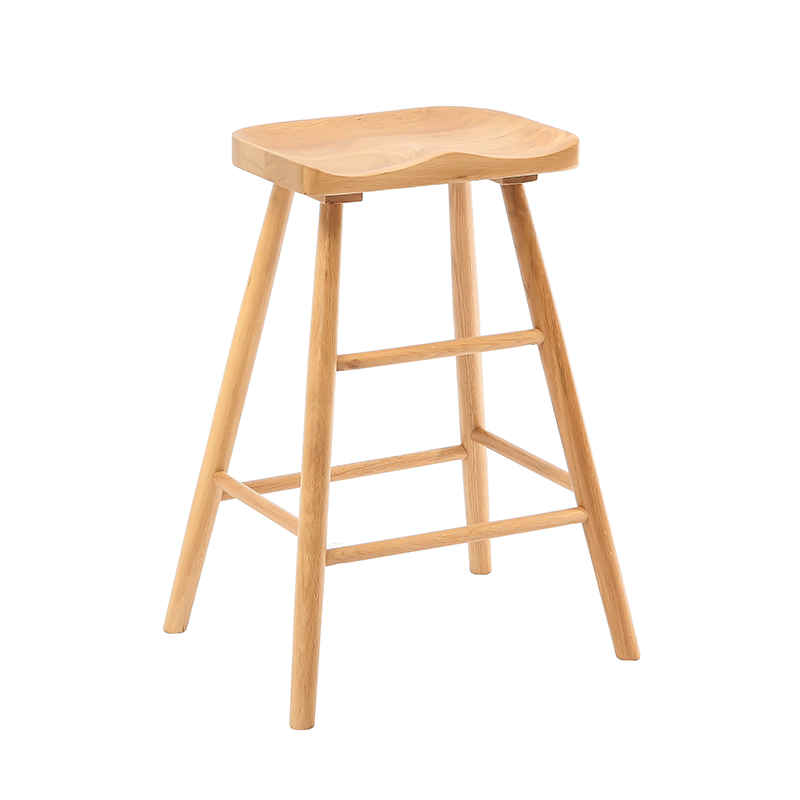
Four straight legs are the simplest base, but splayed legs increase stability because the footprint widens. Stretchers connect the legs about 10 cm above the floor and stop them from spreading under load. On a slim frame, missing stretchers put extra stress on the apron and corner joints. In bar stools, the lower stretcher doubles as a footrest, so its height must match the counter you intend to use. Glides under the feet protect floors and keep the chair level; a missing glide is a common cause of early wobble.
Armrests transfer part of the upper-body weight to the frame and relieve shoulder strain. They rely on arm posts—vertical supports from the front leg or seat rail—and end in arm caps where the forearm rests. Ideally, the elbow sits at about 90 degrees when the arm is on the cap. Restaurants often leave armrests off to save space under tables; homes and lounges add them for comfort. If arms are present, check whether the post is tenoned into the frame or simply glued to the side rail.
Under the fabric, webbing or serpentine springs suspend the seat, while foam density controls resilience. A dining chair cushion at 25–35 kg/m³ recovers well; lower-density foam flattens within a season. The cover material is a daily-maintenance decision: PU leather wipes clean but breathes poorly, woven fabric stays comfortable but stains faster. Seam quality and whether the cushion can be removed matter even more in commercial settings, because cleaning access decides the chair’s usable life.
Different chair types reorder the same basic parts. The comparison below summarizes the configurations buyers most often compare.
Typical part configurations for common chair categories.
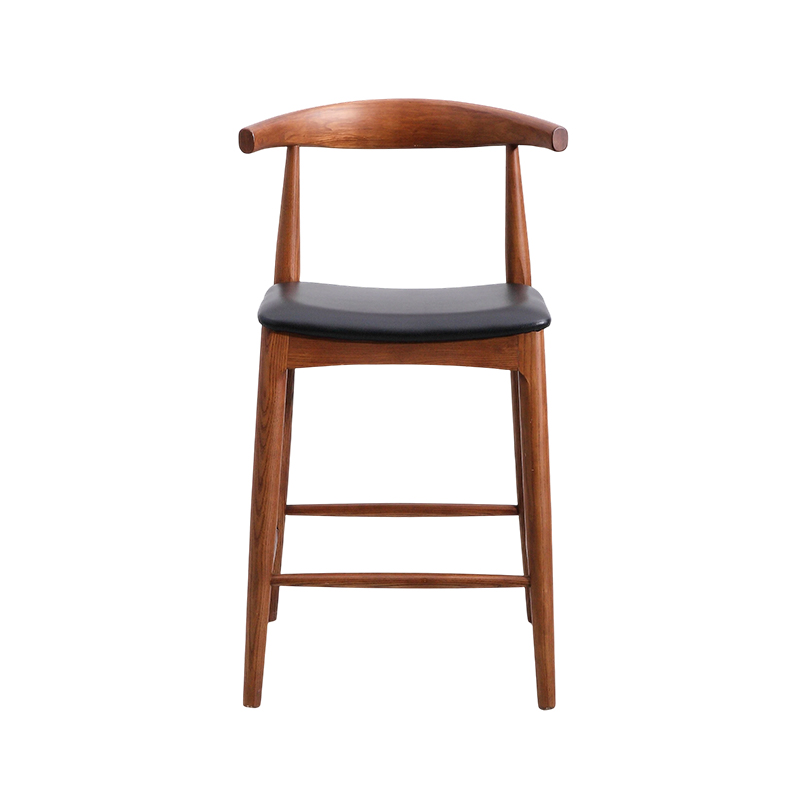
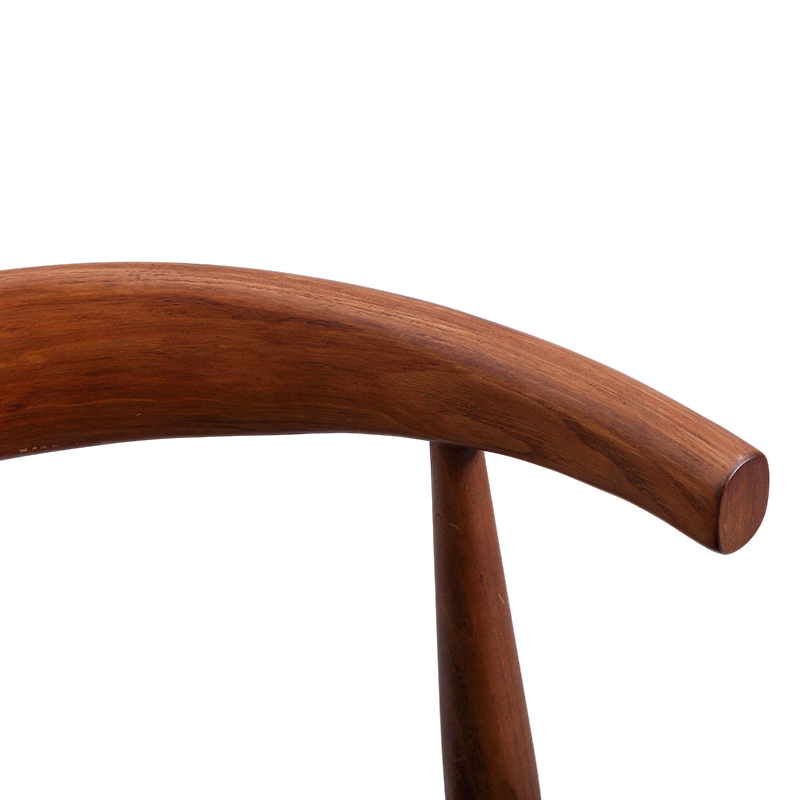 Oak-Framed Bar Stool with PU Leather Seat and Curved BackrestThis stool combines a sturdy oak frame with an easy-clean PU leather seat and a gently curved backrest that supports the lower back. It is sized for standard counters, making it a sensible option for kitchen islands or bars.View Product →
Materials are not simply about style; they change how each part behaves under load and wear. Use these four material families as a shortlist when comparing suppliers.
Solid wood (beech, oak)
Best for legs and back posts. Strength comes from straight grain and proper tenon size. Beech and oak appear most in export-grade dining chairs because they machine cleanly and hold glue well.
Rattan and rope
Best for woven seats and back panels. The wood frame carries the load; the weave provides flex and airflow. A dense, tight weave outlasts a loose one even if the material price is identical.
Plywood and molded panels
Best for curved seat pans and backrests. Multi-layer plywood holds a curve at a lower price than solid wood; quality shows in the face veneer and edge sealing.
Foam, fabric, PU leather
Best for comfort layers. Higher-density foam holds shape; fabric with a high abrasion rating survives daily service; PU eases cleaning but reduces breathability.
Comfort is not spread evenly across a chair. Seat support and shape dominate the experience, followed by backrest angle; the rest of the parts matter mainly at the edges.
A flat, hard seat behaves much worse than a mediocre backrest, which is why shaped wood seats or dense foam make such a big difference. Backrest angle follows: a vertical panel forces a straight spine, while a 95–100° recline allows natural relaxation. The remaining parts affect specific users: armrest height becomes critical for longer meals or older users, and foot support matters most on tall bar stools.
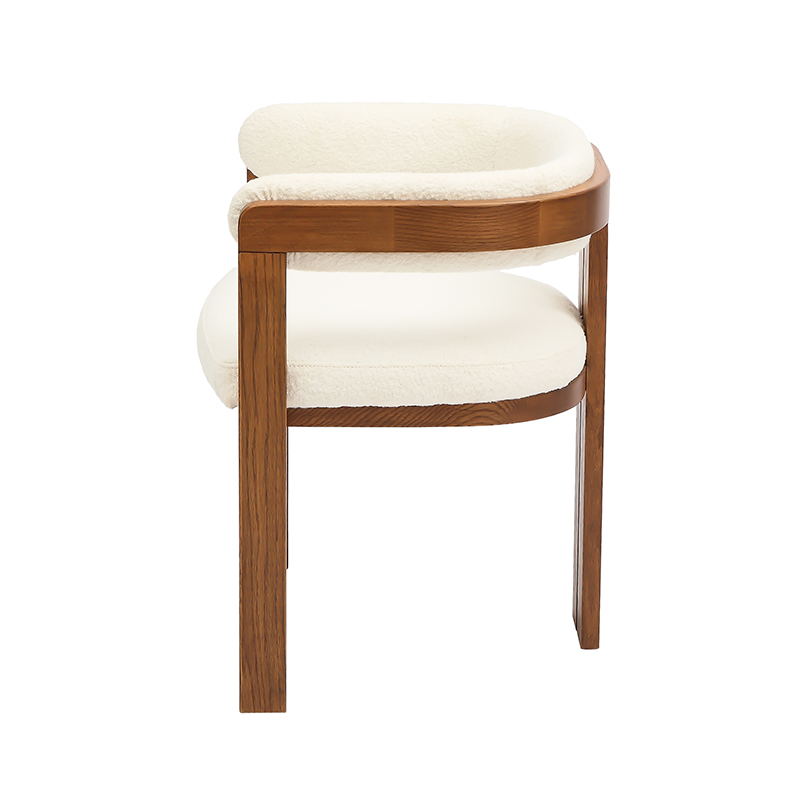 Oak Tripod Dining Chair with Boucle Fabric and Wraparound Lumbar SupportWith a solid oak tripod base and soft boucle upholstery, this chair offers wraparound lumbar support that aligns with the spine. Its moderate recline and compact dimensions make it suitable for extended dining sessions in modern interiors.View Product →
Here are the indicators importers and inspectors look at before approving a production sample.
Different buying segments look for different parts. The distribution below reflects the typical design emphasis we see across furniture procurement channels.
Home buyers pay attention to the cushion and the backrest curve because they feel those parts first. Commercial buyers worry about stretchers, corner blocks, and glides because those parts fail first in daily seating rotations. Bar and café purchases hinge on the footrest height matching the counter and legs that stay stable on hard floors. Multi-use seats need armrests, lumbar support, and materials that resist rolling wear. Let those priorities guide which parts you inspect.
1. Wobble test
Place the chair on a flat floor, grip the back, and rock it side to side. Any click in the legs or back posts means loose joinery.
2. Underside seat check
Turn the chair over. Look for a thick seat board and tenoned stretcher ends, not screws driven into end grain.
3. Cushion rebound
Press a palm into the seat cushion for 3–5 seconds, then release. Quick rebound indicates dense foam; slow sink or a visible dent means soft foam that will flatten.
4. Weave pressure test
On a woven seat, press the center with your thumb. A dense, tight weave offers firm resistance; easy intrusion means the strands will loosen.
5. Glide and foot check
Inspect every glide. Screw-in glides and rubber-tipped feet keep the chair stable on hard floors.
6. Standards question
Ask whether the chair meets EN 12520 (domestic seating) or EN 16139 (non-domestic use) and what flammability requirements the destination market applies.
Chair parts age at different speeds. Wood rails respond to humidity, woven seat surfaces collect dust, cushions absorb body oils. A short routine every three months—checking screws, vacuuming weaves, spot-cleaning fabric, and reapplying furniture polish to exposed wood—extends a chair’s useful life noticeably.
Compliance is the part buyers often miss. European markets commonly require EN 12520 for household chairs and EN 16139 for commercial seating. Upholstered chairs may also need flammability documentation; California TB117-2013 is a frequent reference in North America. If a supplier cannot state which standard applies and show a test summary, you are accepting hidden risk in components you cannot see.
Every chair you have ever sat in was a small assembly of decisions about parts—how thick the seat board is, what angle the backrest takes, whether the stretcher is tenoned or pinned. The vocabulary matters because it tells you where to look. A comfortable cushion can be replaced; a weak frame cannot. When you source wooden or woven seated chairs from a factory, the first conversation should cover dimensions, joinery details, seat construction, and testing standards before the conversation turns to fabric swatches. That habit saves more returns than any finish you can see. If you want to compare real production details, browse the wood chair collection and look at the underside construction before you request a sample.




Innovation Oriented, Quality As Life.
Feel free to reach our if you want to collaborate with us, or simply have a chat.
Become a Client 
Product Category
Wood Upholstered Chair
Woven Wood Chair
Wood Bar Stools
Wood Table
FSC Certified Wood Chairs
Wooden Rattan Chairs
Solid Wood Dining Chair
Modern Wooden Dining Chair
Contact Information
 +86-571-63521858
+86-571-63525898
 furniture@hzchangshun.com
emilypeng@hzchangshun.com
 No. 88, Zhumufan, Yushan Township, Fuyang District, Hangzhou City, Zhejiang Province, China


 EN
EN

 English
 中文简体
中文简体 Español