2026/11/02
Two dining chairs can look identical under showroom lighting and behave completely differently after eighteen months of nightly service. The one that still feels tight is rarely the better-looking one. It is the one whose seat height, seat depth, back angle, joint construction and wood moisture content were written down before the order was placed rather than discovered afterwards.
The conclusion first
The chair characteristics that decide long-term satisfaction are measurable: a seat 43–46 cm high and 40–44 cm deep, a backrest reclined 5–10 degrees with the lumbar curve centred 15–25 cm above the seat, a solid wood frame dried to 8–12% moisture content, and corner joints that resist sideways racking instead of relying on glue and hope.
Style sells the first chair. These five characteristics decide whether the hundredth identical chair is reordered.
Everything below treats chair characteristics as a specification problem rather than a taste problem, because that is how seating is bought once volumes move past a single showroom sample.
Content
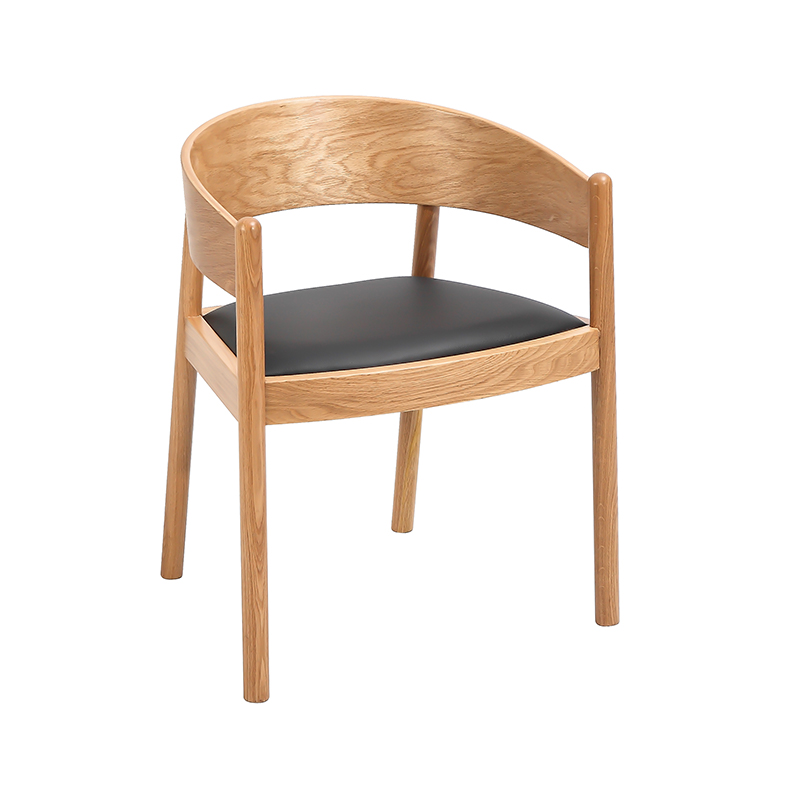
Most complaints in service — numb thighs, a chair that creeps when someone leans back, armrests that foul the table apron — are geometry problems, not quality problems. The frame can be flawless and the chair still fails. These are the ranges worth writing into a purchase specification.
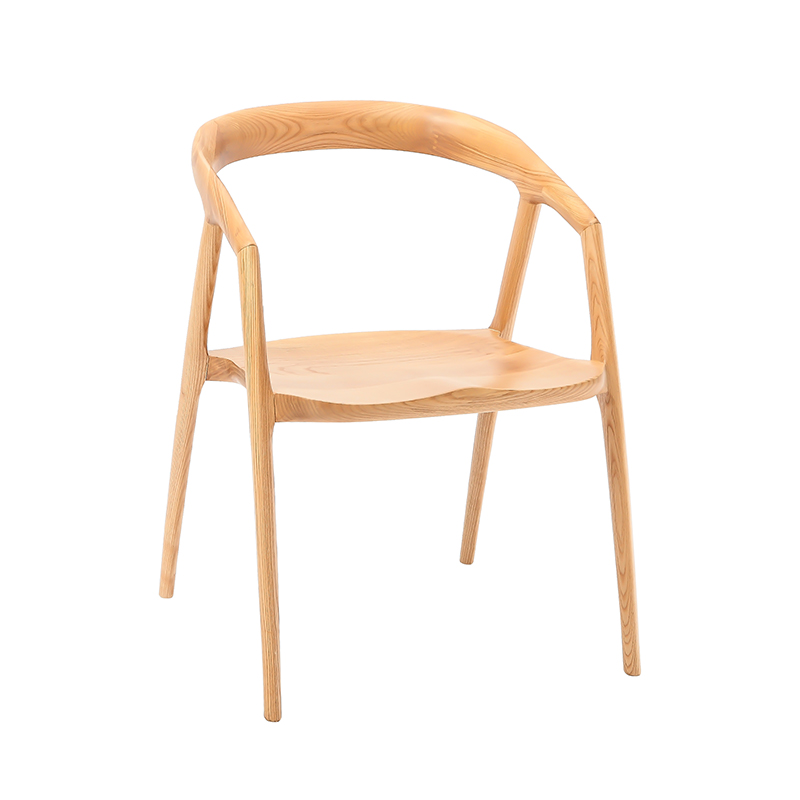
Small shaping changes do more than extra foam. A shallow scoop pressed into the seat surface changes effective depth by 10–15 mm and takes pressure off the thigh line without altering the frame drawing, which is why scooped seats appear so often in volume dining programmes.
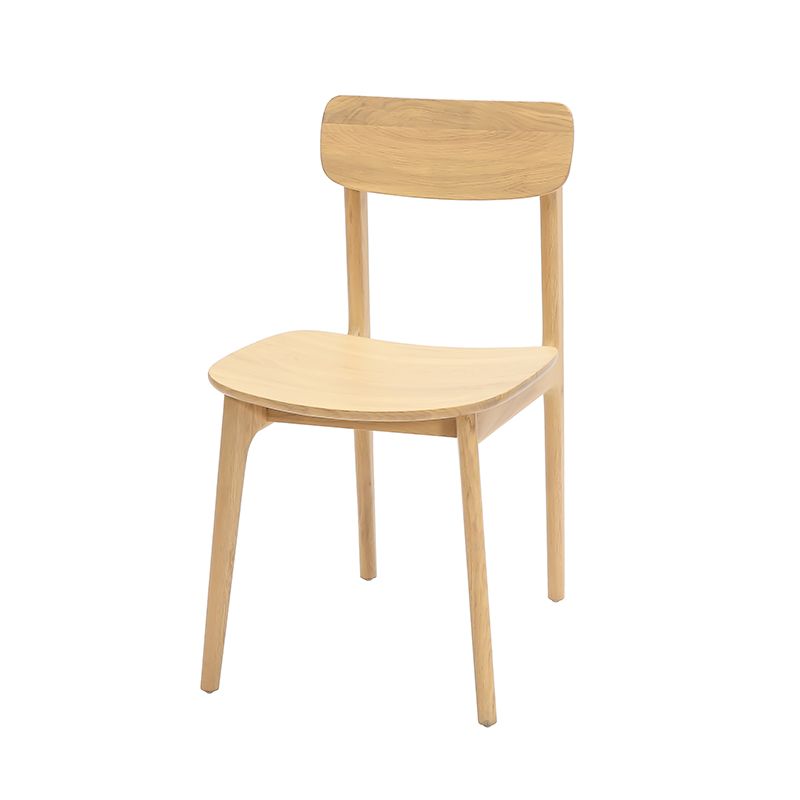 Arc Seat Dip Solid Wood Dining ChairA solid wood chair with a subtly dipped seat for thigh comfort, a clean silhouette, and a lightweight frame for flexible dining or study placement.View Product →
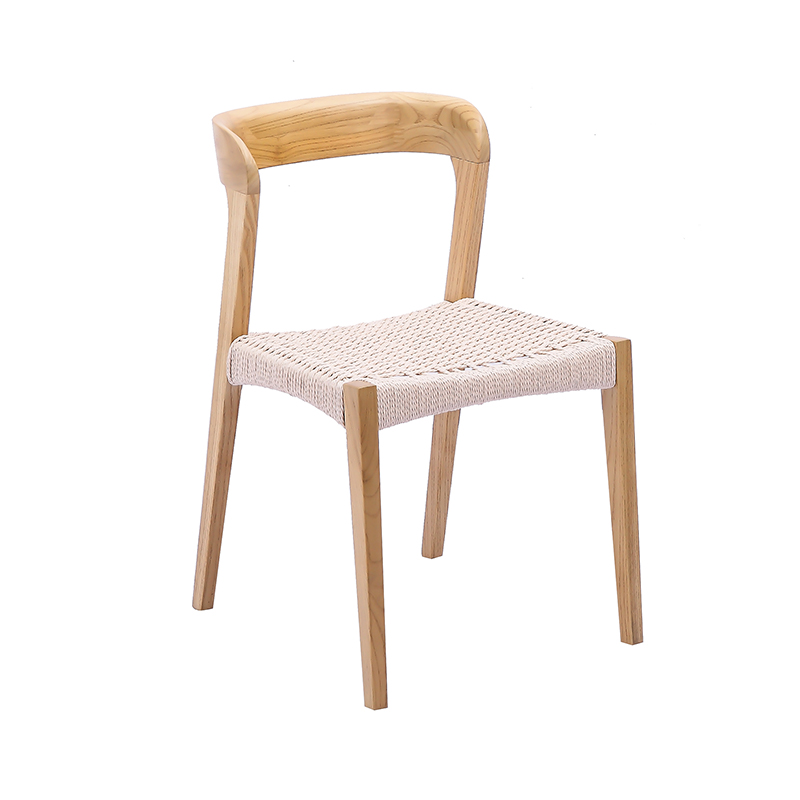
Woven contact surfaces behave differently again. Rattan and rope panels flex a few millimetres under load, spreading pressure across the sitting bones, but that flex is only predictable when the frame beneath is stiff enough to hold its shape season after season.
Solid hardwood
Beech and oak above roughly 600 kg/m³ density hold screw threads and resist compression set. Softwoods reach similar stiffness only with noticeably thicker sections.
Rattan and rope weave
Look for even strand tension, sealed cut ends and no gap where the weave meets the rail. Slack panels sag within a season; over-tight panels crack in dry air.
Upholstery build
Foam at 30–40 kg/m³ suits daily dining use. Below 25 kg/m³ the seat visibly loses height within a year, and no amount of fabric quality hides it.
Finish behaviour
A matte water-based lacquer hides handling marks and stays repairable. Judge adhesion with a cross-hatch test on a sample, not by running a thumb over the sheen.
Joinery is the characteristic buyers skip most often. A mortise-and-tenon or dowel joint that is glued, clamped and pinned survives years of sideways loading; a butt joint held by screws alone loosens as the wood seasons. The part-by-part anatomy of a chair sets out what to check at each joint during an inspection.
Ask any wooden seating line which characteristics fail in the field and the answer is rarely "the design". Failure clusters around a few predictable points. The distribution below is an illustrative pattern from typical seating quality reviews — use it to weight an inspection plan rather than as measured market data.
Share of field defects by origin
The practical reading is straightforward: spend inspection time on joints and moisture before you spend it on colour matching. Two acceptance criteria carry most of the weight — a moisture meter reading of 8–12% on incoming timber, and a cyclic side-load test on the finished frame, such as the 50,000-cycle protocol in BIFMA X5.1, with no measurable joint opening afterwards.
The same chair brief does not serve a kitchen and a hotel lobby. In a typical contract seating programme, priorities split roughly along these lines — an illustrative profile, useful for framing a specification discussion.
42% residential dining — priorities: seat depth, wipeable finish, stackability or storage.
28% hospitality — priorities: joint rigidity, foam density, contract-grade fabric abrasion.
18% bar and counter — priorities: footrest position, lumbar support, higher centre of gravity.
12% other contract — priorities: custom dimensions and compliance documentation.
Bar stools deserve separate treatment because their characteristics do not scale from dining chairs. At 75 cm seat height on a narrow footprint, the centre of gravity sits far higher, so a 30 cm leg spread and a footrest 20–25 cm below the seat stop guests from hooking their feet and rocking the stool. Lumbar support matters more here than in dining, because counter seating is where people linger over a laptop or a second coffee.
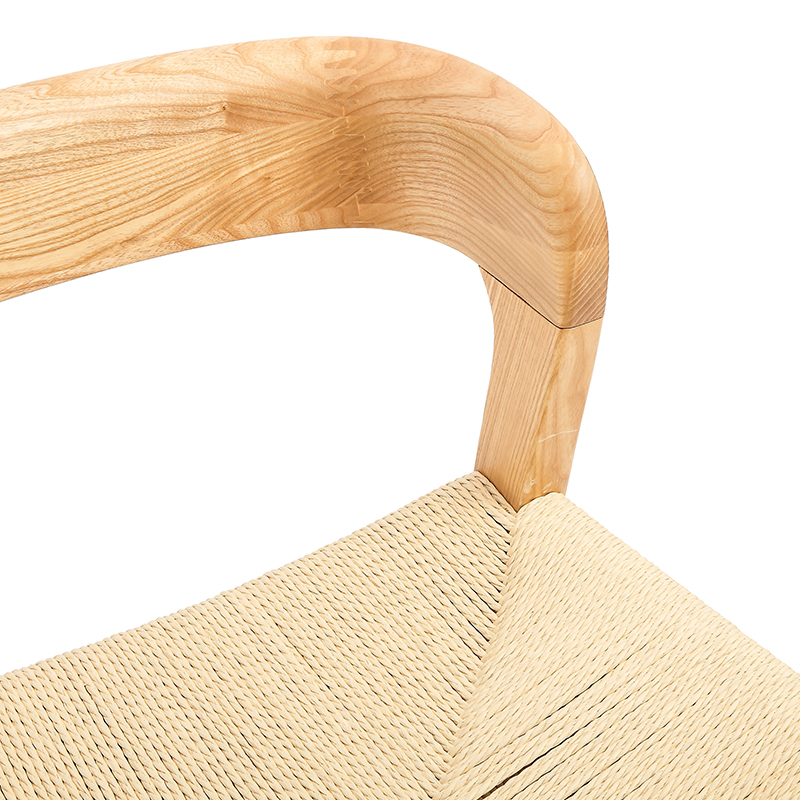 Rope Woven Bar Stool with Lumbar SupportA compact bar stool with rubberwood frame, lumbar-support backrest, and upholstered seat, offered in multiple finishes for home bars and lounges.View Product →
1. Fix the table first
Table height minus 25–30 cm of knee clearance sets the seat height. Choosing chairs before the table locks in an error.
2. Set depth and width
Measure the shortest and tallest intended user; 40–44 cm depth covers most adults without cutting behind the knee.
3. Test the back
Sit for ten minutes, not ten seconds. Support should land in the small of the back, not at the belt line.
4. Inspect the joints
Ask for a cutaway or a knock-down sample. Visible glue squeeze-out and pinned tenons are good signs, not blemishes.
5. Confirm documentation
Moisture readings, load-test reports and finish specification in writing, before the purchase order is signed.
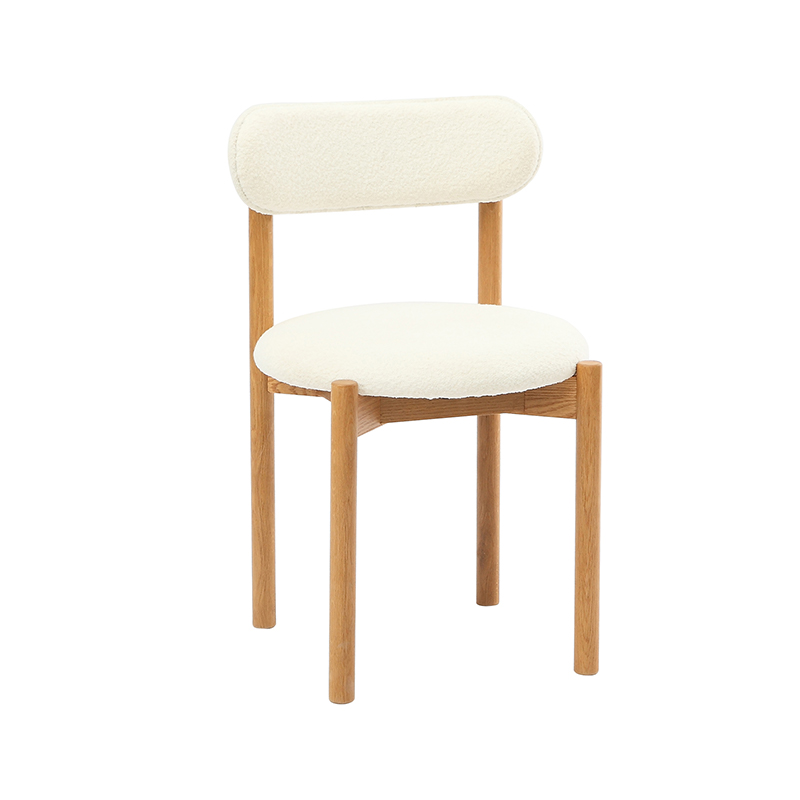
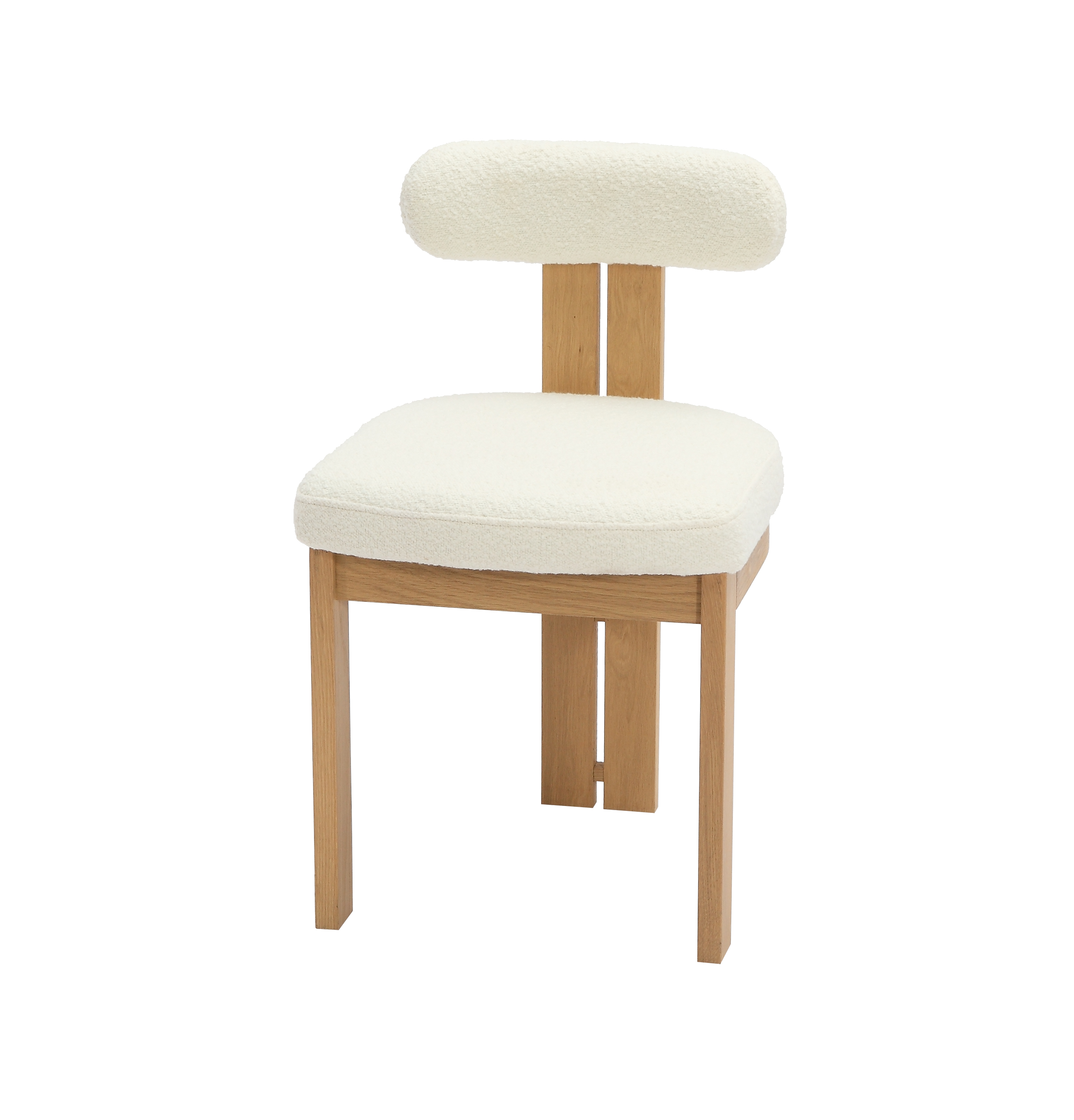
Where comfort is the deciding factor, a wraparound lumbar panel that holds the sitter through the whole curve of the back reduces the pressure peak on the sitting bones, and it is the characteristic most often noticed in a restaurant after the first hour.
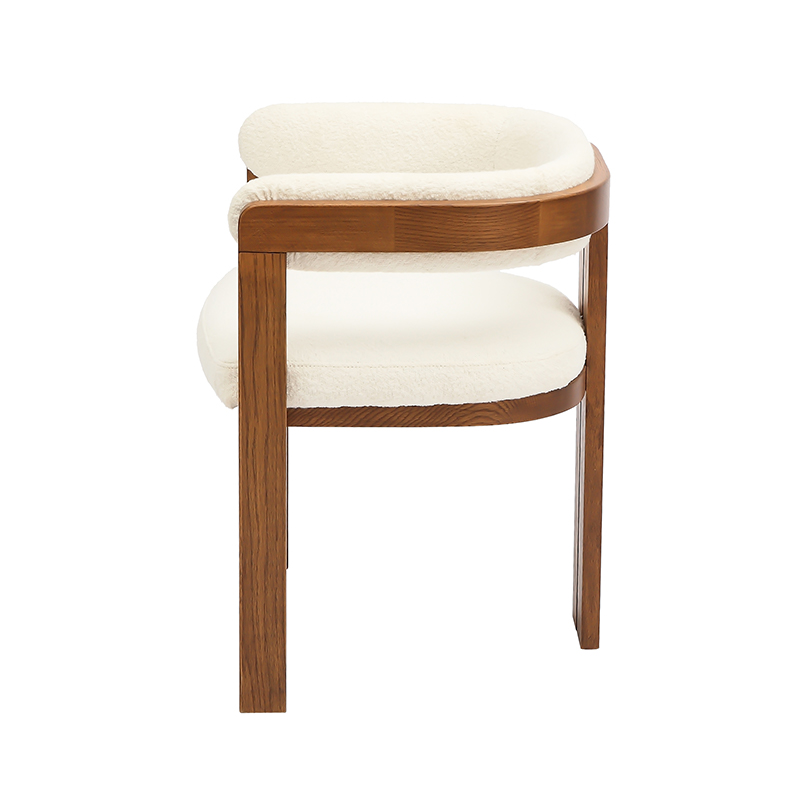 Tripod Oak Dining Chair with Wraparound Lumbar SupportA solid oak tripod dining chair with boucle upholstery and wraparound lumbar support, designed for comfortable extended seating in modern interiors.View Product →
No specification survives neglect, but wooden and woven seating is forgiving if a few habits are in place:
Material sourcing belongs in the same conversation: buyers increasingly ask for documented timber origin and low-emission finishes, and the sustainability commitments behind a chair range are now a procurement criterion rather than a marketing line. Chairs that meet these characteristics rarely come back as returns — they come back as repeat orders.




Innovation Oriented, Quality As Life.
Feel free to reach our if you want to collaborate with us, or simply have a chat.
Become a Client 
Product Category
Wood Upholstered Chair
Woven Wood Chair
Wood Bar Stools
Wood Table
FSC Certified Wood Chairs
Wooden Rattan Chairs
Solid Wood Dining Chair
Modern Wooden Dining Chair
Contact Information
 +86-571-63521858
+86-571-63525898
 furniture@hzchangshun.com
emilypeng@hzchangshun.com
 No. 88, Zhumufan, Yushan Township, Fuyang District, Hangzhou City, Zhejiang Province, China


 EN

 English
 中文简体
 Español