2026/10/26
At 7:40 on a Friday evening, the third stool along a twelve-seat bar counter sinks two centimetres and leans left. The leg has not snapped. The glue line where the leg block meets the seat has opened, and the dowel inside it has started to shear. Whoever manages that floor needs one decision before the weekend: repair it tonight or replace it before the next service.
That decision is easier than it looks, and it rarely depends on how the stool looks. It depends on which part failed, how deep the failure runs, and what the stool is expected to carry. What follows is the rule we apply when a broken bar stool comes back through a workshop, plus the joint details, repair times and replacement specifications that stop the same failure from repeating eighteen months later.
The short answer, before the detail
Content
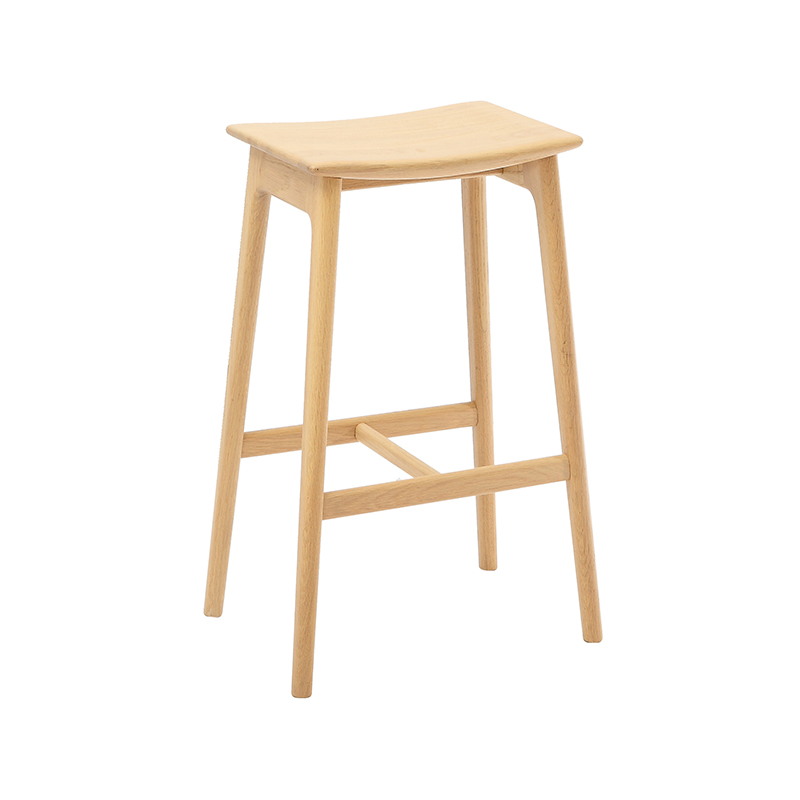
A bar stool is a lever with a small footprint and a high centre of gravity. The seat sits 65–75 cm off the floor, so every weight shift travels down four legs and one or two rungs instead of spreading across a wide base. That geometry explains the failure pattern far more than material price does.
Three loads matter. The first is static seat load. The second is the stepping load applied when a guest puts a foot on the rung and pushes down to climb up — a 100 kg guest can place 150–200 kg of point load on a single stretcher. The third is lateral sway, the small sideways rock that happens every time someone turns on the seat without lifting their feet. Wood tolerates the first two for years and eventually loses the third.
15 mm particle board or MDF grips screws well on day one and loses that grip after two humid seasons. 18 mm plywood with nine or more plies resists screw pull-out much better. Solid wood seats are repairable but move with moisture, so they need slotted fixing points.
The most common break point on any wooden stool. A dowel glued into a cross-grain block is strong when new and gradually starved of glue as the seat shrinks and swells. Look for a thin brown line of old glue squeezing out at the shoulder.
A rung fixed with two screws into end grain will loosen within a season of heavy use. A through-tenon with a wedge, or a steel bracket under the rung, carries the stepping load without relying on screw threads in short grain.
Low backrests fail when the two fixing screws work loose and the sitter leans back against nothing. Check monthly on contract stools; the screws are usually accessible from underneath the seat.
Adjustable stools rarely break at the wood. They fail at the plastic collar, the bearing race or a worn gas lift that slowly sinks under load. These parts are replaceable, but only if the model is still supported.
A collapsed seat pad is a comfort failure, not a structural one, but it hides cracked frames underneath. Foam below 30 kg/m³ flattens within a year in bar seating, where sitters perch rather than settle.
If you are checking a frame before you buy rather than after it breaks, this joint and frame inspection guide walks through the same points in buying order.
Repair is worth doing when the surrounding timber is intact and the stool will not be dragged across a floor twice a night. The comparison below is the one we use to quote a fix instead of a replacement.
When we sort returned wooden bar stools by where the damage starts, the picture is consistent enough to plan around. The seat joint dominates, but the footrest is the quiet offender: it is the second most common failure point and the part nobody inspects until a guest steps up and the rung gives way.
The practical read: budget for a joint repair roughly once every two years per twenty stools, and inspect footrest fixings every quarter. A rung that flexes under a thumb is already carrying load through a screw rather than through wood, and it will fail on a busy night rather than a quiet one.
The right replacement depends less on style than on seat hours per day. A home kitchen island stool sees perhaps two hours of use daily; a bar counter stool in a busy venue sees ten, with cleaning chemicals and floor drag on top. That difference should drive the specification far more than the finish.
Hospitality and bar counters — 42%. Highest seat hours, highest load variance. Specify a tested rating, wipe-clean seats and a footrest the cleaner will not trip over.
Home kitchen islands — 28%. Comfort and floor protection matter more than load testing; felt glides and a shaped seat beat a heavier frame.
Cafés and quick-service seating — 18%. Smaller footprints and backrests that survive being pushed under a table a hundred times a day.
Office breakout and showroom — 12%. Short bursts of use, so aesthetics and stacking carry more weight than durability.
In café and hotel settings, the pair that fails least often in our experience is a curved backrest with a wipe-clean seat pad: the curve takes the sideways sway off the joints, and the pad keeps the foam out of the fight. A leather-look seat also survives daily sanitising better than an open weave.
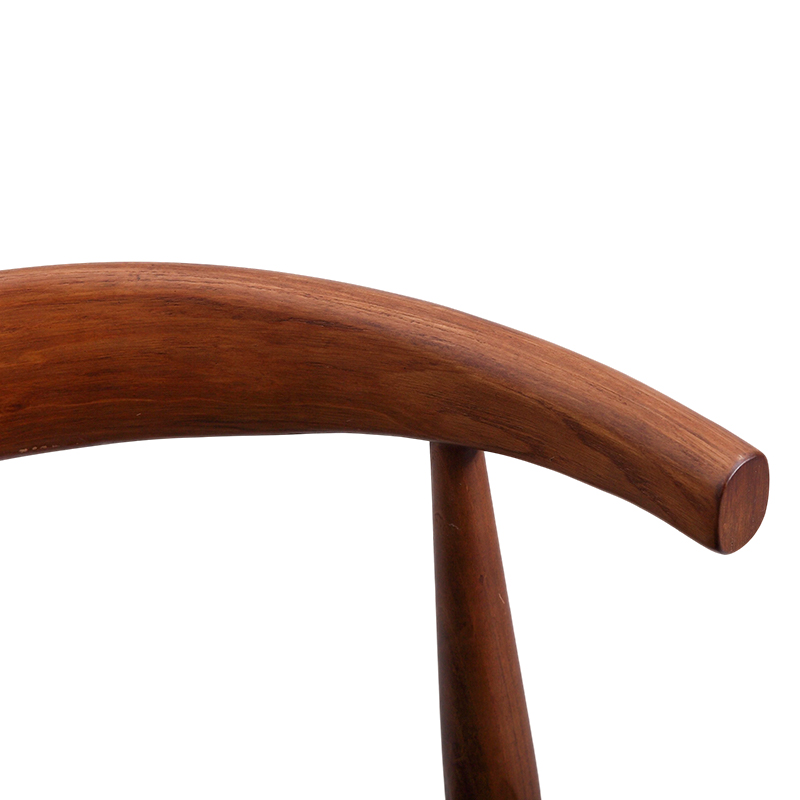 Leather Seat Bar Stool with Curved BackrestSolid oak bar stool with wipe-clean PU leather upholstery and a curved backrest, relevant where easy cleaning and back support are priorities.View Product →
If the diagnosis points to replacement, the goal is not to buy the same stool again but to remove the failure mode. Our wooden bar stool range is built around the same four variables, and the sequence below is how we brief a factory order.
Run a simple payback: a low-cost stool at 90 that fails every fourteen months costs about 77 per year plus disposal and staff time. A stool at 150 with a five-year service life costs 30 per year. The expensive-looking purchase is the cheaper one over any realistic contract term — and the gap widens once labour for fitting and delivery is counted.
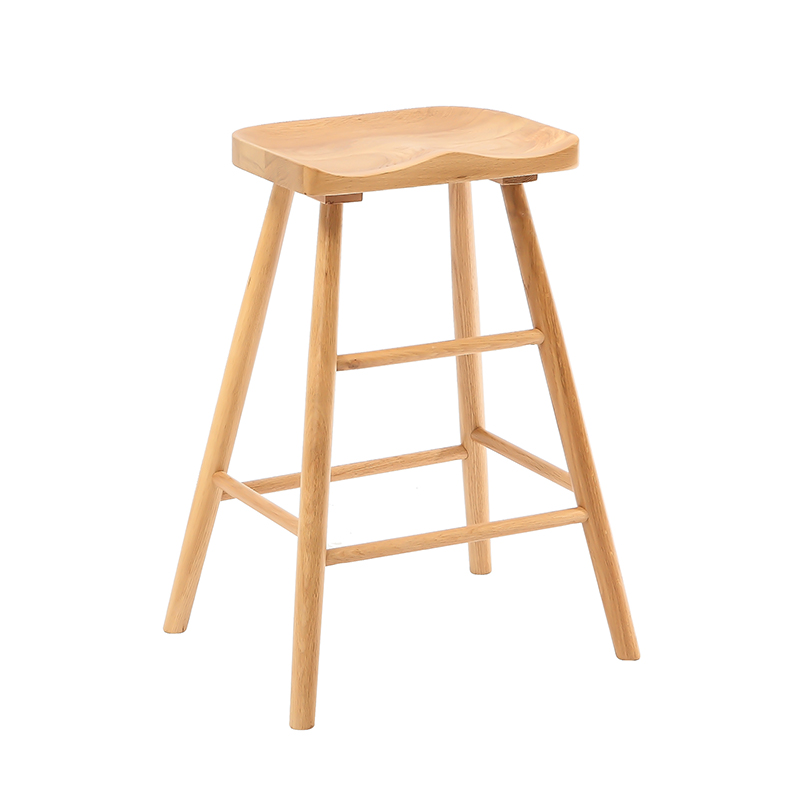
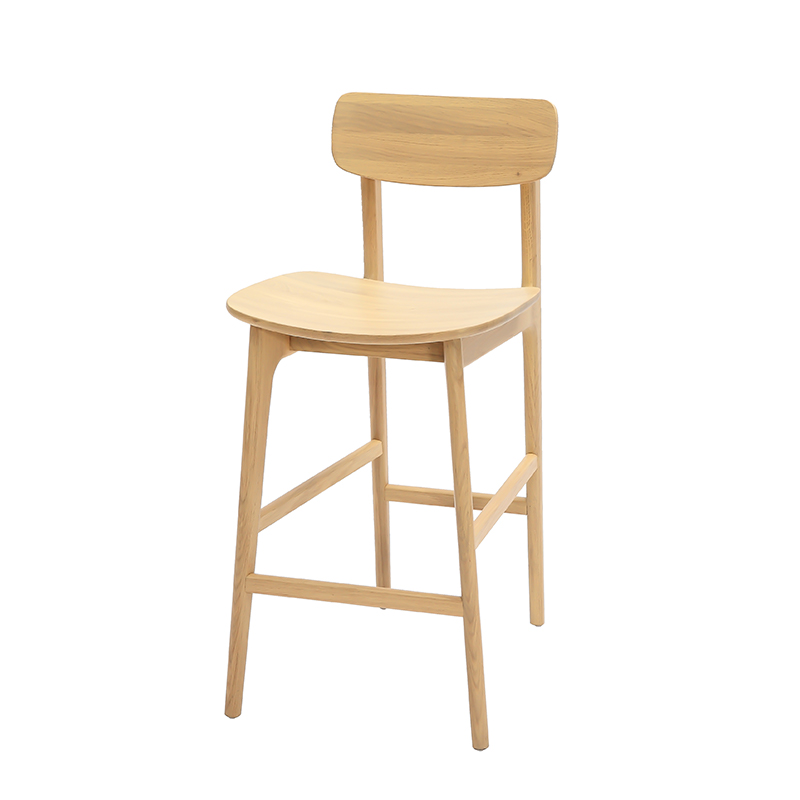 Arc Seat Dip Wood Bar Stool with BackrestSolid wood bar stool with a contoured dipped seat and lumbar backrest, offering a sturdy four-legged frame for kitchens, cafés and bars.View Product →
Most "broken" bar stools are maintenance failures before they are manufacturing failures. Four checks a quarter will catch nearly all of them: twist each leg by hand, press down hard on the footrest with one foot, tighten any accessible screws, and look at the glides for wear that lets water sit under the leg.
Keep interior humidity between roughly 40% and 60%. Below that, solid wood seats shrink and joints open; above it, MDF and particle board swell and lose screw grip. Clean with a damp cloth and a pH-neutral cleaner — solvent wipes dry out lacquer and, on woven seats, fray the rope fibre. For woven surfaces, a soft brush and a dry cloth work better than a wet sponge.
On compliance, ask for reports per production batch rather than a single file from 2019. Commercial seating is usually assessed against EN 16139 for strength, durability and stability, with EN 1022 covering stability. Wood-based panels should meet E1 or CARB Phase 2 formaldehyde limits, and upholstery foam sold into the United States should reference California TB 117-2013. None of these replace a load test on the finished stool, and none of them matter if the footrest bracket is held by two short screws.
Keep the broken part when you claim a warranty. A seat that has split through the middle tells a manufacturer which substrate grade was used; a leg with a clean shoulder break tells them the glue line was starved. Photographs of the failure are worth more than a description.
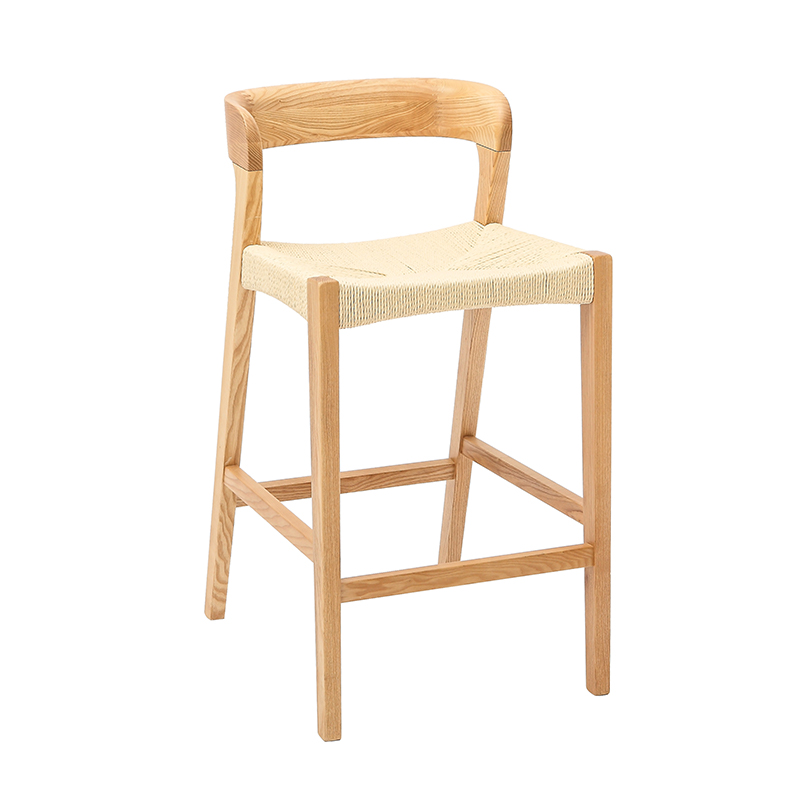
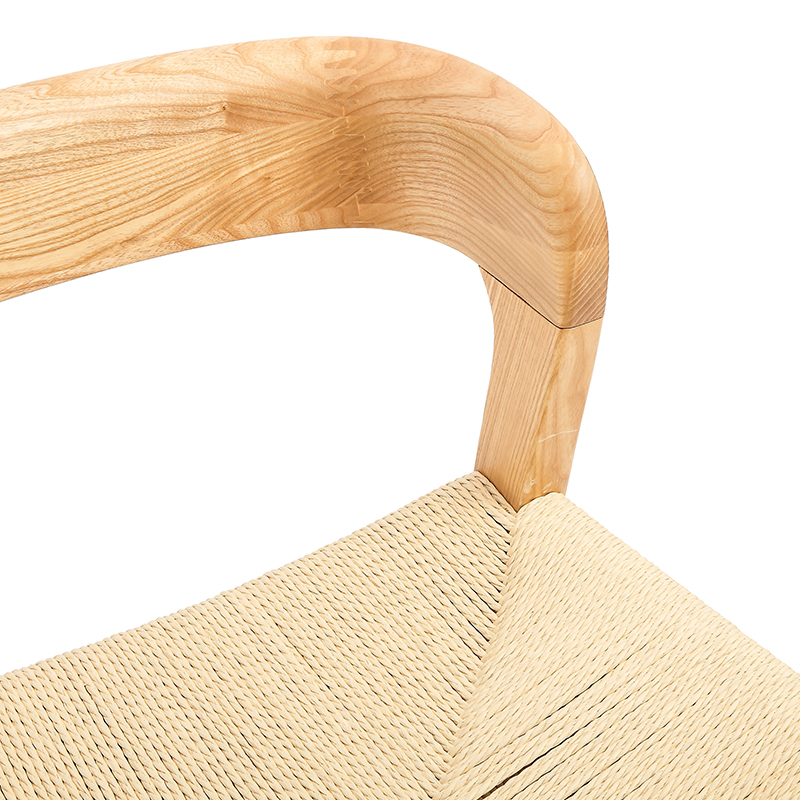 Rope Woven Bar Stool with Lumbar SupportRubberwood-framed bar stool with fabric upholstery and lumbar support, available in multiple finishes and heights for compact home or commercial seating.View Product →
So the stool leaning at the end of the bar counter on Friday night gets a reprieve if the failure is a glue line, a rung or a worn pad — clean it, glue it, clamp it, and check the other nineteen for the same symptom. If the seat has split through or the tenon has gone inside the block, it is finished, and the useful decision is what to specify next: correct seat height, a stated load rating, a joint that does not rely on end-grain screws, and a footrest built for someone stepping up in a hurry.
That is also the cheapest diagnostic tool you have. Before reordering anything, put a thumb on every footrest and twist every leg; the stools that move are the ones that will break, and they will break on the night you can least afford it.




Innovation Oriented, Quality As Life.
Feel free to reach our if you want to collaborate with us, or simply have a chat.
Become a Client 
Product Category
Wood Upholstered Chair
Woven Wood Chair
Wood Bar Stools
Wood Table
FSC Certified Wood Chairs
Wooden Rattan Chairs
Solid Wood Dining Chair
Modern Wooden Dining Chair
Contact Information
 +86-571-63521858
+86-571-63525898
 furniture@hzchangshun.com
emilypeng@hzchangshun.com
 No. 88, Zhumufan, Yushan Township, Fuyang District, Hangzhou City, Zhejiang Province, China


 EN

 English
 中文简体
 Español