2026/11/09
An acacia dining set that has spent two summers on an open deck usually shows the same three symptoms: a silver-grey surface, hairline cracks running along the end grain, and joints that have started to lift. None of that is a manufacturing defect. It is what happens when a dense, moisture-responsive hardwood lives outside without a barrier that gets renewed on schedule.
Acacia is a genuinely good outdoor timber — hard, tight-grained and naturally resistant to rot — but it is not teak, and it will not maintain itself. The rules below cover most of what keeps a set serviceable for a decade, and they cost far less than replacing it.
The short version
Content
Most failures start with dirt, not with sun. A film of pollen, dust and cooking grease holds water against the surface, and in the shade it stays damp for hours after rain. That is the environment mildew needs, and it is also where the finish breaks down first — usually along the top rail and the armrests, where hands rest.
If you want the full sequence written out with dwell times and rinse steps, our step-by-step wooden patio furniture cleaning guide covers it in more detail.
Understanding the three mechanisms below makes every later decision easier, because they explain why an oiled table needs attention in August while a varnished one may look fine until it suddenly peels.
Acacia swells in humid weather and shrinks in dry heat. Each cycle stresses glue lines and end grain. Wide glued panels move noticeably more than narrow boards, which is why edge-glued table tops cup before chair frames do.
The silver-grey patina is surface lignin breaking down. It is cosmetic, not structural — but a degraded, open surface absorbs water faster, so grey timber without oil sits wetter for longer.
Steel screws, brackets and threaded inserts corrode quietly, then a loose joint traps water inside the mortise. Checking fasteners once a season prevents more damage than any finish.
The care burden is largely decided at the point of purchase. Four construction details reduce it: narrow staves rather than wide glued panels, joints that can drain and breathe, stainless or galvanised hardware, and a form that folds, stacks or lifts off the ground for the off-season.
For balconies and small patios, a folding frame with a woven seat is the practical choice — it can be carried inside in ten minutes when a storm is forecast, and the open weave never holds a puddle.
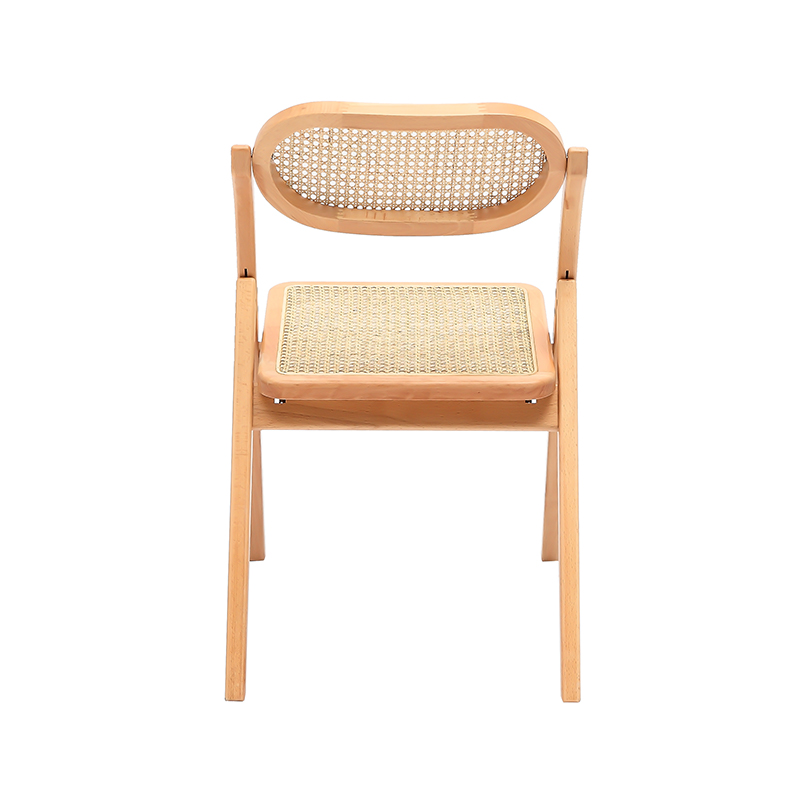 Folding Beech Wood Chair with Rattan Seat and BackA folding beech-frame chair with a breathable rattan seat and back, suited to balcony or veranda use where it can be stored away quickly.View Product →
On a covered veranda, where rain never lands directly but humid air still moves through, an oval table works well because the lack of sharp corners means fewer worn edges to refinish, and a single sealed top is quick to wipe after a meal.
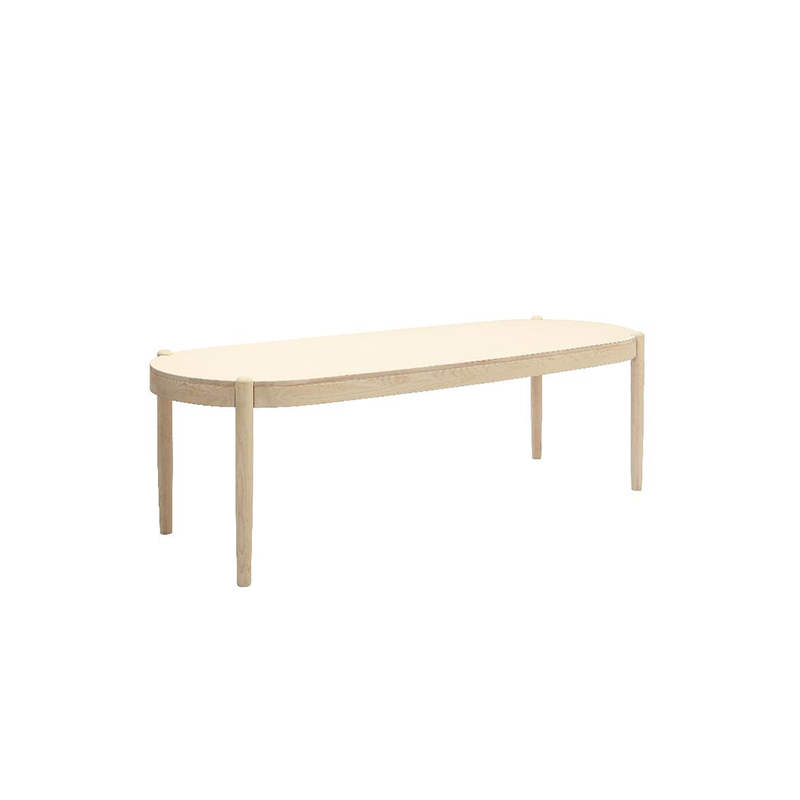 Oval Solid Wood Dining Table with Rounded EdgesAn oval solid-wood dining table with smooth rounded edges and tapered legs, offering a soft profile for family meals and smaller dining spaces.View Product →
Oil and film-forming finishes behave in opposite ways, and mixing them on the same piece creates problems. Once a penetrating oil is in the grain, a polyurethane topcoat will struggle to bond.
Finish life is not a fixed figure. It tracks the exposure the piece actually sees, and salt spray, chlorinated splash water and constant humidity shorten it dramatically. The bars below show realistic intervals before water stops beading.
The practical test is a tablespoon of water on a horizontal rail. If it beads and runs, the finish is intact. If it darkens the wood and sits there, you are already late.
Exposure mix decides how much maintenance a household really faces. Most sets live somewhere partially protected, which is why a twice-yearly deep clean covers the majority of owners.
Timing matters more than technique. Oiling in late autumn, before the wet season, protects the wood through the months when it cannot dry out; oiling in midsummer heat simply bakes into the surface.
Tighten every bolt, replace corroded screws, deep clean, dry 24 hours, then sand lightly at 120 then 180 grit along the grain and apply two thin oil coats, wiping off the excess within half an hour.
Wipe down every two to three weeks. Touch in dry patches on armrests and table edges as soon as they appear, before hairline cracks open.
Run the water-bead test. If it fails, clean and re-oil rather than adding oil over old dirt, which produces a blotchy, sticky surface.
Clean, dry and oil before the wet season. Cover with breathable fabric, leave an air gap underneath, lift legs onto blocks, and check monthly on dry days.
Hairline surface checks under a millimetre wide and stable are normal on acacia and are best left alone; filling them usually looks worse within a season. Checks that trap water and stay dark for days are different — clean them, let them dry, then work a small amount of oil into the crack with a cloth rather than a filler.
Procurement teams and retailers increasingly ask where the timber comes from and whether the finish chemistry is low-solvent. Our notes on sustainable materials and sourcing explain how plantation-grown acacia and water-based finishes fit into that conversation.
Acacia outdoor furniture rarely fails because the wood was wrong. It fails because a fifteen-minute job was postponed twice a year until the surface had greyed, opened and started holding water. Clean it while the dirt is still loose, oil it while the grain is still dry, and check the screws before they loosen — that is the whole method, and the set will still be worth re-oiling long after the first decade.




Innovation Oriented, Quality As Life.
Feel free to reach our if you want to collaborate with us, or simply have a chat.
Become a Client 
Product Category
Wood Upholstered Chair
Woven Wood Chair
Wood Bar Stools
Wood Table
FSC Certified Wood Chairs
Wooden Rattan Chairs
Solid Wood Dining Chair
Modern Wooden Dining Chair
Contact Information
 +86-571-63521858
+86-571-63525898
 furniture@hzchangshun.com
emilypeng@hzchangshun.com
 No. 88, Zhumufan, Yushan Township, Fuyang District, Hangzhou City, Zhejiang Province, China


 EN

 English
 中文简体
 Español