2026/08/17
By late August, the wood patio furniture that looked fine in June is often a different story. The tabletop has a gray film, the chair arms feel sticky with tree sap, and a few dark specks along the seat slats point to early mold. You do not need to replace anything, and you do not need harsh chemicals. The practical sequence is shorter than most people expect: identify the finish, clean with the right mild solution, protect the surface, and keep up a few simple habits that prevent heavy buildup. This guide walks through that sequence in the order it actually happens on a patio.
Content
The right cleaning method depends less on the species of wood and more on what is on the surface. Bare wood absorbs water and cleaners differently than painted, varnished, or oiled wood. Using the wrong approach—for example, scrubbing bare teak with a deck stripper, or running a pressure washer over a painted pine table—creates more work than it solves.
Three finish conditions cover almost all outdoor wood furniture:
| Finish condition | Typical woods | Correct approach |
|---|---|---|
| Bare unfinished | Teak, cedar, eucalyptus | Wood-specific cleaner; sand or re-oil after cleaning |
| Painted or stained | Pine, spruce, some hardwoods | Mild soap and water; avoid abrasive pads |
| Oiled or sealed | Teak, mahogany, acacia | Soap and water; reapply oil or sealer when dry |
If you are buying new pieces, the same logic applies. The species and finish of a table determine how much maintenance it will need, and our guide to wooden tables, wood types and sizing walks through how different finishes behave outdoors before you commit.
Start with the assumption that a normal season's dirt comes off with mild soap, water, and moderate brushing. No special products are required.
This routine handles roughly 90 percent of cleaning cases. It is gentle enough to repeat every four to six weeks during heavy use. If dirt remains after washing, it is usually either embedded in the grain or bonded by mold or sap, which is what the deep-cleaning section covers next.
Design matters here too. If you are choosing chairs partly by how easy they will be to clean, look for smooth surfaces and few tight crevices. The Arc Seat Dip Wood Chair, for example, curves without sharp seams, so dirt and pollen have nowhere to accumulate.
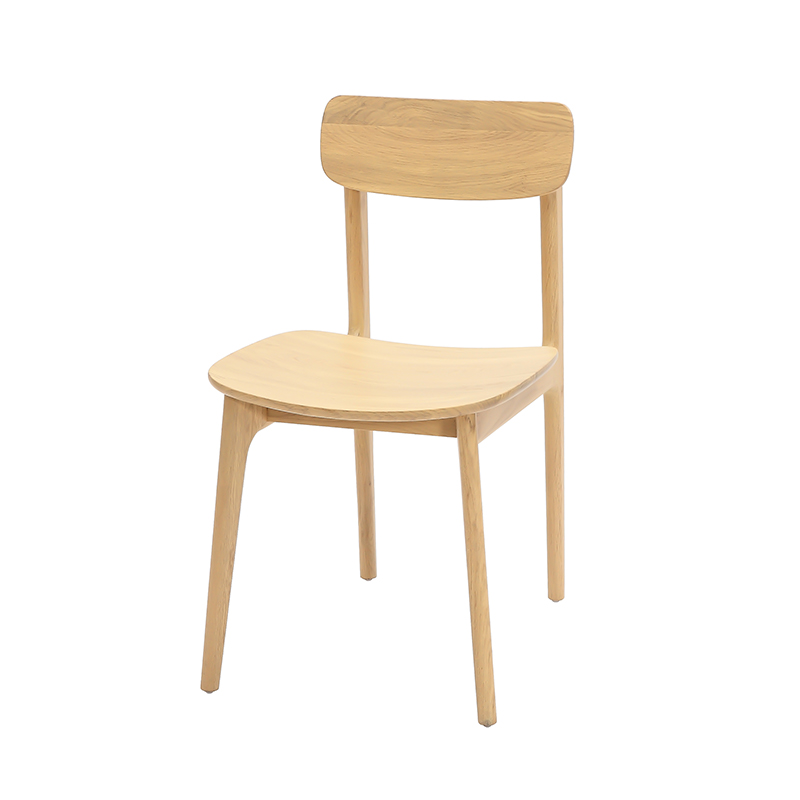 Wholesale Arc Seat Dip Wood Chair Suppliers, Factory - Hangzhou Changshun FurnitHangzhou Changshun Furniture Co., Ltd is Wholesale Arc Seat Dip Wood Chair Suppliers and Factory in China, The Arc Seat Dip Wood Chair fe...View Product →
Gray film, green patches, and dark sap stains are the three problems that soapy water will not fully remove. Each responds to a specific treatment rather than a single miracle product.
Graying is natural oxidation of the wood surface, and in most cases it is purely cosmetic. To remove it, use an oxygen-based wood cleaner or a deck brightener. Follow the dilution on the label, apply it with a soft brush, let it sit for the specified time, and rinse. For deeper graying, follow up with light sanding using 120-grit paper once the wood is dry. Sand along the grain, never across it, and stop as soon as the fresh wood color shows.
For mold, the reliable option is an oxygen bleach product, usually sodium percarbonate, rather than chlorine bleach. Chlorine works on the surface, but it also lightens and weakens the wood fibers around the spot. Mix the oxygen bleach with warm water, apply it with a brush or pump sprayer, wait about fifteen minutes, and rinse thoroughly. If you are not sure whether a dark spot is mold or dirt, dab it with a little bleach solution. Mold lightens noticeably within a few minutes; dirt does not.
Tree sap softens with rubbing alcohol. Dampen a cloth with alcohol, blot the spot until it gives, and wash the area with soapy water afterwards to remove the residue. The same approach works for adhesive residue from stickers or tape.
Chairs with woven sections need the same treatments but ask for a little more patience. If the chair has a woven base, such as the Woven Rattan Base Wood Chair, check between the strands for trapped leaves and dust before wet cleaning, and use a narrow soft brush or a vacuum nozzle to get into the gaps. The advantage of an open weave is that water drains and air circulates, which stops the damp conditions mold depends on.
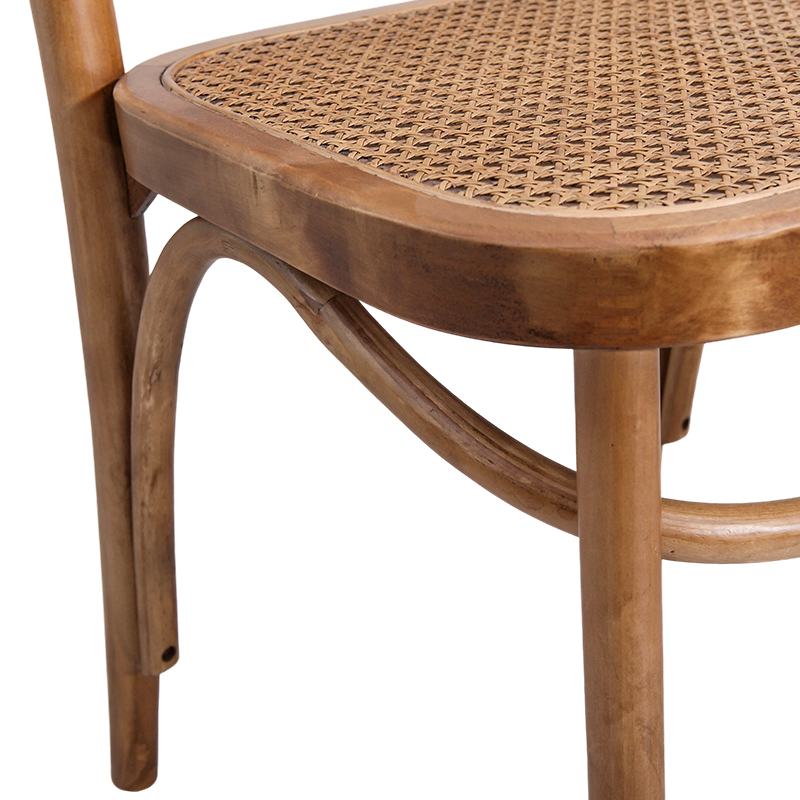 Wholesale Woven Rattan Base Wood Chair Suppliers, Factory - Hangzhou Changshun FHangzhou Changshun Furniture Co., Ltd is Wholesale Woven Rattan Base Wood Chair Suppliers and Factory in China, This Woven Rattan Base Wo...View Product →
A few rules apply across all deep cleaning: never use a pressure washer on wood, never scrub with a wire brush, and never reach for chlorine bleach as your first option. Work gently and let the chemistry do the work.
Once the wood is clean and dry, take the extra hour to put protection back on. A surface left bare will gray again within a season.
For oiled woods, apply teak oil or a penetrating wood oil with a cloth, let it absorb for about ten minutes, and wipe off the excess. One coat after cleaning is usually enough unless the wood looks very dry.
For painted or stained pieces, inspect for chips. Latex paint is easy to touch up. Sand the damaged area lightly, apply primer if bare wood is exposed, then repaint.
For sealed pieces, do a quick water test. Sprinkle a few drops on the surface. If the water beads up, the sealer is still working. If it soaks in, the piece needs a fresh coat of exterior varnish or water-repellent sealer.
Choosing the right product matters as much as applying it. A deck sealant is not the same as furniture oil. Read the label for outdoor use and for your specific wood type. When in doubt, test the product on an inconspicuous spot first.
The easiest cleaning is the one you never need to do. A few habits cut months of grime out of the calendar.
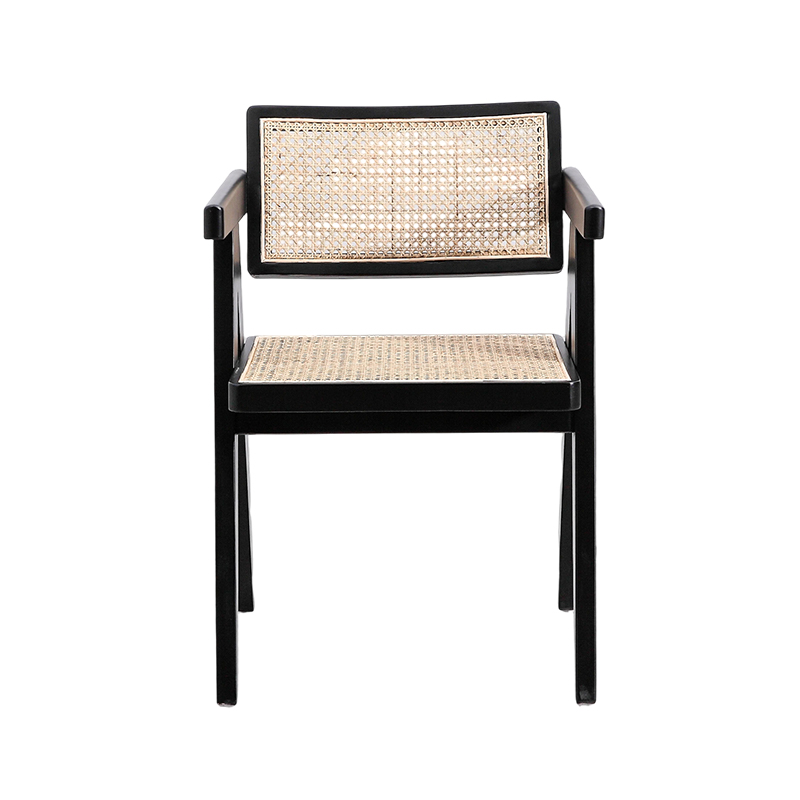
Storage is the part most people underestimate. If you have folding chairs, use that feature. A folding model such as the Folding Wood Chair with Rattan Contact Surface can be carried indoors in under a minute before a storm, which removes the frame from rain and sun exposure entirely. That single habit adds years to the chair and keeps cleaning to a minimum.
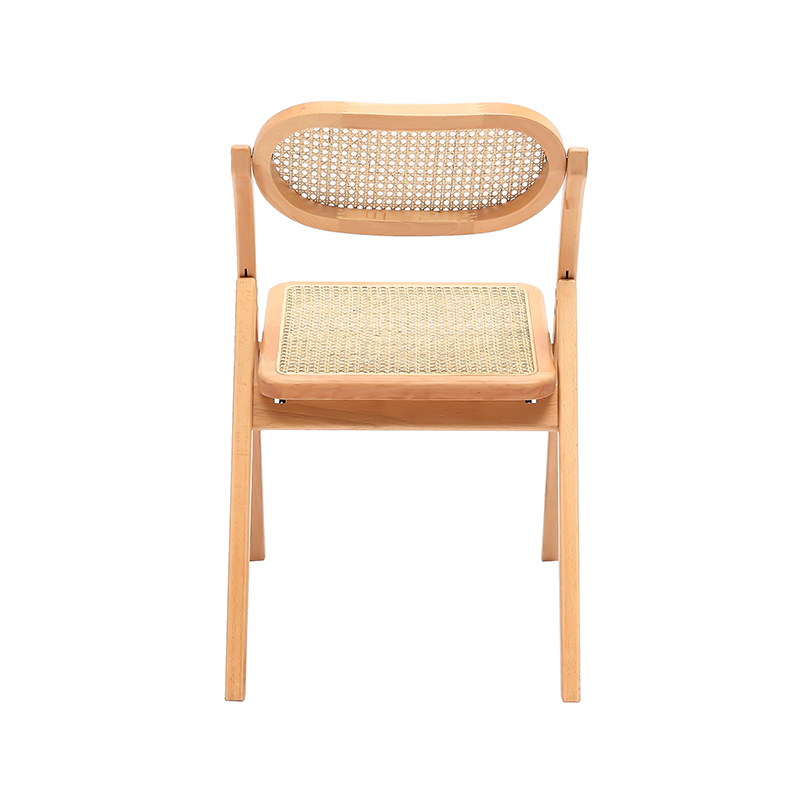 Wholesale Folding Wood Chair with Rattan Contact Surface Suppliers, Factory - HaHangzhou Changshun Furniture Co., Ltd is Wholesale Folding Wood Chair with Rattan Contact Surface Suppliers and Factory in China, This Fo...View Product →
Cleaning restores surfaces, not structure. If a chair wobbles because the joint is rotted, if the wood has deep splits that catch a fingernail, or if sections have softened from years of moisture, those are structural problems. No cleaner will fix them. The repair options are gluing, replacing a rail, or cutting out a damaged section. All are doable, but on a mid-priced chair the labor is often hard to justify. If the frame is actually decaying, replacement is the honest answer.
When you do buy replacements, consider how the design will behave in your climate, not just how it looks in photos. The shape of the seat, the angle of the back, and the gaps between slats all affect how quickly dirt builds up and how comfortable the chair feels after an hour. Our article on how chair design influences daily comfort, posture, and interior harmony offers a useful frame of reference for those choices.
The core of wood patio furniture care is not a long list of specialty products. It is a sequence: know the finish, clean with mild pressure in the direction of the grain, protect the surface before the weather attacks it, and fix small problems before they become big ones. Clean once, protect, and then stay ahead. A solid wood chair that goes through that routine every season will outlast one that is left untouched until it turns gray.




Innovation Oriented, Quality As Life.
Feel free to reach our if you want to collaborate with us, or simply have a chat.
Become a Client 
Product Category
Wood Upholstered Chair
Woven Wood Chair
Wood Bar Stools
Wood Table
FSC Certified Wood Chairs
Wooden Rattan Chairs
Solid Wood Dining Chair
Modern Wooden Dining Chair
Contact Information
 +86-571-63521858
+86-571-63525898
 furniture@hzchangshun.com
emilypeng@hzchangshun.com
 No. 88, Zhumufan, Yushan Township, Fuyang District, Hangzhou City, Zhejiang Province, China


 EN
EN

 English
 中文简体
中文简体 Español