2026/10/13
A chair back is usually approved from a catalogue photo and rejected in a dining room eighteen months later. The back of a chair is the most heavily loaded surface on the product: it absorbs the full lean of every guest, it resists the racking that starts at the seat rails, and on bar stools it also takes the downward push of someone climbing onto the seat. When a back fails, the wood itself is rarely the cause. The joint, the angle and the panel behind the shoulder blades are.
Buyers who avoid that outcome make decisions in the same order: define the load, fix the geometry, then choose material and style. Style comes last, because it is the cheapest thing to change and the easiest thing to sell.
What actually decides whether a chair back lasts
Content
"Back of chair" is a description, not a specification. On a purchase order it can mean the whole rear assembly or only the surface that touches the sitter, and suppliers will read it whichever way suits their quotation. Name the parts instead:
Terminology drifts between markets, and that drift causes real disputes. A "back upright" is a stile. A "loose back cushion" is a separate component from the frame it rests against. If your specification is being written from scratch, a parts-of-a-chair anatomy breakdown is a useful checklist to work from, because it separates the load-bearing frame from the comfort layer.
Five configurations cover most of the wooden and woven chair market. Each trades comfort, cleaning effort and repairability differently.
Turned spindles set into the crest and seat rails. Light, visually open and slightly flexible, which gives natural give under a lean. The weak point is the spindle-to-rail joint, so look for a shoulder rather than a bare dowel.
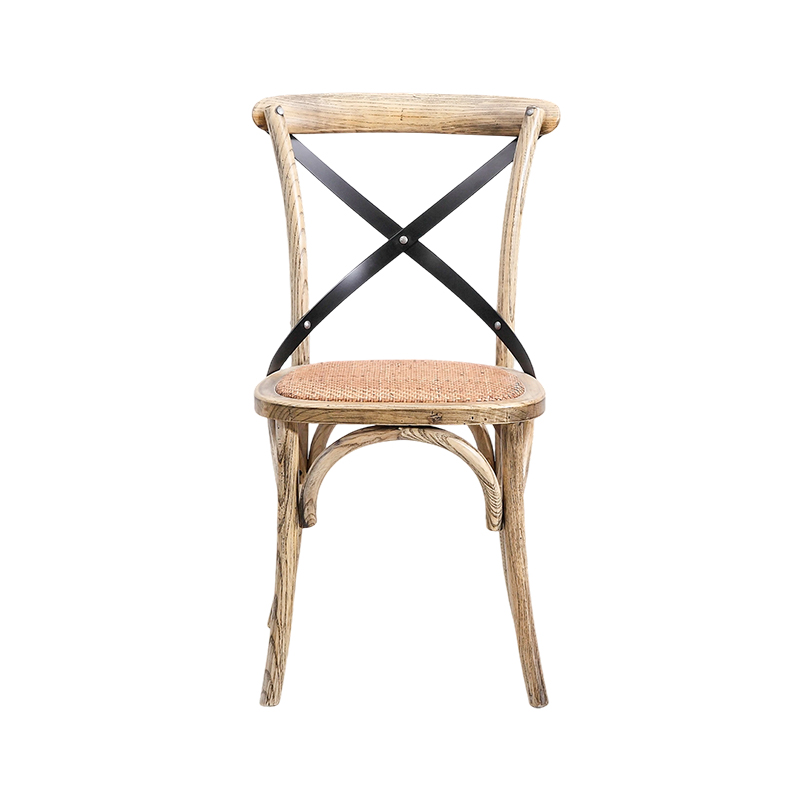
Two crossing slats brace the back diagonally and add stiffness, often with a rattan mat as the contact surface. A good choice where the back gets pushed against tables and walls in high-traffic dining rooms.
Horizontal slats are the easiest back to wipe down and the simplest to repair. Contact pressure concentrates on the slat edges, so a curved slat profile or a small pad helps on longer sittings.
The panel conforms to the sitter instead of pushing the spine forward, and it breathes in warm rooms. Tension is maintained by moisture, so dry, air-conditioned interiors need planned attention.
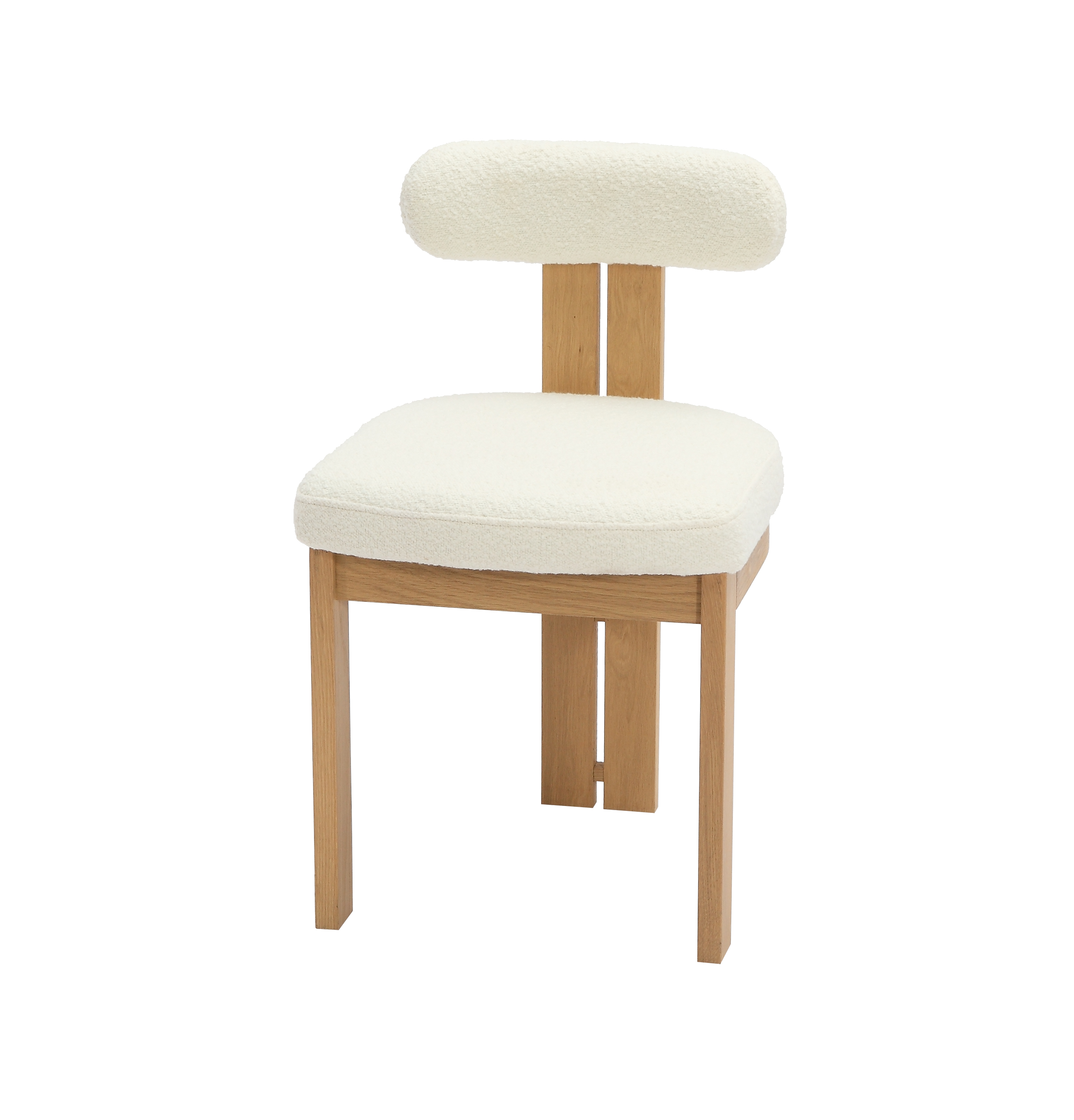
Foam over a plywood or solid frame spreads pressure best and hides fastening hardware. It costs the most to build, clean and re-cover, and foam quality decides whether it still looks new after two years.
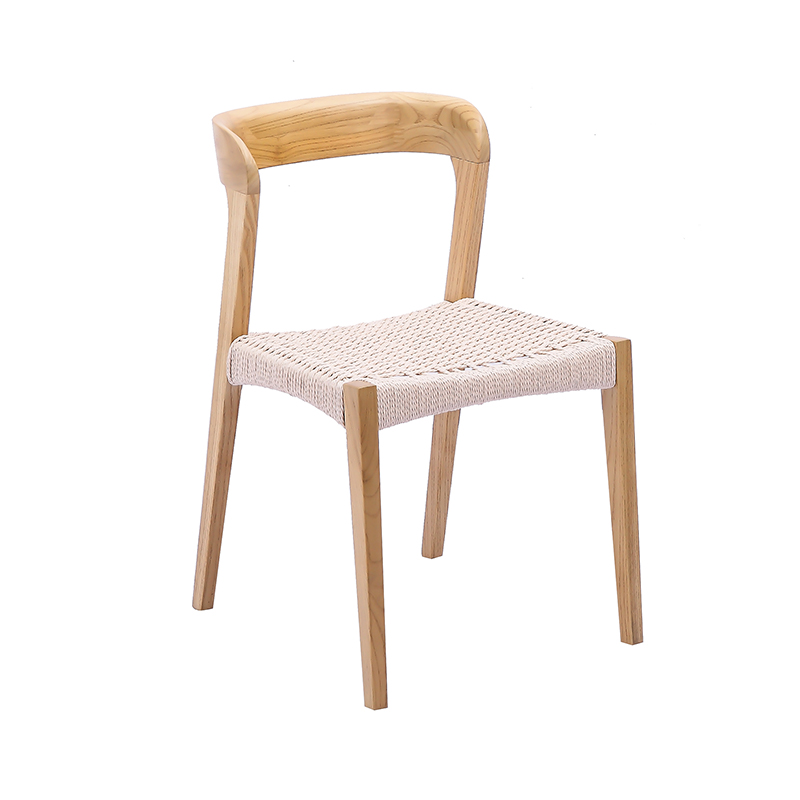
 Wholesale Spindle Back Solid Wood Dining ChairSolid wood spindle-back chair with ergonomic curve and W48 x D53 x H90 cm dimensions; suited to dining rooms, studies, or casual corners.View Product →
Comfort arguments end quickly once geometry is specified. Three measurements do most of the work: rake angle, back height above the seat, and the height of the lumbar contact point. Dining backs are typically set 5 to 10 degrees off vertical, enough to support the shoulder blades without pushing the sitter away from the plate. Bar and lounge backs open to 12 to 20 degrees because the sitter is not eating over a table. The lumbar contact point usually sits 150 to 250 mm above the seat surface; below that, support turns into a hip push.
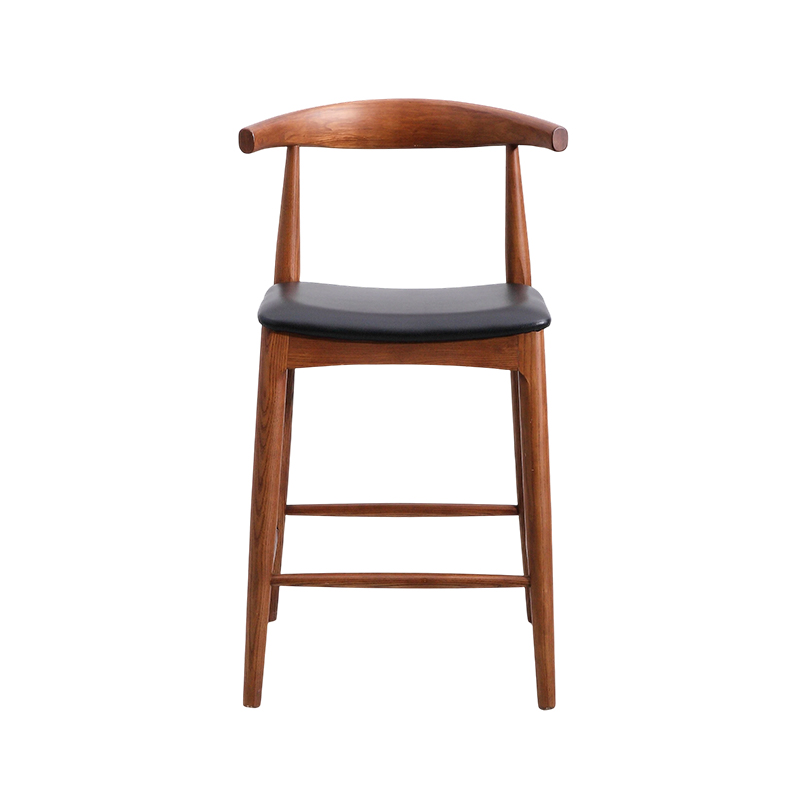
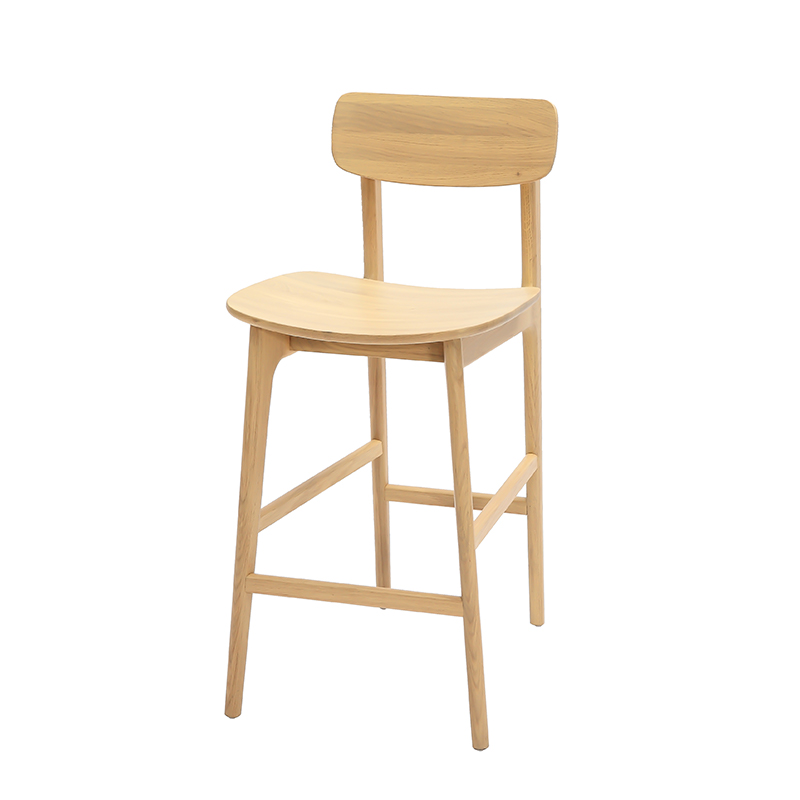
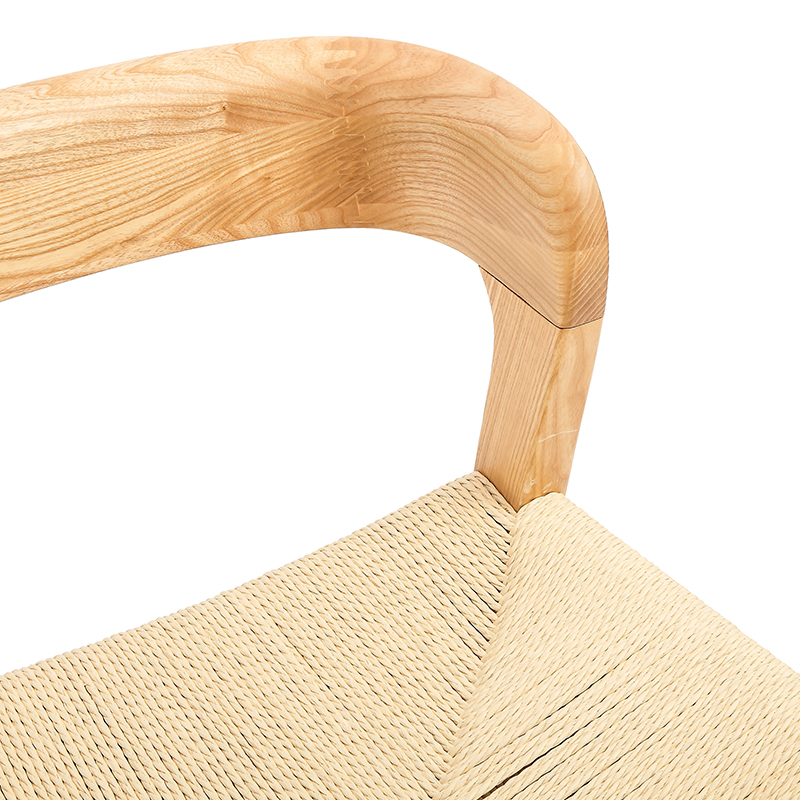 Rope Woven Bar Stool with Lumbar SupportRubberwood bar stool with lumbar-support backrest, fabric seat and W45 x D53 x H86 cm dimensions; fits home bars and commercial lounges.View Product →
A back can pass visual inspection and still fail the two tests that matter. The first is a back-load cycle test: EN 16139 and BIFMA X5.1 both apply repeated rearward load at the top rail. The second is moisture movement. Solid wood at 8 to 12 percent moisture content will move once it reaches a heated building sitting at 30 percent relative humidity, and every joint at the back posts feels it.
Two of the top three causes are design decisions rather than material defects. A glued and screwed corner block at the back seat rail removes most joint-related claims. Foam below 25 kg/m3 collapses under daily use, while 30 to 35 kg/m3 holds its shape and keeps the inside back looking flat instead of hollow.
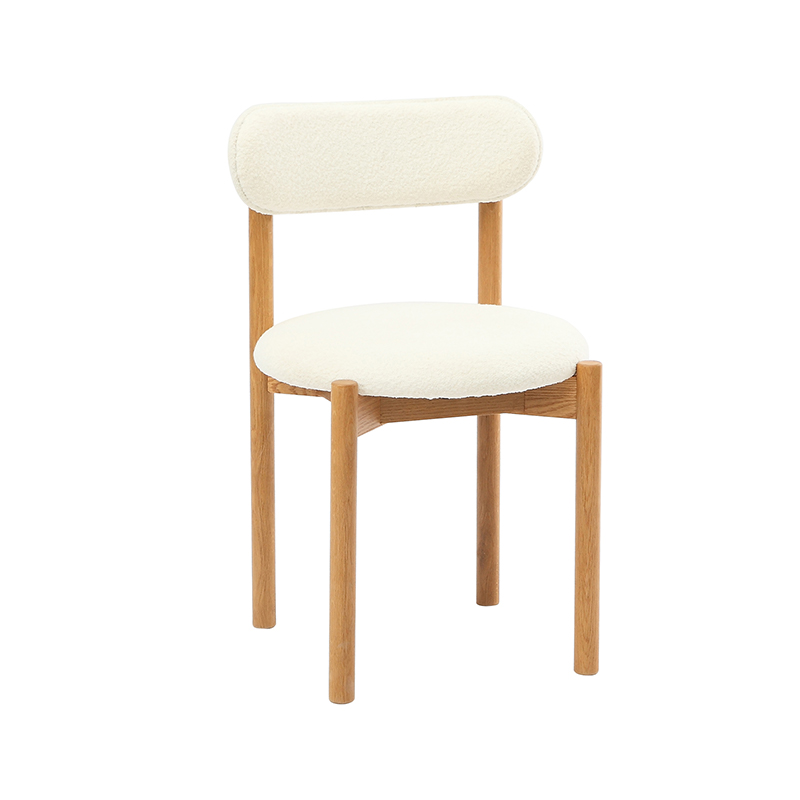
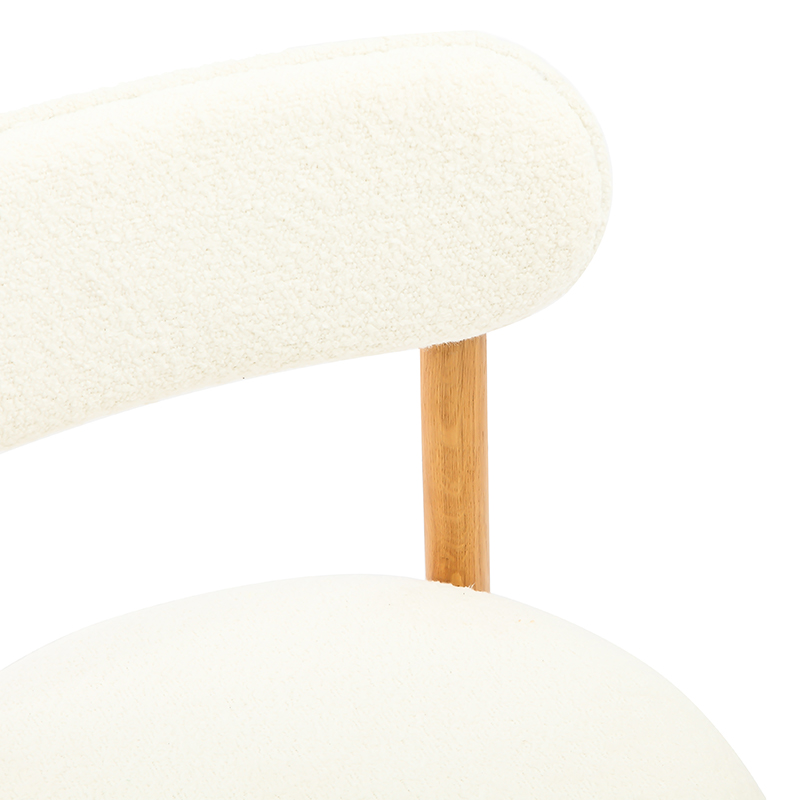 Dining Upholstered Chair with Seat and Back CushionSolid oak dining chair with white fleece-upholstered seat and back, W48 x D47 x H77 cm; suitable for dining tables and accent seating.View Product →
Back configuration tracks the end-use segment more closely than any other chair component. A working split of wooden chair backs by segment looks roughly like this.
The pattern matters because volume sits in commercial dining, where downtime costs more than parts. A back that can be re-tensioned or re-covered on site is worth more in that segment than a back that is simply cheaper per unit.
Under 30 minutes suits a dining back. One to two hours suits a cafe. Two hours or more needs a deeper rake and a real lumbar curve.
Match the angle to the duration, then place the lumbar contact point 150 to 250 mm above the seat.
Woven panels for warm, dry-clean environments and airflow. Upholstery where pressure distribution and appearance carry more weight than cleaning speed.
Ask for a cycle report on the crest rail and back seat rail, plus foam density figures. A photo cannot show either.
A 28 dollar chair replaced every two years costs 14 dollars a year. A 52 dollar chair lasting five years costs 10.40 dollars a year, before the cost of handling a claim.
Most back-related complaints arrive in year two, and most of them are maintenance issues that were predictable on day one.
For contract projects, EN 16139 covers strength, durability and stability for non-domestic seating, while BIFMA X5.1 remains the common North American reference. Wood sourcing documentation and formaldehyde limits under CARB Phase 2 and EPA TSCA Title VI are normally requested alongside the test report, and buyers who review a supplier's sustainability and material sourcing programme at the same time tend to catch weak points before the first container ships. Ask for the documents that match the market you sell into, and keep a sample back from each production run so a claim in year two can be compared against the original build.




Innovation Oriented, Quality As Life.
Feel free to reach our if you want to collaborate with us, or simply have a chat.
Become a Client 
Product Category
Wood Upholstered Chair
Woven Wood Chair
Wood Bar Stools
Wood Table
FSC Certified Wood Chairs
Wooden Rattan Chairs
Solid Wood Dining Chair
Modern Wooden Dining Chair
Contact Information
 +86-571-63521858
+86-571-63525898
 furniture@hzchangshun.com
emilypeng@hzchangshun.com
 No. 88, Zhumufan, Yushan Township, Fuyang District, Hangzhou City, Zhejiang Province, China


 EN

 English
 中文简体
 Español