2026/05/12
A wooden table occupies a unique position in the hierarchy of home furnishings. Unlike upholstered pieces that soften or metal accents that sharpen, a wooden table anchors a room with something no manufactured material can replicate: the quiet evidence of natural growth. Every grain line is a record of seasons, every knot a mark of character. But appreciating wood's beauty is only the beginning. Choosing the right wooden table — the right shape, species, construction method, and finish — requires understanding what separates a table that lasts decades from one that disappoints within a few years. This guide walks through everything you need to know to make that decision well.
Content
In an era of engineered composites, powder-coated steel, and resin surfaces, the wooden table has not merely survived — it has strengthened its position as the preferred centerpiece of the dining room. The reason is not nostalgia. It is performance. Solid wood is dimensionally stable once properly dried and finished, resists the micro-vibrations that cause laminate surfaces to delaminate over time, and develops a patina with age that makes it more visually interesting rather than less. A quality wooden table bought today is fully expected to outlast the house it sits in, provided it receives basic care.
Beyond durability, wood offers a tactile warmth that no synthetic surface matches. The slight give of wood fibers underhand, the way a wooden tabletop holds ambient warmth from a sunny window, and the way light plays differently across a wire-brushed oak surface versus a smooth walnut one — these sensory qualities make meals feel more grounded and spaces feel more inhabited. A wooden table does not just fill square footage. It gives a room a center of gravity.
The term "wooden table" covers a wide spectrum of construction quality, and understanding this spectrum protects you from paying solid wood prices for engineered wood products. The core distinction is straightforward:
For anyone investing in a dining table they expect to use daily for ten or more years, solid wood is the only construction type worth serious consideration. The additional upfront cost is recovered many times over in avoided replacement costs.
Not all solid wood performs identically. The Janka hardness scale provides a standardized measure of a wood species' resistance to denting and surface wear — a critical factor for a dining table that will absorb decades of daily contact. The following table compares the most commonly used dining table species:
| Wood Species | Janka Hardness (lbf) | Grain Character | Best Suited For |
| White Oak | 1,360 | Open, pronounced rays | High-use family dining |
| Hard Maple | 1,450 | Fine, tight, uniform | Modern minimalist styles |
| Black Walnut | 1,010 | Rich, flowing, dark | Formal dining, statement pieces |
| Beech | 1,300 | Fine, even, subtle | Nordic and Scandinavian styles |
| Teak | 1,155 | Straight, oily, golden | High humidity environments |
For most family dining rooms, white oak and hard maple offer the best balance of hardness, visual appeal, and finishing versatility. Walnut is softer but rewards careful use with extraordinary visual depth. Avoid softwoods such as pine or fir for the tabletop surface in dining applications — they dent easily and show wear rapidly under daily use.
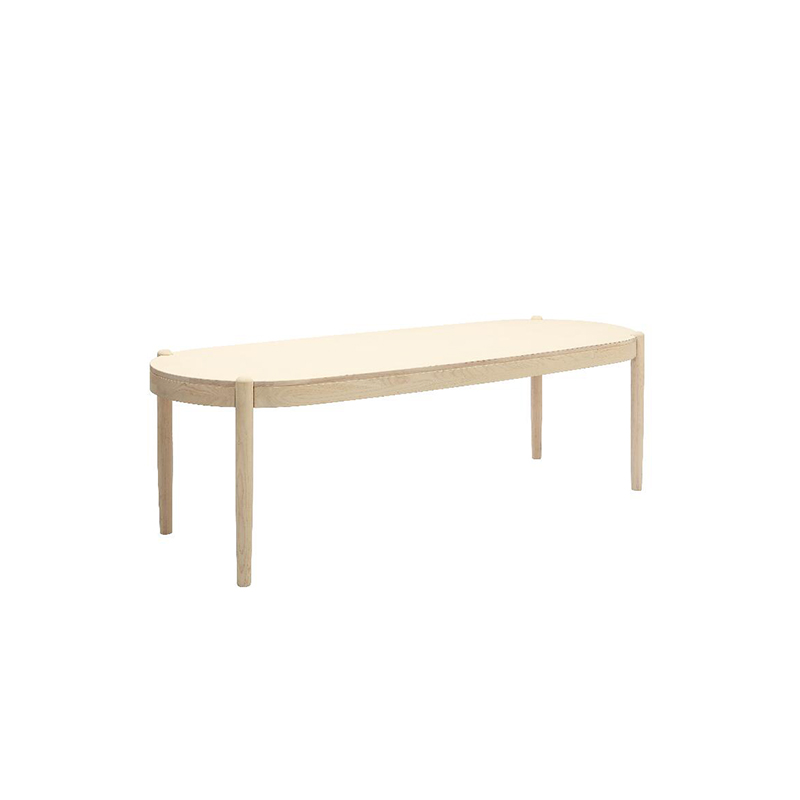
Among the many shapes available, the oval solid wood dining table deserves particular attention for family households. The oval shape solves a genuine practical problem: it combines the generous seating capacity of a rectangular table with the social geometry of a round one, all without the sharp corners that create hazards in shared spaces.
From a seating perspective, an oval table typically seats two to four people along each long side and one at each end, offering flexible capacity that adjusts naturally to the number of guests present. The curved ends encourage conversation across the full table width rather than isolating guests at the ends — a social advantage that becomes immediately apparent at larger gatherings.
For the tabletop itself, the oval format allows woodworkers to showcase the natural grain of solid wood in an uninterrupted field. A well-made oval solid wood dining table in white oak or walnut, finished with a clear matte lacquer that preserves the wood's natural color, becomes a genuinely beautiful object in addition to a functional one. The continuous curve of the perimeter, without the abrupt transition of a rectangle's corner, gives the piece a cohesive, sculptural quality that complements both modern minimalist and transitional interiors.
Families with young children rightfully prioritize safety and durability, and a child-friendly wooden table addresses both through specific design and finishing choices. The absence of sharp corners is the most obvious feature — the oval shape eliminates the 90-degree corner entirely, replacing it with a continuous curve that dramatically reduces the risk of head and body impacts during the inevitable collisions of active family life.
But child-friendly design extends well beyond edge geometry. The following factors are equally important when selecting a wooden table for a household with children:
A well-specified child-friendly wooden table does not require aesthetic compromise. The same oval solid wood form that provides safety also provides beauty — the two goals are entirely compatible when the table is designed with both in mind from the outset.
One of the enduring advantages of a wooden table is its stylistic range. The same material — solid oak, for example — can be finished and proportioned to read as Scandinavian minimal, mid-century modern, rustic farmhouse, or contemporary transitional depending on the decisions made during design and finishing.
These styles favor pale wood species — beech, ash, or light-toned oak — with clear matte finishes that let the natural grain remain the primary visual element. Legs are typically slender and tapered, proportioned to create visual lightness even in a substantial table. The overall aesthetic rewards restraint: no ornamentation, no contrasting materials, just the intrinsic character of the wood itself.
Pairing a solid wood top with a steel base — flat bar, round tube, or hairpin legs — creates the contrast that defines industrial style. The wood typically carries a darker stain or a wire-brushed texture to emphasize grain depth, while the metal base is finished in matte black or raw steel. This combination works particularly well in loft-style spaces and open-plan kitchen-dining rooms where the hardness of the architecture benefits from the warmth of wood.
Traditional dining tables favor darker species — walnut, mahogany, or cherry — with richer stains and glossier finish levels. Turned legs, carved apron details, and symmetrical proportions characterize this style. For those drawn to classical Eastern aesthetics, the principles are similar: symmetry, careful joinery, and a finish that honors rather than obscures the wood's natural beauty.
A solid wooden table requires less maintenance than most owners expect, but it does require the right maintenance applied consistently. The most common sources of damage are moisture, heat, and abrasion — all of which are entirely manageable with simple daily habits. Use placemats and trivets to protect the surface from hot dishes, wipe spills promptly rather than allowing them to pool, and avoid cleaners that contain ammonia or bleach, which degrade most clear wood finishes over time.
For oil- or wax-finished tables, reapply the protective coat once or twice a year depending on use intensity. For lacquer or varnish-finished tables, the surface requires no periodic treatment beyond gentle cleaning — if it becomes scratched or worn after many years of use, a professional refinish restores it completely. This is the ultimate advantage of solid wood over any engineered alternative: the material beneath the surface is identical to the surface itself, and it can always be made new again.




Innovation Oriented, Quality As Life.
Feel free to reach our if you want to collaborate with us, or simply have a chat.
Become a Client 
Product Category
Wood Upholstered Chair
Woven Wood Chair
Wood Bar Stools
Wood Table
FSC Certified Wood Chairs
Wooden Rattan Chairs
Solid Wood Dining Chair
Modern Wooden Dining Chair
Contact Information
 +86-571-63521858
+86-571-63525898
 furniture@hzchangshun.com
emilypeng@hzchangshun.com
 No. 88, Zhumufan, Yushan Township, Fuyang District, Hangzhou City, Zhejiang Province, China


 EN
EN

 English
 中文简体
中文简体 Español