2026/05/20
Content
A chair's lifespan is determined before the first joint is cut. The wood species used for the frame sets the ceiling on everything that follows — how much stress the joinery can absorb, how well the finish adheres, whether the piece survives a decade of daily use or starts showing fatigue within a few seasons. This is why solid wood, despite its higher material cost compared to engineered alternatives, continues to dominate the upper tier of dining and accent chair production.
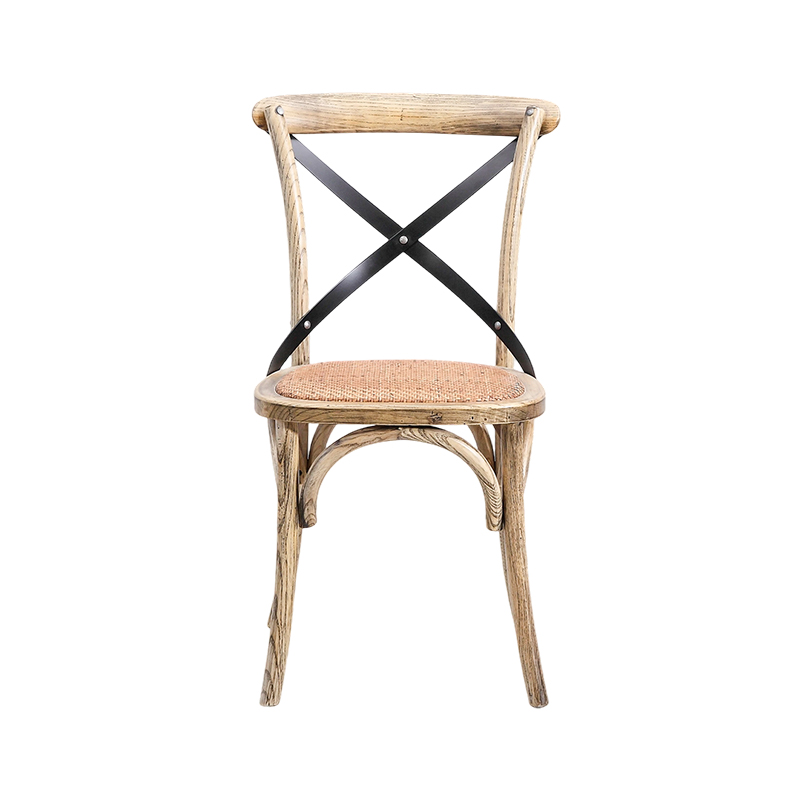
Among the most widely used species for chair frames, oak and beech stand out for their combination of hardness, workability, and availability. Oak's dense grain structure resists wear and takes finishes cleanly, making it equally suitable for natural and stained surfaces. Beech, though slightly softer, steam-bends exceptionally well — a property that makes it the preferred species for curved backrests and shaped seat rails where rigidity alone would cause splitting. Ash and rubber wood (often called Malaysian oak) offer cost-effective alternatives at the mid-range, while walnut is reserved for premium pieces where grain figure and deep color justify a higher price point.
The structural advantage of solid wood over veneer or MDF-based alternatives becomes most apparent at the joints. Mortise-and-tenon and dowel joinery — the traditional methods used in quality chair construction — require material that can hold a tight fit and resist racking forces over time. These joints work because solid wood fibers grip adhesive and resist deformation; engineered panels cannot replicate this mechanical behavior at the same load levels.
For buyers evaluating solid wood chairs at scale, the full wood chair collection spanning multiple frame styles and seat configurations provides a practical starting point for understanding how species selection and structural design interact across different price tiers.
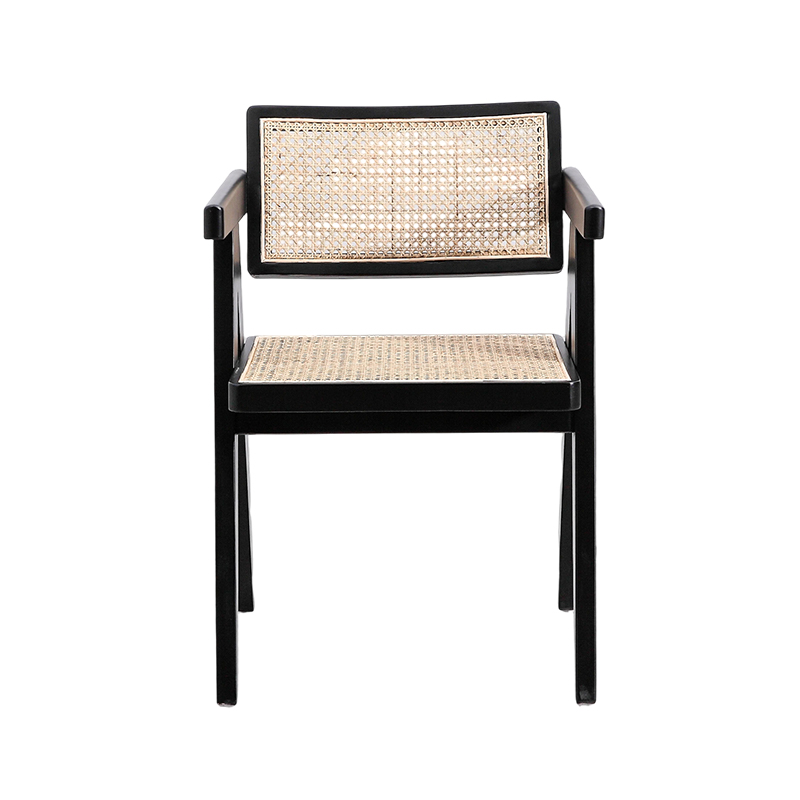
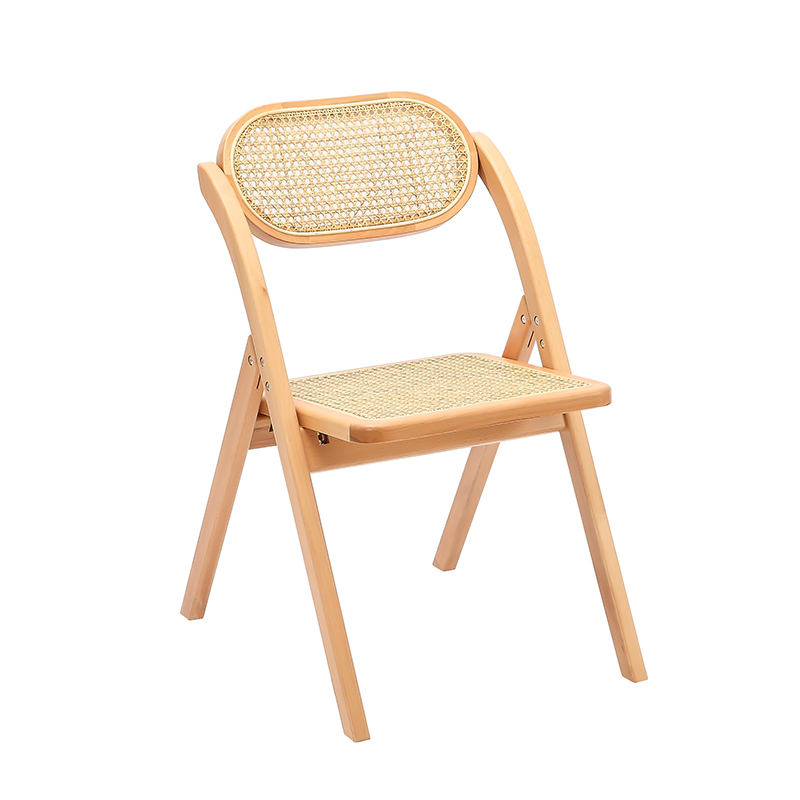
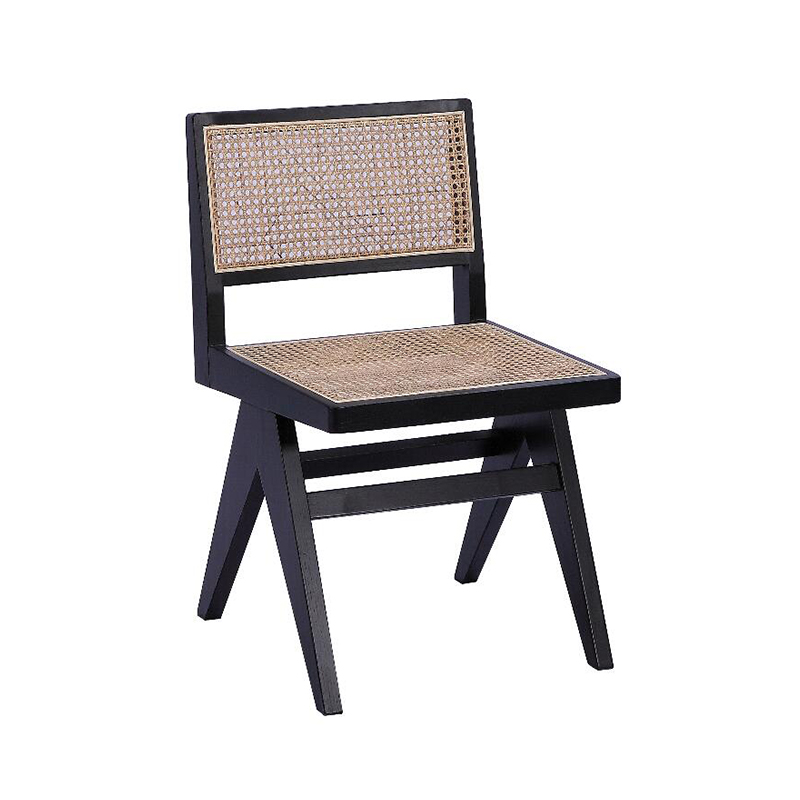
The shift toward mixed-material chairs — solid wood frames paired with rattan, cane, or rope woven seats and backs — is not a recent trend. It reflects a longstanding logic in furniture making: use each material where it performs best. Wood provides structural integrity at the frame; woven materials offer breathability, visual texture, and a degree of flexible comfort that solid panels cannot match.
Rattan is harvested from climbing palms found primarily across Southeast Asia. Unlike bamboo, which is hollow, rattan has a solid core that allows it to be bent, split, and woven without losing structural strength. When used as a seat or back material on a solid wood chair frame, natural rattan provides a breathable, slightly yielding surface that improves comfort in warm conditions while adding tactile richness to the overall piece. The variation in color and fiber texture that comes with natural rattan — often perceived as inconsistency — is in fact a marker of authenticity that machine-produced synthetic alternatives cannot replicate.
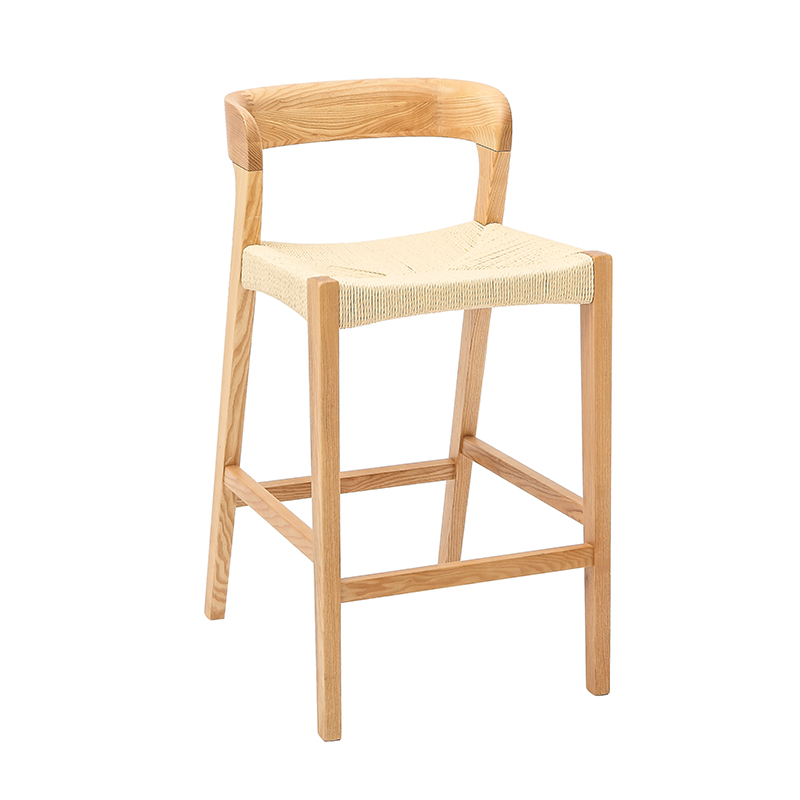
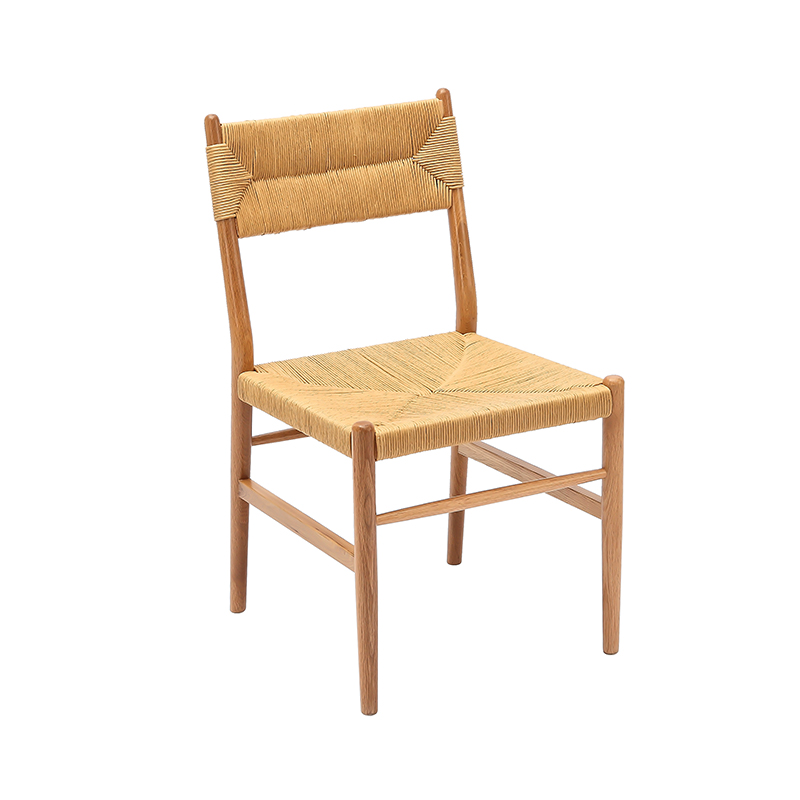
Rope weaving, by contrast, works through tension rather than interlocking structure. When rope is wound tightly across a seat frame — typically in diagonal, cross-hatch, or tribal-pattern configurations — the resulting surface distributes weight across the entire woven field rather than concentrating it at contact points. This makes rope-woven seats particularly ergonomic for extended sitting. The visual result is denser and more geometric than rattan, with a harder-edged texture that suits both contemporary and rustic interiors.
| Material | Origin / Composition | Surface Character | Best Suited For |
|---|---|---|---|
| Natural Rattan | Tropical climbing palm; solid core | Warm, organic, slightly uneven texture | Seats, backs, decorative panels; bohemian and coastal styles |
| Rope (Paper/Cotton/Jute) | Twisted fiber; paper cord or natural rope | Dense, geometric, firm surface | Seat weaving; Scandinavian, tribal, and minimalist styles |
| Cane Webbing | Rattan skin; machine-pressed or hand-woven | Fine, open hexagonal lattice | Back panels, seat inserts; traditional and mid-century designs |
Chairs that combine a solid wood frame with rattan or rope elements benefit from the structural reliability of the frame while gaining the visual warmth and material contrast that pure wood or fully upholstered chairs cannot offer. This is why the combination has endured across design movements — from mid-century Danish Modern to contemporary Japandi and biophilic interior styles.
Mixed-material chairs are among the most style-flexible pieces in residential and hospitality furniture. Their ability to read as rustic, minimal, coastal, or artisanal depending on finish and context makes them a reliable choice for buyers who need pieces that work across multiple project types.
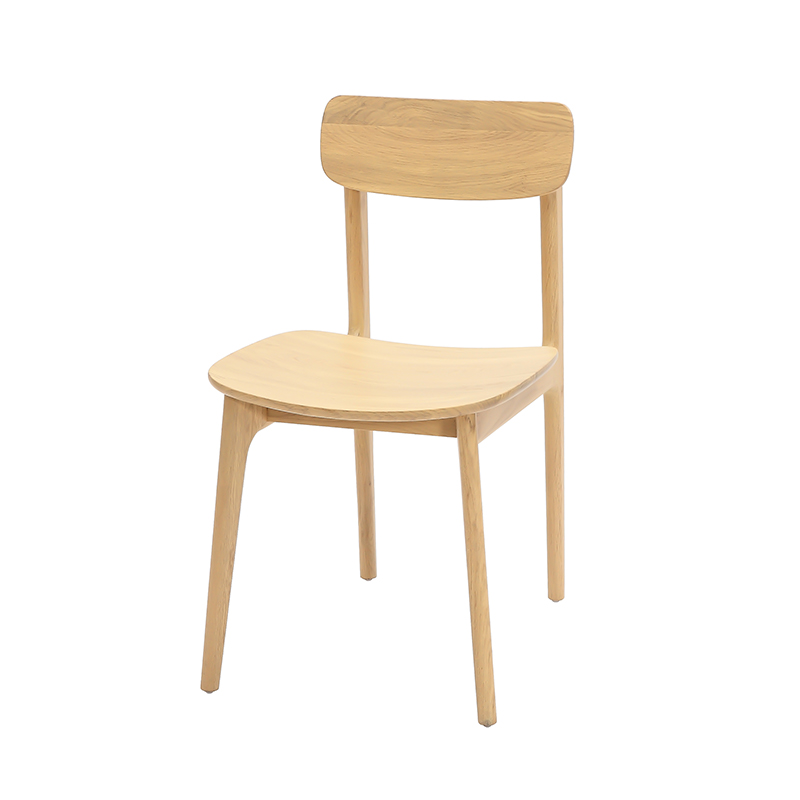
Scandinavian and Japandi interiors use wood-and-rope chairs as the primary seating element, paired with pale wood tables and neutral textiles. The clean silhouette of a rope-woven seat on tapered solid wood legs fits naturally into these schemes without adding visual weight. Seat-dip constructions — where the seat surface is gently shaped to follow the body — further reinforce the ergonomic sensibility that defines these styles. The arc seat dip wood chair with contoured solid wood seat exemplifies this approach, combining structural simplicity with ergonomic consideration.
Bohemian and natural-themed interiors tend to favor rattan over rope, leaning into the organic irregularity of the material. Here, the woven element is often the visual focal point rather than a secondary detail — a full rattan back panel, a hand-woven base, or a decorative rattan accent on armrests or side rails. The woven rattan base wood chair for boho and natural-themed spaces takes this further by integrating rattan directly into the structural base, creating a piece where the material combination is architecturally embedded rather than decoratively applied.
Rustic and farmhouse settings benefit from the contrast between rough-hewn wood grain and the tight geometric pattern of rope weaving. The tension between organic and ordered surfaces creates visual rhythm without requiring complex ornamentation. Tribal-style rope woven chairs, with their denser winding patterns and visible knot work, carry cultural references that add depth to these spaces.
For hospitality buyers — restaurants, cafés, boutique hotels — wood-and-woven chairs offer another practical advantage: they photograph well. The material contrast creates depth and texture in interior shots that monochrome upholstered chairs often lack, which matters in settings where visual brand identity is built as much through photography as through physical experience.
Evaluating a woven chair for quality requires looking at both the frame and the woven element — and at how the two are connected. A structurally sound frame with poorly attached rattan is a durability problem waiting to surface after the first few months of use. Equally, a beautifully woven seat on an under-engineered frame will rack and loosen under normal load.
On the frame side, key indicators include joint construction, leg taper consistency, and surface finish quality. Joints should show no visible gaps, adhesive residue should be clean and internal rather than smeared across the surface, and leg tapers should be uniform — uneven tapering is a sign of inconsistent machining that often correlates with wider quality control issues. Surface finish should be even, with no pooling at rail edges or obvious brush marks on curved components.
On the woven side, tension consistency is the primary indicator. A rattan seat that shows uneven spacing between strands, loose areas near the frame attachment points, or fraying at the edges will degrade noticeably within a year of normal use. For rope seats, check that the winding is tight throughout and that the rope ends are cleanly finished and secured — not simply tucked or tied in a way that will loosen under repeated weight.
Frame-to-weave attachment is often the weakest point in lower-quality mixed-material chairs. Rattan panels should be secured by a spline pressed into a routed groove (the traditional cane-setting method), not simply glued to the surface. Rope should be anchored at tension points where the frame provides mechanical resistance, not just wound around exposed rails without anchoring hardware.
Buyers sourcing for commercial settings — where chairs will see significantly higher cycle loads than residential use — should request load-testing data. Quality solid wood dining chairs are typically rated to hold between 120–150 kg static load; for hospitality environments, structural testing at 1.5–2× this load provides a more reliable indicator of long-term durability under real conditions.
The practical question for most buyers is not which chair is objectively better — it is which combination of materials, finish, and silhouette works best for a specific space, user, and maintenance expectation. A few straightforward considerations structure this decision.
Indoor vs. mixed-use environments: Natural rattan performs best in stable indoor conditions. It responds to humidity — expanding slightly in damp environments and contracting in dry ones — which is manageable indoors but problematic if the chair will regularly move between covered outdoor areas and air-conditioned interiors. Rope woven in paper cord or cotton is similarly moisture-sensitive. For covered patios or environments with higher humidity variation, synthetic rope alternatives or lacquer-sealed rattan provide better long-term stability.
Frame finish and interior palette: Solid wood chair frames are available across a wide finish range — natural oil, clear lacquer, matte paint, and stain. The finish affects how the wood reads in relation to the woven element. A dark-stained frame against natural rattan creates strong contrast; a natural oil finish on beech against the same rattan creates a tonal harmony. Neither is universally correct, but matching the contrast level to the overall palette of the space produces the most coherent result.
Upholstered seat pads: Many wood-and-woven chair designs are offered with the option to add a loose seat cushion over the woven surface. This is worth considering for dining settings where extended sitting comfort is a priority — rattan and rope, while ergonomically sound for short periods, benefit from a thin pad for meals lasting over 45 minutes. The wood upholstered chair range with cushioned seat and back options provides a reference point for buyers who want the warmth of a solid wood frame combined with padded seating comfort.
For spaces that combine dining and bar-height seating, the material logic extends to stool form. A rope woven bar stool with lumbar support for counter and bar height seating maintains the material continuity of a natural-theme scheme while addressing the different ergonomic demands of elevated seating.




Innovation Oriented, Quality As Life.
Feel free to reach our if you want to collaborate with us, or simply have a chat.
Become a Client 
Product Category
Wood Upholstered Chair
Woven Wood Chair
Wood Bar Stools
Wood Table
FSC Certified Wood Chairs
Wooden Rattan Chairs
Solid Wood Dining Chair
Modern Wooden Dining Chair
Contact Information
 +86-571-63521858
+86-571-63525898
 furniture@hzchangshun.com
emilypeng@hzchangshun.com
 No. 88, Zhumufan, Yushan Township, Fuyang District, Hangzhou City, Zhejiang Province, China


 EN
EN

 English
 中文简体
中文简体 Español