2026/06/08
Content
Two categories dominate the dining chair market: all-wood chairs and fully upholstered chairs. The first is easy to clean and visually spare. The second prioritizes comfort but can feel heavy in a room without the right balance. Wood upholstered dining chairs resolve this tension by combining the structural warmth of a natural wood frame with a cushioned seat — and in many configurations, a padded backrest — that makes extended meals genuinely comfortable.
The appeal is practical as much as aesthetic. A wood frame provides visual lightness and tactile warmth that fully upholstered chairs rarely achieve. The exposed legs, seat rails, and backrest posts anchor the piece in the material world; the cushioned surfaces introduce softness without erasing the sense of craft. The result sits comfortably in dining rooms ranging from minimal and contemporary to traditionally furnished — which is why wood upholstered dining chairs with varied backrest and cushion options have become a staple across residential and hospitality markets in Europe, North America, and Southeast Asia alike.
For buyers sourcing at volume, this category also offers meaningful customization range. Wood finish, cushion material, backrest shape, and leg profile can each be specified independently, allowing a single structural design to produce chairs that read quite differently in different interior contexts. That flexibility is a primary reason why manufacturers and distributors favor this category for OEM programs.
Seat cushion material is the variable that most directly determines how a wood upholstered dining chair performs in daily use. The three most common options — PU leather, woven fabric, and off-white or neutral padded upholstery — each serve a distinct set of priorities, and choosing correctly requires understanding what each trades away.
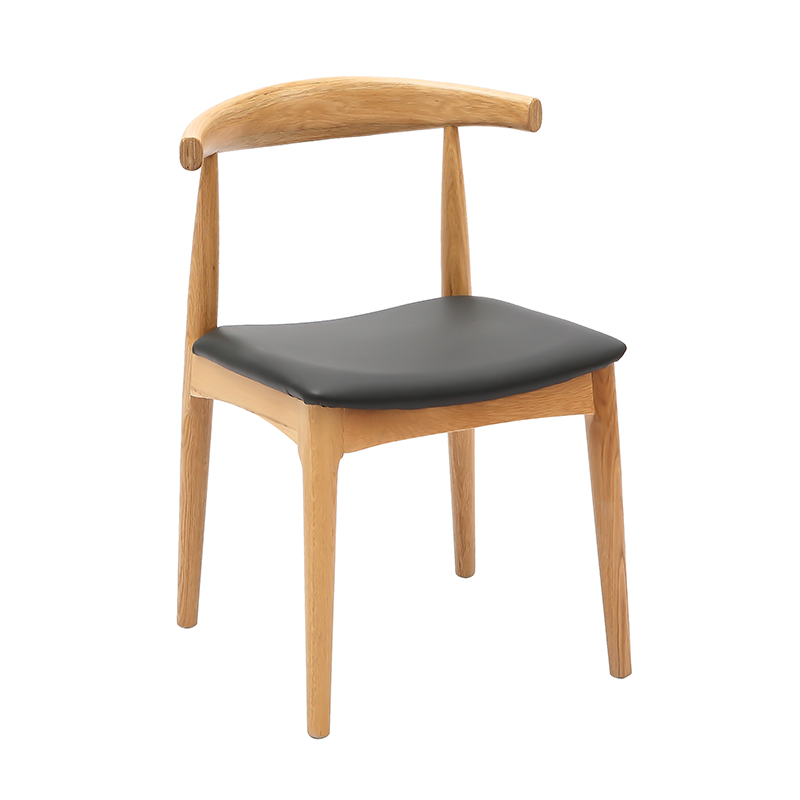
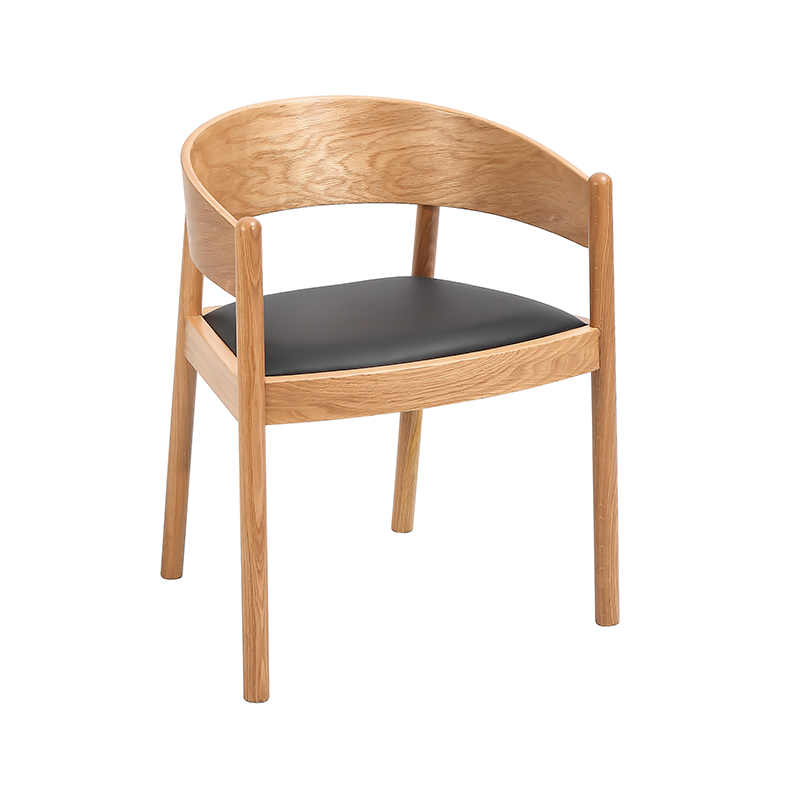
PU leather is the dominant choice for commercial and high-traffic residential applications. Its closed surface repels liquid, resists food stains, and wipes clean with a damp cloth — advantages that matter in dining contexts where spills are routine. Abrasion ratings for quality PU leather typically exceed 50,000 Martindale cycles, making it the most durable upholstery option in practical use. The tradeoff is breathability: PU leather traps heat during extended sitting, which can be uncomfortable in warm climates without air conditioning. A dining chair with PU seat cushion works best in restaurants, cafés, and family dining rooms where easy maintenance outweighs maximum thermal comfort.
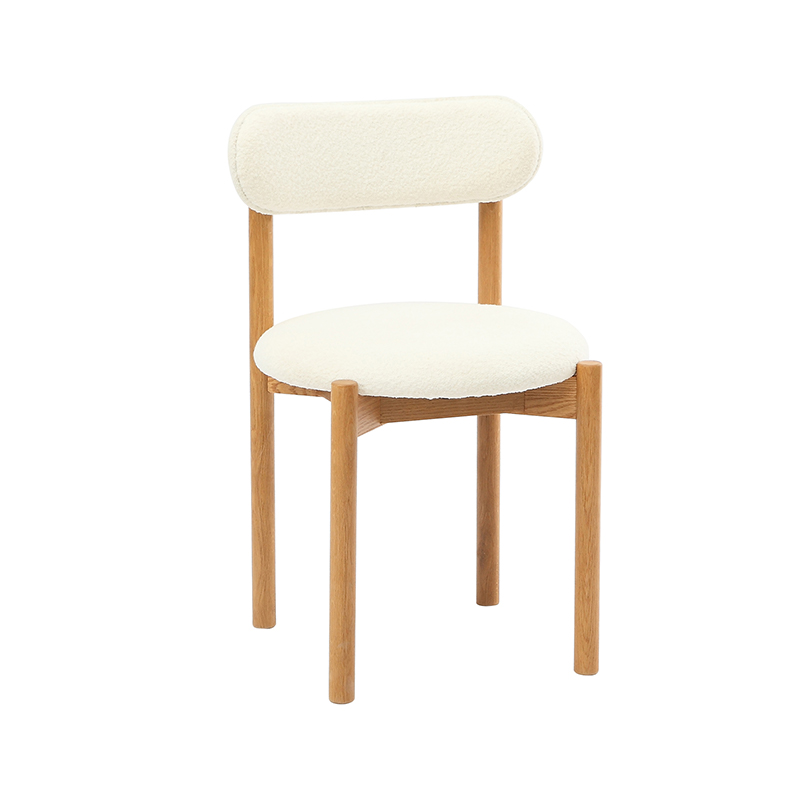
Woven fabric — typically polyester blends or performance textiles — offers a softer, more breathable sitting surface and a wider range of color and texture expression. Quality performance fabrics achieve 40,000–60,000 Martindale cycles and are treated for stain resistance at the fiber level, making them suitable for dining use even with children present. Fabric upholstery reads more casually than PU leather and integrates more naturally into residential interiors where the chair is meant to blend with soft furnishings rather than stand apart.
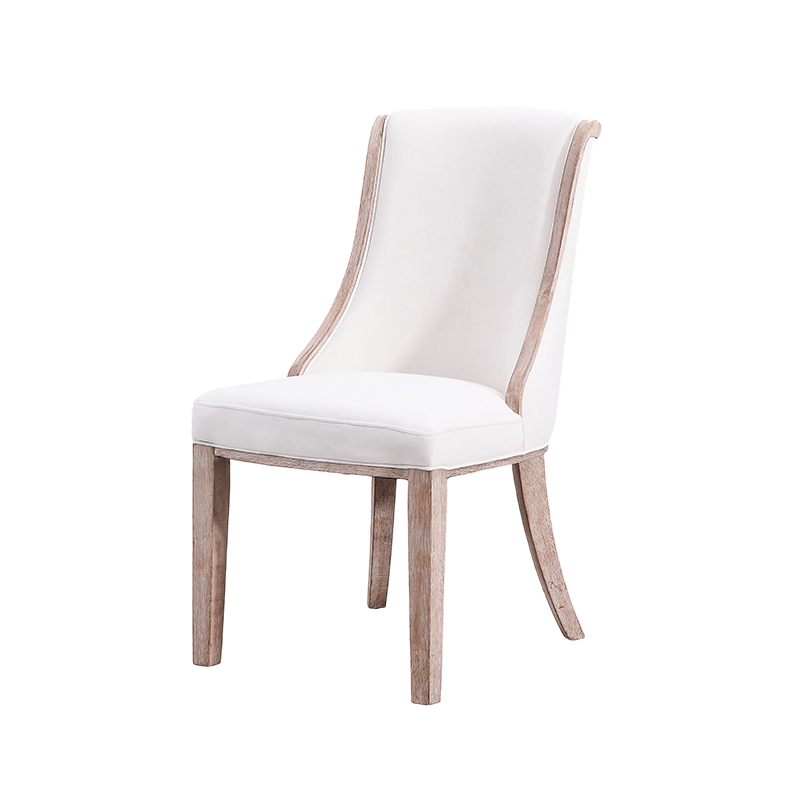
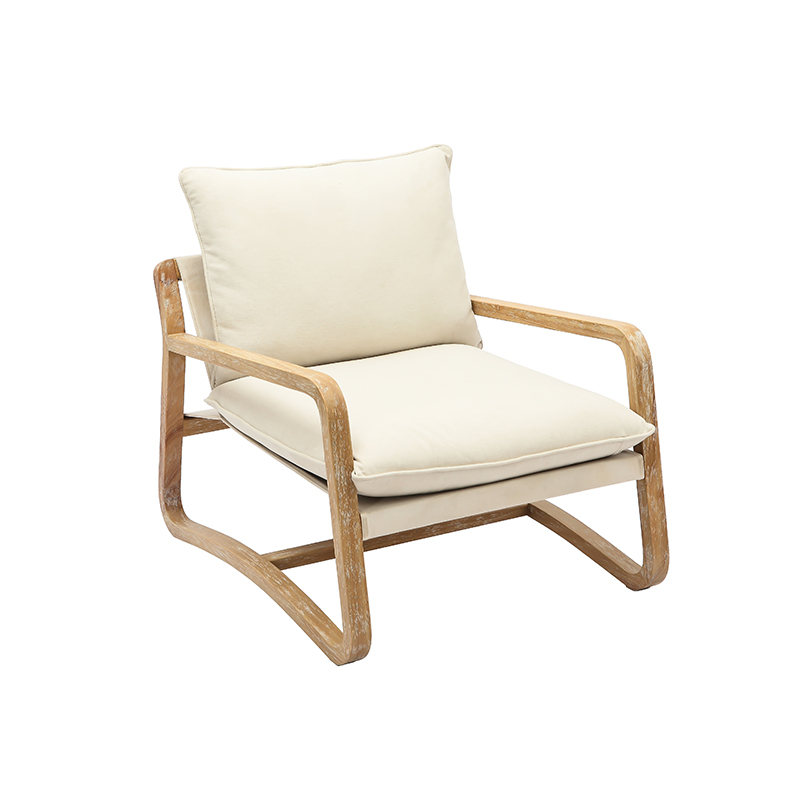
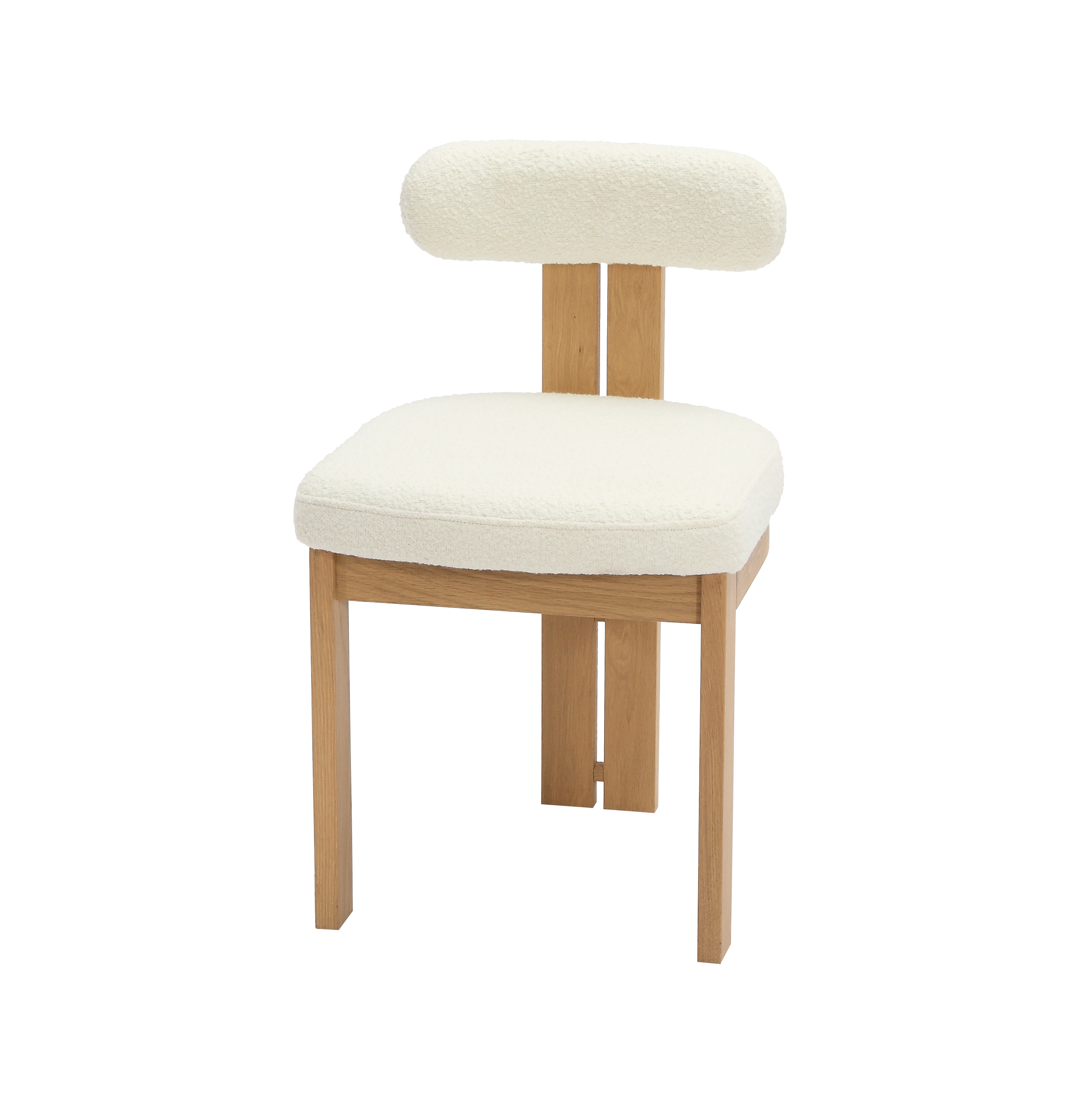
Off-white and neutral padded upholstery — typically using a tightly woven fabric in cream, ivory, or warm white tones — occupies a different position. These finishes are selected primarily for their visual contribution: they lighten the look of the chair, contrast gently with darker wood frames, and introduce a quiet luxury to the dining setting. Practical maintenance requires more care than PU leather, but for dining rooms used for formal meals rather than daily family use, the aesthetic return is significant.
The backrest of a dining chair is frequently treated as a purely aesthetic decision — curved versus straight, open spindles versus solid panel, tall versus low. In reality, backrest geometry has a direct effect on comfort during extended sitting, and small differences in angle and profile produce noticeably different experiences at the table.
A slightly reclined backrest angle — typically between 95° and 100° from the seat plane — allows the lumbar spine to rest against the support surface without requiring active muscular effort. Chairs with perfectly vertical backrests force the sitter to maintain posture through muscle engagement alone, which becomes fatiguing after 20–30 minutes. This is why dining chairs with a gently curved back profile, even without a dedicated lumbar cutout, feel more supportive than their geometry suggests.
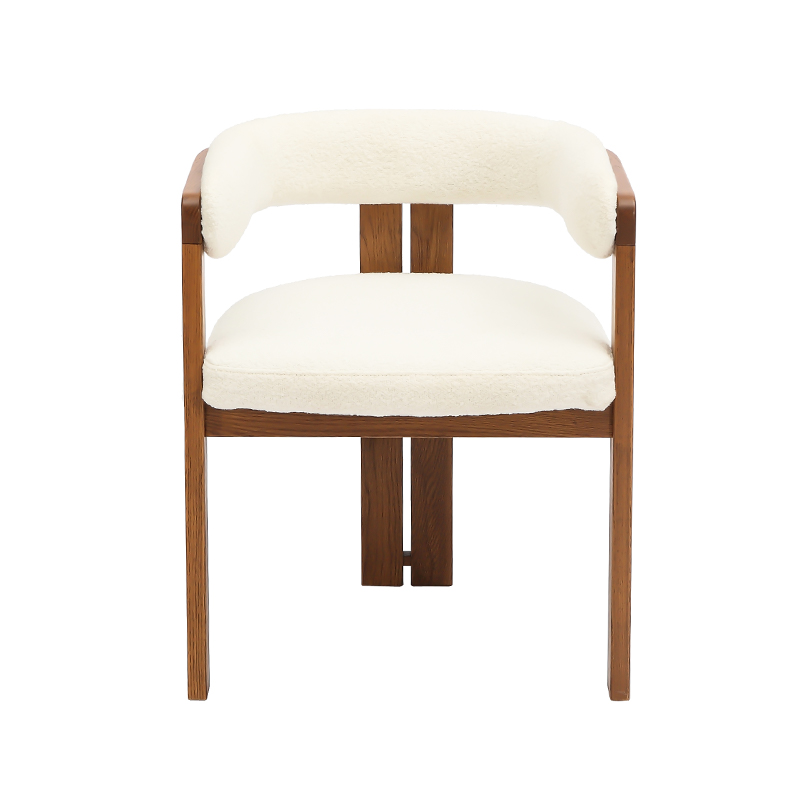
Wraparound lumbar support designs take this further by curving the lower portion of the backrest to follow the natural inward curve of the lower back. On wood upholstered chairs, this is typically achieved by shaping the upholstered back panel rather than modifying the wooden frame structure — which means the ergonomic benefit can be built into chairs that retain a clean, minimal visual profile from the front.
Backrest height matters as much as angle. A backrest that ends at shoulder blade level provides support for the lower and mid back while allowing natural shoulder movement — the right profile for dining chairs that will be used for meals and conversation. Full-height backrests that extend to neck level introduce a more formal, chair-like quality suited to occasional dining rooms; they can feel constraining in casual everyday settings. The majority of well-selling wood upholstered dining chairs in the European and North American residential market use a mid-height upholstered back panel, precisely because this proportion balances ergonomic function with visual lightness.
One of the consistent strengths of the wood upholstered chair category is its stylistic range. The combination of exposed frame and cushioned surfaces can be executed to read as contemporary, Scandinavian, transitional, or quietly classical — depending on four key design variables: leg profile, wood finish, cushion color, and backrest shape.
For minimalist and contemporary interiors, straight tapered legs, a light natural or matte white frame finish, and a fabric cushion in neutral tones — warm grey, oat, or natural linen — produce a chair that recedes visually and lets the table become the focus. The oak dining chair with off-white cushion is a specific expression of this approach: the pale wood frame and restrained cushion color create a composition that sits equally well against white walls, concrete surfaces, or pale stone flooring.
For transitional and classic dining rooms, a darker stained frame — walnut brown, ebony, or a warm medium oak — combined with a fabric cushion in deep neutrals or muted earth tones produces a more grounded, anchored look. Cross-brace stretchers between the legs add a traditional craftsmanship reference without making the chair feel period-specific. Curved armrests, where included, soften the visual mass and invite a more relaxed posture.
For Scandinavian-influenced or wabi-sabi interiors, the design logic shifts toward natural material expression: unfinished or lightly oiled frames, off-white or undyed fabric, and deliberately simple silhouettes that emphasize the quality of the wood grain over any applied ornament. The goal is a chair that looks as though it belongs to the house rather than having been brought into it.
Color temperature alignment between the wood frame and cushion material is a detail that is often underestimated in sourcing decisions. A cool-toned grey fabric on a warm amber oak frame creates a subtle tension; the same grey on a cooler ash or pale beech frame reads as cohesive. Requesting physical material samples before confirming specifications avoids this specific misalignment — which is invisible in product photography but immediately apparent in person.
For buyers sourcing wood upholstered dining chairs through OEM channels, supplier selection ultimately comes down to four factors: frame construction quality, cushion engineering, finish consistency, and the manufacturer's ability to hold specification across large production runs.
Frame construction in quality wood upholstered dining chairs uses mortise-and-tenon or dowel joinery at all major stress points — seat rail to leg, backrest post to seat rail — reinforced with corner blocks and structural adhesive. Chairs relying solely on metal bracket hardware at these junctions will loosen over time with the racking forces of regular use. The wood species and moisture content of the raw material also matter: kiln-dried hardwood with a moisture content below 12% is the correct specification for chairs destined for markets with significant indoor climate variation.
Cushion engineering should specify dual-layer foam construction — a high-density base foam at 40+ kg/m³ topped with a softer comfort layer — seated on a minimum 12mm plywood base. Single-layer foam constructions require the manufacturer to choose between initial softness and long-term resilience; dual-layer construction provides both. The fabric or PU leather wrap should be stapled to the underside of the seat panel with consistent tension to prevent surface wrinkling, with welt cord or trim applied at any visible perimeter edge.
Hangzhou Changshun Furniture Co., Ltd. has operated from Fuyang, Zhejiang for over 20 years, specializing in wood and rattan chair and table manufacturing for export markets including Europe, North America, Southeast Asia, and the Middle East. The company holds FSC certified wood chair manufacturing credentials alongside ISO 9001 quality management certification — a combination that addresses both environmental sourcing requirements and production consistency standards increasingly required by European and North American retail buyers.
OEM and ODM programs at Changshun support customization across wood finish, fabric selection, cushion specification, and structural configuration, with sample confirmation protocols that require physical material sign-off before production is committed. For procurement teams managing multi-SKU programs or seasonal collection updates, this workflow structure significantly reduces the risk of specification drift between development samples and production units — the most common source of quality disputes in OEM furniture sourcing.
Related Products




Innovation Oriented, Quality As Life.
Feel free to reach our if you want to collaborate with us, or simply have a chat.
Become a Client 
Product Category
Wood Upholstered Chair
Woven Wood Chair
Wood Bar Stools
Wood Table
FSC Certified Wood Chairs
Wooden Rattan Chairs
Solid Wood Dining Chair
Modern Wooden Dining Chair
Contact Information
 +86-571-63521858
+86-571-63525898
 furniture@hzchangshun.com
emilypeng@hzchangshun.com
 No. 88, Zhumufan, Yushan Township, Fuyang District, Hangzhou City, Zhejiang Province, China


 EN
EN

 English
 中文简体
中文简体 Español