2026/06/16
The way people use kitchen and dining space has shifted. Open-plan layouts, kitchen islands as social hubs, and casual counter dining have all pushed bar and counter seating out of the commercial setting and into the centre of daily home life. With that shift comes a harder question for buyers: what separates a bar stool worth living with from one that looks right in a showroom and becomes a problem within a year? Hangzhou Changshun Furniture Co., Ltd., a Fuyang-based manufacturer with over two decades of experience in solid wood and rattan furniture, has built its Wood Bar Stool series around that exact question — and the answers show up in the details.
Content
The decision to add a back to a bar stool is not purely aesthetic. A wood bar stool with back transforms the piece from a perch into a seat — somewhere a person can sit through a full breakfast, a work-from-home morning, or an extended conversation without shifting or bracing themselves against the counter edge. The structural and ergonomic implications of that choice drive every other design decision in the Changshun Wood Bar Stool series.
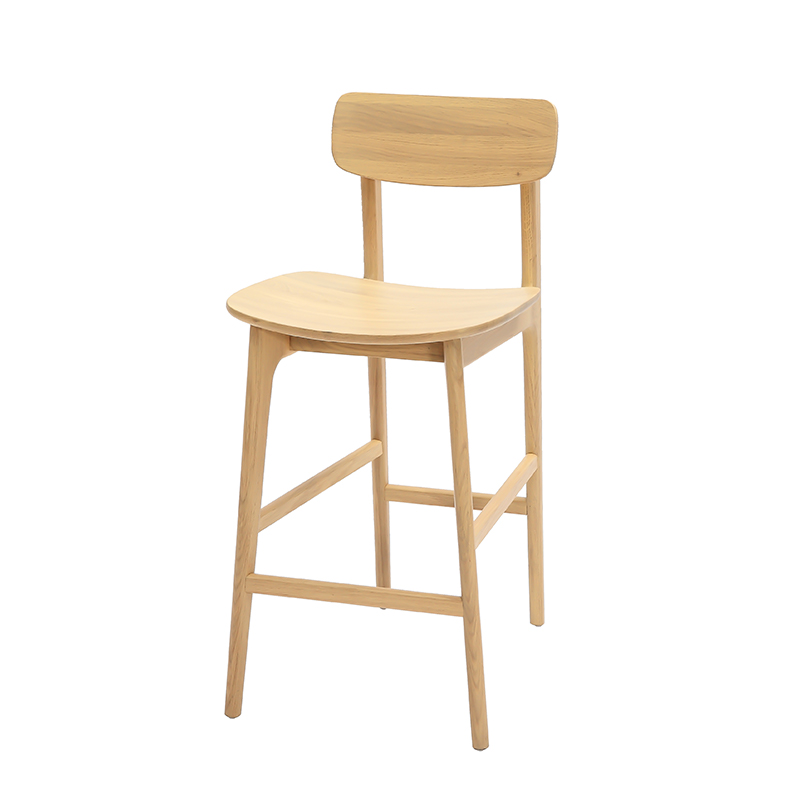
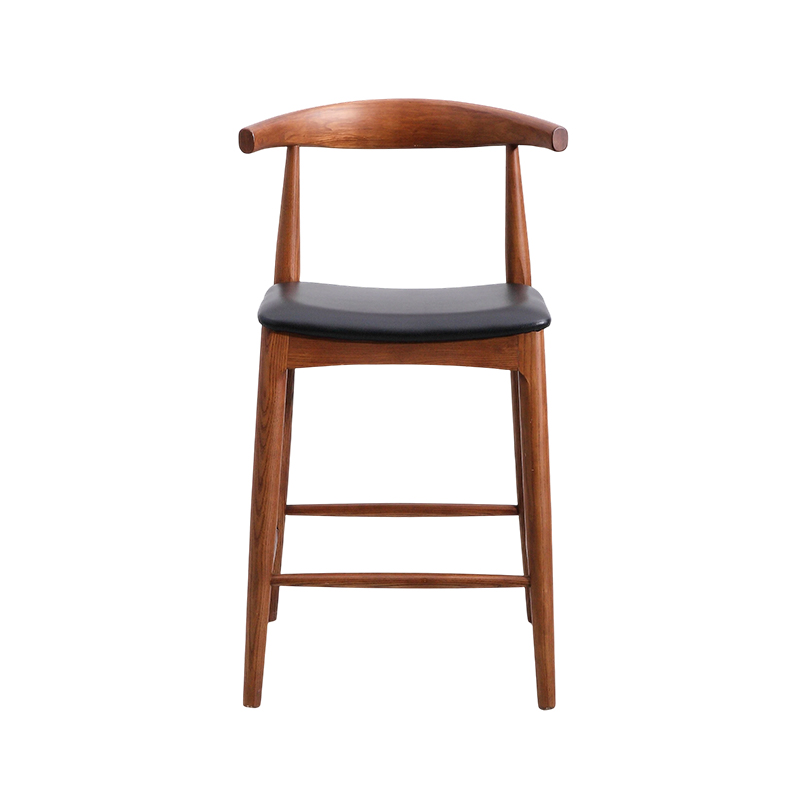
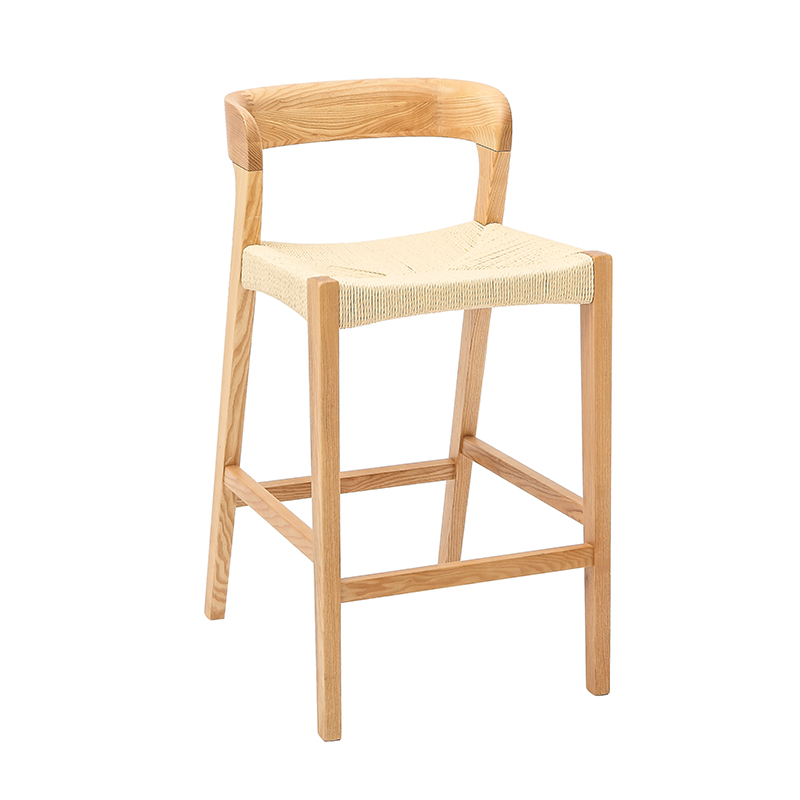
The collection includes several backed configurations, from the Arc Seat Dip Wood Bar Stool with Backrest to the Leather Seat Bar Stool with Curved Backrest and the Rope Woven Bar Stool with Lumbar Support. Each treats the back not as an add-on but as an integral load-bearing element of the design. The curved backrests are shaped to follow the natural line of the spine rather than pressing flat against it, and the lumbar-positioned rope weaving on select models provides a zone of gentle support exactly where prolonged sitting creates the most fatigue. These are not soft-furnishing comfort features — they are structural choices, executed in solid wood and hand-applied materials that hold their form over time.
The case for a backed stool strengthens considerably when the seating will see mixed use: the same stool that works for a quick morning coffee needs to support forty-five minutes of focused work or an hour-long dinner without becoming uncomfortable. A wood bar stool with back from a manufacturer who has integrated that support into the frame construction — rather than surface-attaching a thin slat — is the version that performs across all those scenarios.
Ergonomic is a word used liberally in furniture marketing, but its practical requirements are specific. An ergonomic counter stool must do three things simultaneously: position the sitter at the correct height relative to the counter surface, support the spine in its natural curve without forcing it into an unnatural posture, and allow the feet to rest without dangling. Each of these requirements places precise demands on the design.
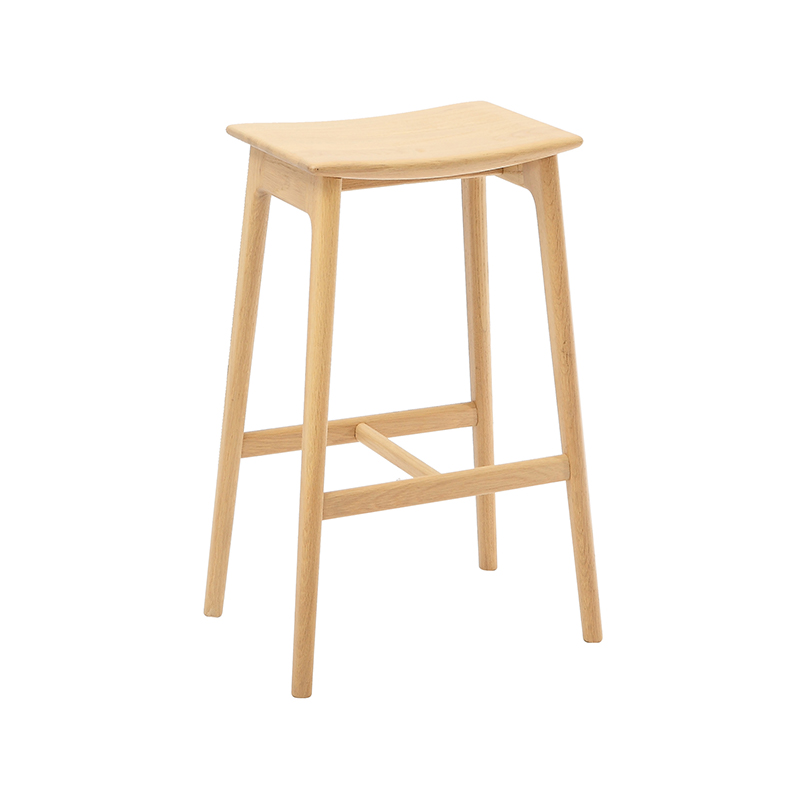
Changshun's approach to the ergonomic counter stool begins with the seat itself. The arc seat dip — a gentle sculpted depression in the wooden seat surface — is the most visible ergonomic feature in the range. Unlike a flat wooden seat, which concentrates pressure at the sit bones and encourages the sitter to slide forward, a contoured dip distributes weight across a broader surface area and holds the pelvis in a position that naturally encourages an upright lower back. The hip-fitting seat dip variant deepens this contouring, shaping the seat to the body's natural form at the point of contact. Neither feature requires foam or upholstery to function — the ergonomic benefit comes from the geometry of the wood, not from a cushion compensating for a poorly shaped base.
The backrests in the ergonomic models are positioned to engage the lumbar and mid-back region rather than the shoulder blades. This matters because most casual counter use involves a slight forward lean — reaching for food, working on a device, leaning into a conversation. A backrest set too high provides no support during forward lean; one positioned at the lumbar meets the body where it naturally settles. The rope-woven lumbar backrest in particular delivers a degree of give that a rigid wooden slat cannot — the woven tension provides contact and resistance without the hardness that makes prolonged sitting uncomfortable.
The Changshun Wood Bar Stool series makes deliberate use of material contrast — rope weaving, leather seating surfaces, and curved wooden backrests appear across different models, each combining a natural wood structural frame with a surface treatment that adds both tactile quality and functional benefit. This is not a styling decision made to photograph well; each material choice has an effect on the performance of the piece.
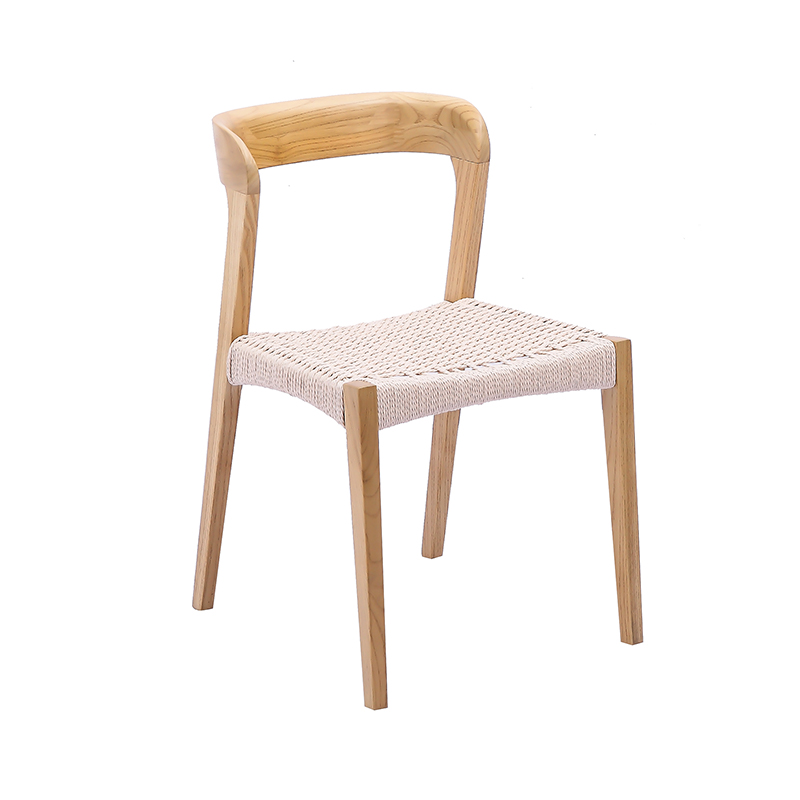
Rope weaving on a backrest or seat panel introduces flexibility that solid wood cannot provide. The tension in a well-woven rope back gives under pressure and returns to shape — it accommodates slight postural shifts without the stiffness of a rigid panel. It also breathes, making extended sitting in warmer environments more comfortable than an upholstered surface would. The craftsmanship required to produce a well-tensioned, consistently woven back is significant; the density and regularity of the weave directly affect both the visual quality and the structural performance of the finished piece.
Leather seating surfaces serve a different purpose. Leather conforms to the body over time, developing a fit that a wooden seat or woven surface cannot replicate. The Leather Seat Bar Stool with Curved Backrest pairs a leather seat with a curved wooden back — the back provides postural support and visual structure, while the leather seat provides the contact surface comfort that makes the stool work for longer sitting periods. The curved back in leather models is shaped to cradle without constraining, giving the sitter something to lean against that follows their posture rather than redirecting it.
A well-designed stool in the wrong size is a failed purchase. The relationship between seat height and counter height determines whether a stool is functional or frustrating, and buyers who skip this measurement — assuming "bar height" and "counter height" are interchangeable terms — frequently end up with seating that either places their chin too close to the counter surface or forces them to reach upward to use it comfortably.
The standard guidance is to leave 25 to 30 centimetres (roughly 10 to 12 inches) of clearance between the top of the stool seat and the underside of the counter or overhang. Standard kitchen counter height sits at approximately 90 cm, making a seat height of 60 to 65 cm the correct range for counter stools. Bar-height surfaces — typically a home bar or a raised island — run closer to 105 to 110 cm, requiring seat heights of 75 to 80 cm. The Changshun Wood Bar Stool range is designed within these parameters, and the compact overall profile of the collection means the stools tuck cleanly under an overhang without the footrest or lower rung interfering with the counter structure.
For buyers specifying multiple units — restaurant fit-outs, café chains, or retail interior programmes — consistent sizing across units in a production run is as important as the height specification itself. Changshun's manufacturing background, with more than 20 years focused on wooden and rattan seating for export, supports the dimensional consistency that commercial buyers require across larger orders.
The wood quality in a bar stool affects everything: the weight and feel of the piece, its resistance to racking and joint loosening over time, and its surface appearance across years of daily use. Changshun holds FSC (Forest Stewardship Council) certification — a third-party verified standard that confirms the wood used in production comes from responsibly managed forests with documented chain-of-custody controls from harvest to finished goods.
For buyers sourcing for markets where sustainable sourcing is a procurement requirement — which now includes most major European retailers, a growing share of North American hospitality operators, and virtually all premium residential furniture programmes — FSC certification is not a differentiating feature but a baseline expectation. Changshun's certification status means buyers can incorporate these stools into their supply chains without needing to commission separate supplier audits or apply for sourcing exemptions under timber import regulations.
The practical effect of responsible wood sourcing shows up in the material consistency of the finished product. Sustainably managed timber is harvested at stages of growth that produce stable, well-grained wood with predictable moisture content — the variables that determine whether a solid wood frame remains tight at its joints after two years of seasonal humidity fluctuation. This is where material standard and long-term product performance converge, and it is why Changshun positions its FSC certification not as a marketing claim but as a fundamental part of its sustainability commitment to buyers who need to stand behind the products they specify.
Buyers and trade partners seeking specifications, lead times, or custom configurations for the Wood Bar Stool series are invited to reach out directly. The full collection — including the Arc Seat Dip, Hip Fitting Seat Dip, Rope Woven, and Leather Seat variants — is available for review through the Wood Bar Stool product range on the Changshun website.




Innovation Oriented, Quality As Life.
Feel free to reach our if you want to collaborate with us, or simply have a chat.
Become a Client 
Product Category
Wood Upholstered Chair
Woven Wood Chair
Wood Bar Stools
Wood Table
FSC Certified Wood Chairs
Wooden Rattan Chairs
Solid Wood Dining Chair
Modern Wooden Dining Chair
Contact Information
 +86-571-63521858
+86-571-63525898
 furniture@hzchangshun.com
emilypeng@hzchangshun.com
 No. 88, Zhumufan, Yushan Township, Fuyang District, Hangzhou City, Zhejiang Province, China


 EN
EN

 English
 中文简体
中文简体 Español