2026/07/21
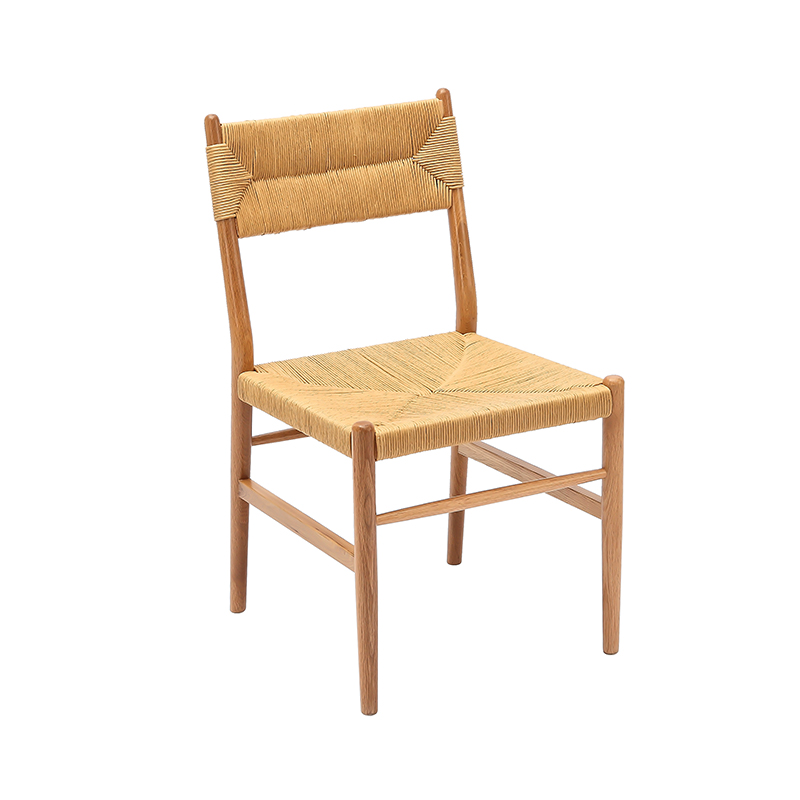
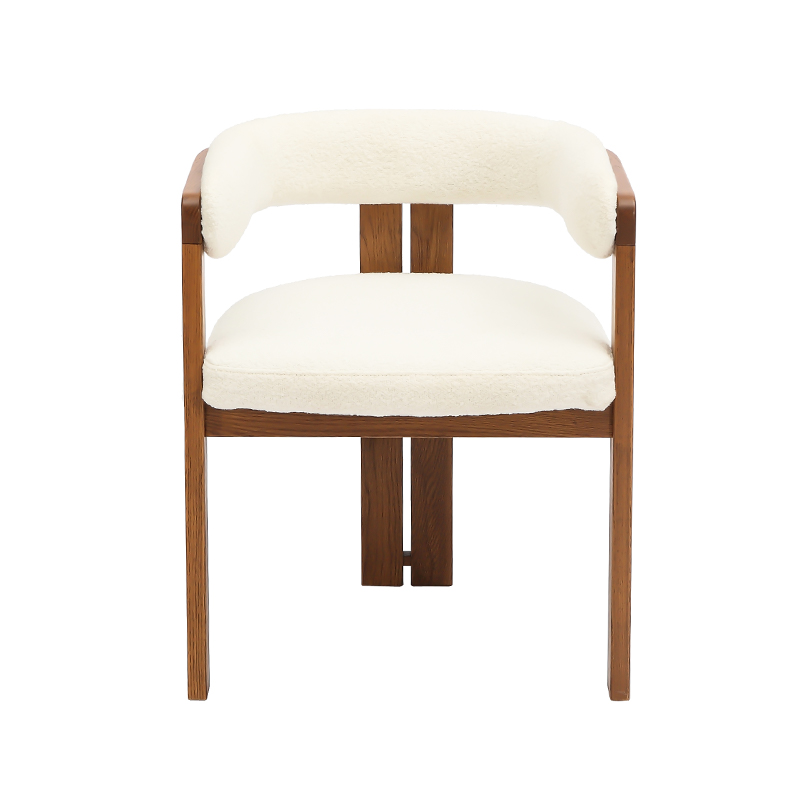
A wood upholstered chair with arms delivers a distinct combination of postural support, tactile comfort, and visual warmth that armless or fully upholstered dining chairs rarely achieve. The armrests reduce spinal loading by supporting forearm weight during meals, the wood frame provides structural longevity exceeding 15–20 years under daily use, and the upholstered seat and back panels offer pressure distribution that rigid wood seats cannot match. Within this category, chairs that pair solid wood frames—typically oak, ash, or walnut—with thoughtfully selected cushion materials such as PU leather, woven fabric, or off-white padding adapt to both contemporary apartments and formal dining rooms without sacrificing ergonomics. The following sections examine how frame construction, material choices, and backrest geometry interact to produce a chair that serves as both a functional seat and a defining interior element.
Content
Armrests on a dining chair are not decorative afterthoughts; they directly influence seated comfort during meals that extend beyond 30–45 minutes. When the forearms rest on a properly positioned support, the load on the cervical paraspinal muscles decreases by approximately 15–20% compared to unsupported sitting, as measured by surface electromyography studies of dining posture. This reduction in static muscle tension translates to less fatigue during long dinner gatherings or when the chair doubles as a home office seat. The armrest height on well-designed models falls between 18–23 cm above the seat surface, which accommodates the elbow height of most adults without forcing shoulder elevation. Chairs that deviate below this range offer little support, while those exceeding 25 cm push the shoulders upward and create neck tension over time.
Beyond biomechanics, armrests also assist with sit-to-stand transitions—a critical consideration for older users or those with knee or hip mobility limitations. The ability to push down on a stable wood armrest reduces the peak knee extension moment required to rise by 20–30 Nm, making the chair accessible across a wider range of physical abilities without the clinical appearance of a lift chair.
The wood species and joinery method determine whether a chair remains wobble-free after a decade of service. Hardwoods such as European oak (Quercus robur) and American ash (Fraxinus americana) dominate the quality segment because their Janka hardness ratings of 1,200–1,350 lbf resist denting from rings, belt buckles, and daily impacts. Rubberwood and birch, with hardness values around 950–1,000 lbf, appear in mid-range chairs and perform adequately when reinforced with corner blocks. The critical structural points are the leg-to-seat rail connections and the backrest-to-seat junction. Mortise-and-tenon joints reinforced with wood glue and internal dowels maintain structural integrity under cyclic loading; chairs built with this method withstand over 50,000 seated weight shifts without joint loosening in standardized BIFMA testing, whereas chairs relying solely on screws and brackets may develop movement within 3–5 years.
| Wood Finish | Appearance | Scratch Resistance | Interior Compatibility |
|---|---|---|---|
| Natural Oak | Light honey grain pattern | Moderate; hides light scratches | Scandinavian, coastal, and farmhouse interiors |
| Tan Wood Stain | Warm amber-brown, subtle grain | Good; tones conceal minor wear | Traditional, transitional, and rustic settings |
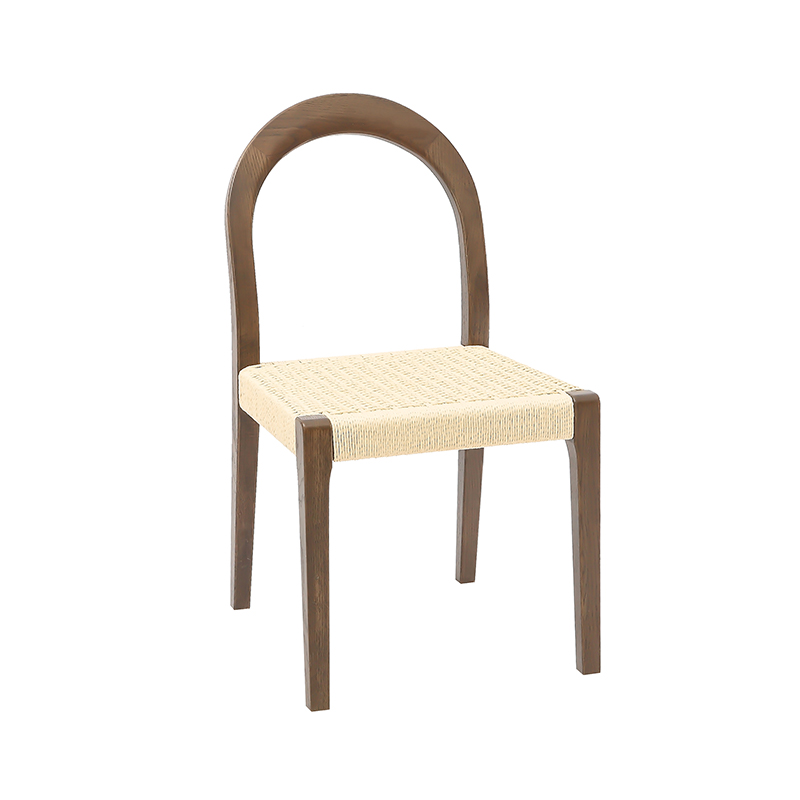
| Dark Walnut | Rich chocolate brown, deep grain | Lower; visible scratches contrast | Formal dining rooms, mid-century modern |
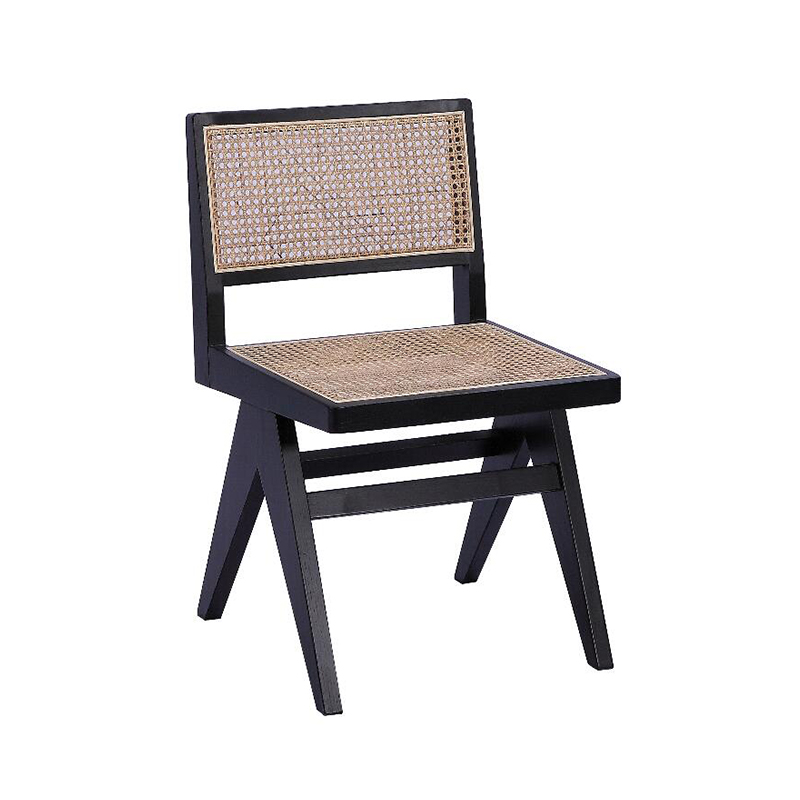
| Painted Matte Black | Opaque, smooth, minimal grain | High; paint layer protects wood | Industrial, modern, and minimalist spaces |
The seat and back cushion materials determine how the chair feels during the first five minutes and how it looks after five years. The current collection offers three primary options, each optimized for different household contexts.
Polyurethane leather covers provide a non-porous, wipe-clean surface that resists spills from coffee, wine, and oil-based dressings with a simple damp cloth. Unlike genuine leather, PU leather does not develop patina unevenly across the seat, maintaining uniform color over time. Modern high-grade PU leather with a thickness of 0.8–1.2 mm achieves a Martindale abrasion resistance of 50,000–100,000 cycles, placing it well within contract-grade upholstery territory suitable for high-frequency dining use. The main limitation is reduced breathability, which can cause warmth accumulation during extended seating in hot weather.
Woven fabric cushions, typically polyester or polyester-cotton blends with a thread count of 250–400, allow airflow through the seat surface, reducing moisture buildup during prolonged meals. Fabric also accepts patterns—from subtle herringbone to geometric weaves—that PU leather cannot replicate. The trade-off is stain vulnerability: untreated fabric absorbs liquids within 5–10 seconds. However, many manufacturers now apply factory-grade fluorocarbon finishes that increase liquid repellency, giving users a 15–30 second window to blot spills before permanent staining occurs. For households with young children, removable and machine-washable fabric covers add a layer of practicality that fixed upholstery lacks.
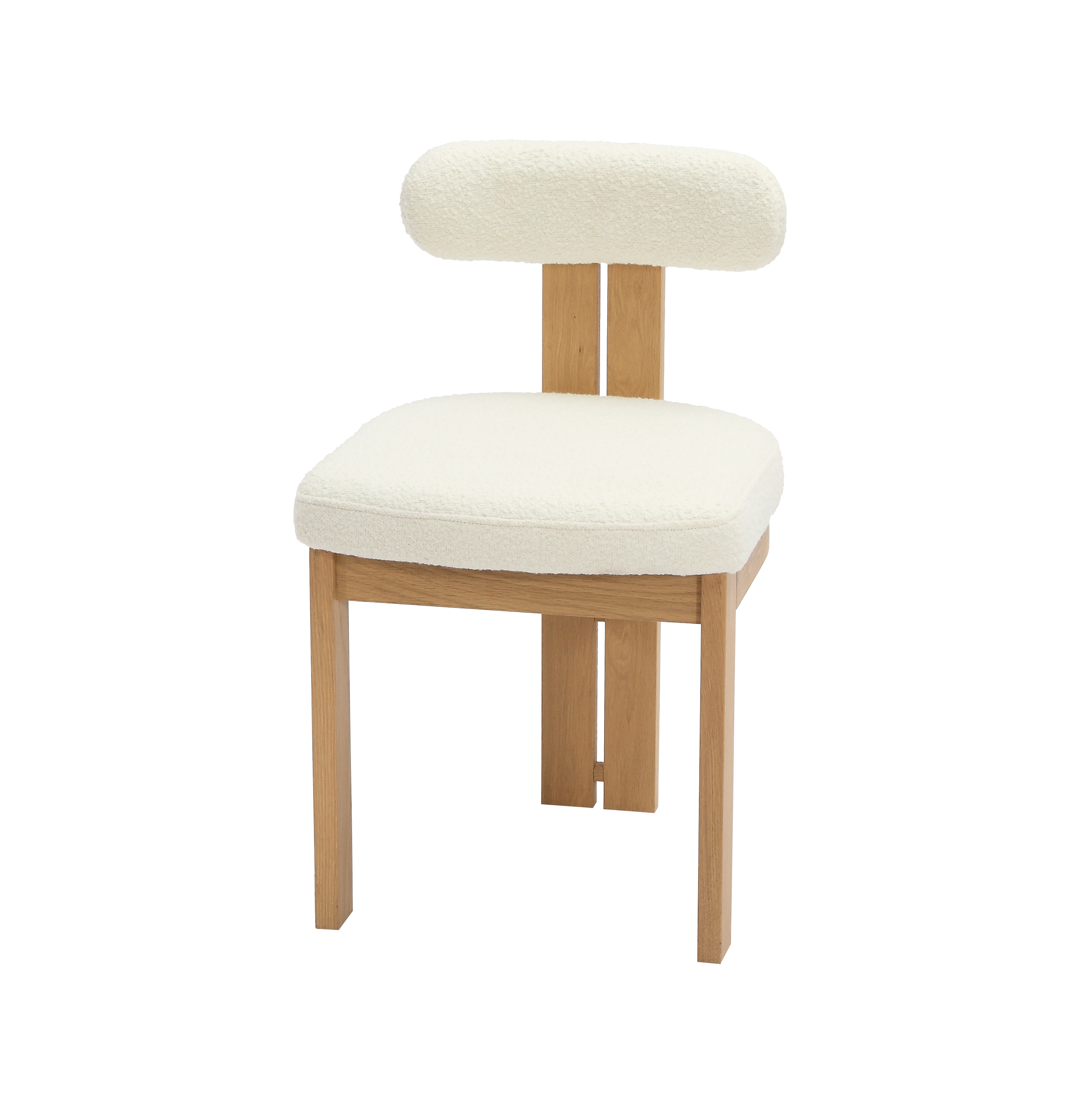
Off-white cushions serve a specific design purpose: they visually expand the chair's footprint and reflect ambient light, making compact dining areas feel less enclosed. This color choice pairs effectively with both dark wood frames—creating high-contrast sophistication—and light tan frames, producing a monochromatic softness. The practical consideration is maintenance: off-white PU leather resists discoloration better than off-white fabric, which may show dye transfer from denim over months of use. When chosen in wipeable PU leather, off-white seats retain their neutrality with weekly cleaning; in fabric form, they benefit from textile protectors reapplied every 6–12 months.
Backrest shape influences spinal alignment more than seat cushion thickness. The collection includes gently curved backrests that follow a lumbar arc with a 30–40 mm depth, measured from the backrest plane to the deepest point of the curve. This depth corresponds to the average lumbar lordosis angle of 25–35 degrees in a relaxed seated posture, providing contact support without pushing the pelvis forward. Higher backrests that reach the mid-thoracic region add support for the shoulder blades, beneficial for users who recline slightly during conversation after meals. Lower backrests, ending around the L2–L3 vertebral level, prioritize upper body freedom and suit shorter seating durations. The common thread across effective designs is a backrest inclination of 100–108 degrees relative to the seat plane—upright enough for dining, reclined enough to avoid a rigid, formal perch.
The dual-material nature of wood and upholstery allows these chairs to bridge design languages that would normally clash. A light oak frame with a neutral fabric cushion reads as Scandinavian warmth against white walls and blonde flooring. The same chair, finished in dark walnut with a PU leather seat, shifts into mid-century modern territory when placed beside a teak dining table. This adaptability reduces the need to replace seating when redecorating. The chairs also contribute acoustically: upholstered seats and backs absorb mid-frequency sound, lowering the reverberation time in open-plan dining areas by an estimated 0.1–0.2 seconds when four or more upholstered chairs replace hard-surfaced seating. The reduction is modest but perceptible, softening the clatter of plates and conversation echo.
Selecting the optimal wood upholstered chair with arms involves aligning five variables with daily habits and the existing room palette. A structured approach ensures the chair remains satisfying beyond the initial visual impression.
Routine maintenance prevents the slow accumulation of damage that shortens a chair's useful life. For wood frames, a monthly wipe-down with a slightly damp microfiber cloth followed by immediate drying removes airborne grease that bonds with dust to form a dull, sticky film. Annual application of a beeswax-based wood conditioner restores moisture lost to indoor heating systems, which can otherwise cause hairline cracks along the seat rail joints. For PU leather cushions, a weekly cleaning with a pH-neutral, alcohol-free cleaner prevents the plasticizer degradation that leads to peeling; avoid oil-based conditioners that trap heat and accelerate polymer breakdown. Fabric cushions benefit from a vacuuming schedule of once per week using an upholstery brush attachment, which extracts particulate matter before it abrades the fibers into pilling. Spills on fabric should be blotted—never rubbed—with an absorbent white cloth, starting from the outer edge inward to prevent stain expansion.




Innovation Oriented, Quality As Life.
Feel free to reach our if you want to collaborate with us, or simply have a chat.
Become a Client 
Product Category
Wood Upholstered Chair
Woven Wood Chair
Wood Bar Stools
Wood Table
FSC Certified Wood Chairs
Wooden Rattan Chairs
Solid Wood Dining Chair
Modern Wooden Dining Chair
Contact Information
 +86-571-63521858
+86-571-63525898
 furniture@hzchangshun.com
emilypeng@hzchangshun.com
 No. 88, Zhumufan, Yushan Township, Fuyang District, Hangzhou City, Zhejiang Province, China


 EN
EN

 English
 中文简体
中文简体 Español