2026/07/27
A well-designed wood bar stool chair solves a specific ergonomic problem: how to sit comfortably at a 100–110 cm high counter for extended periods without foot discomfort, lower back fatigue, or the instability that plagues poorly constructed elevated seating. The best examples combine a solid wood frame with a sculpted seat that dips 8–12 mm in the center, a footrest positioned within 40–45 cm of the seat top, and joinery that resists the twisting forces unique to tall furniture. Within this category, material choices—from woven rope to leather upholstery to bare contoured wood—determine how the stool feels during hour-long kitchen gatherings and how it integrates with surrounding cabinetry and countertops. The following sections examine the structural, material, and design factors that separate a stool that wobbles after two years from one that remains a reliable kitchen presence for a decade or more.
Content
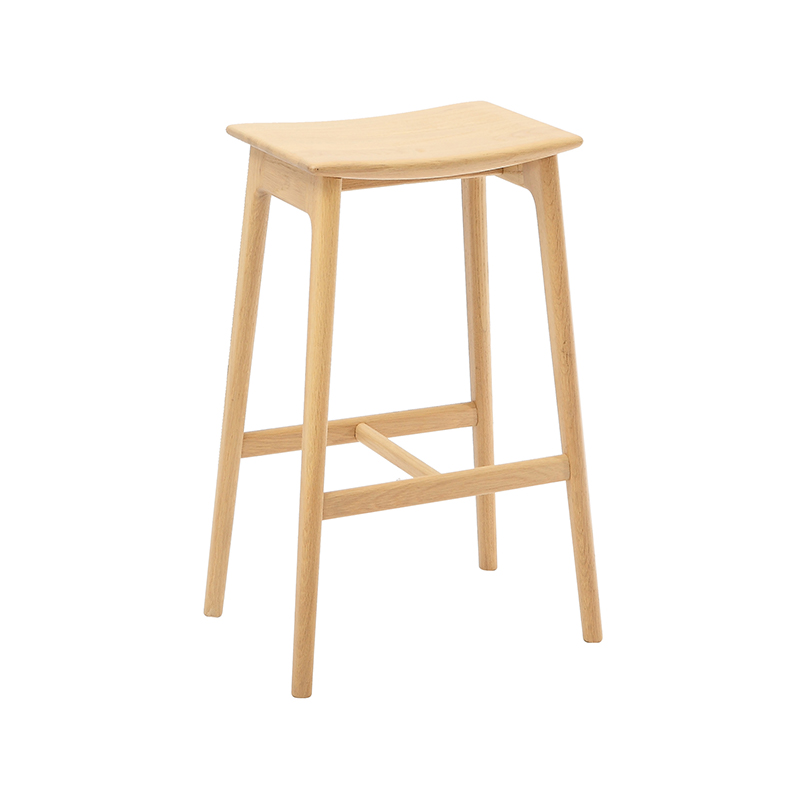
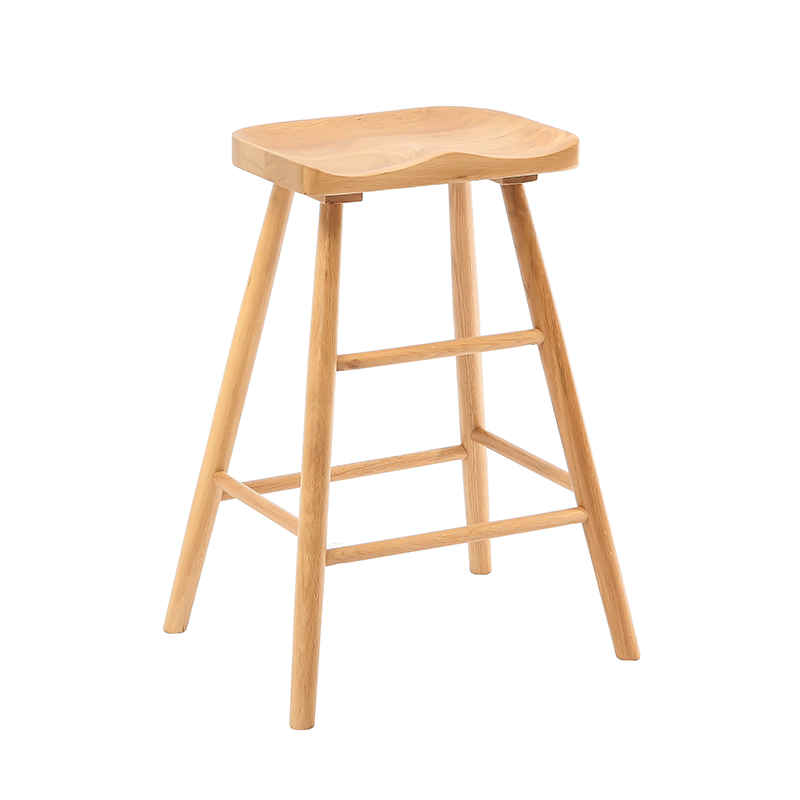
Bar stool frames endure different forces than standard dining chairs. The higher center of gravity—typically 65–80 cm above the floor versus 45–50 cm for a dining chair—amplifies lateral loads when a user leans to reach across a counter or pivots to speak with someone beside them. A leg spread of 50–55 cm at the base creates a stable footprint that resists tipping, while stretcher bars positioned 20–30 cm above the floor tie the legs into a rigid rectangle and also serve as secondary footrests. Without these horizontal braces, individual legs can develop independent movement under repeated loading, loosening the seat-to-leg joints. Quality bar stools use through-tenons or doweled mortise-and-tenon connections at every leg-to-seat junction, reinforced with corner blocks that distribute the user's weight across a broader glue surface. In standardized testing based on ANSI/BIFMA X5.1 protocols, stools built this way survive over 40,000 seated weight shifts without measurable joint play, whereas stools relying on screw-only leg attachments often fail within 15,000 cycles.
| Wood Species | Janka Hardness (lbf) | Grain Character | Best Application |
|---|---|---|---|
| European Oak | 1,300–1,360 | Prominent grain, light honey to medium brown | High-traffic kitchen islands, daily use |
| American Ash | 1,320 | Straight, pronounced grain; pale cream to light brown | Modern interiors, sculptural designs |
| Beech | 1,300 | Fine, even texture; light reddish-cream | Bentwood and steam-curved backrests |
| Rubberwood | 950–1,000 | Minimal grain, uniform pale color | Budget-friendly collections, painted finishes |
Flat wooden seats become uncomfortable after 20–30 minutes because they concentrate body weight onto the ischial tuberosities—the bony prominences at the base of the pelvis—without distributing pressure to the surrounding thigh tissue. A gently dipped seat counters this by lowering the center of the sitting surface by 8–12 mm, creating a subtle bowl that cups the buttocks and engages a broader contact area. Pressure-mapping studies of wooden seating surfaces show that a 10 mm central depression can reduce peak pressure at the ischial points by 18–22% compared to a completely flat seat of the same material. The dip must be gradual; an abrupt drop creates a hard edge that cuts into the back of the thighs. Well-executed examples transition smoothly from the rim to the lowest point, often describing a spherical radius of 300–400 mm that follows the natural curve of the seated pelvis. This sculptural approach also gives the stool a handcrafted appearance, reinforcing the connection between ergonomic intent and visual design.
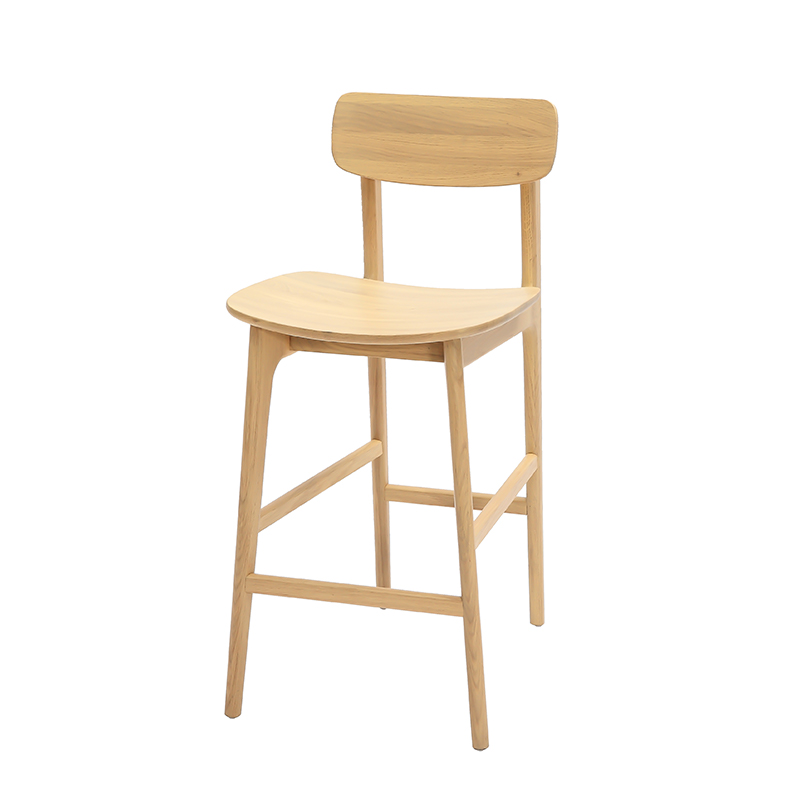
Not all bar stool users want a backrest, but those who sit for meals, remote work, or extended conversation benefit measurably from lumbar support. A backrest that contacts the spine between the L2 and L4 vertebrae—roughly 18–24 cm above the seat surface for most adults—reduces erector spinae muscle activation by providing a forward-leaning counterforce that maintains the natural lumbar curve. Backrests that curve to match a lumbar lordosis of 25–30 degrees feel supportive without pushing the user forward off the seat. Short backrests that end at the mid-lumbar level suit kitchen counters where sitting duration rarely exceeds 30 minutes. Taller backrests that extend to the 35–40 cm mark provide mid-thoracic contact, appreciated by those who lean back with a coffee or laptop. The connection between the backrest and seat must handle repetitive leaning loads; a backrest attached with two steel brackets and four screws per side resists loosening better than a single central spine attachment, which can develop lateral wobble within months of daily use.
The wood bar stool category has expanded beyond all-wood construction to include seating surfaces that introduce texture, flexibility, and temperature neutrality. Two material approaches dominate the elevated design segment.
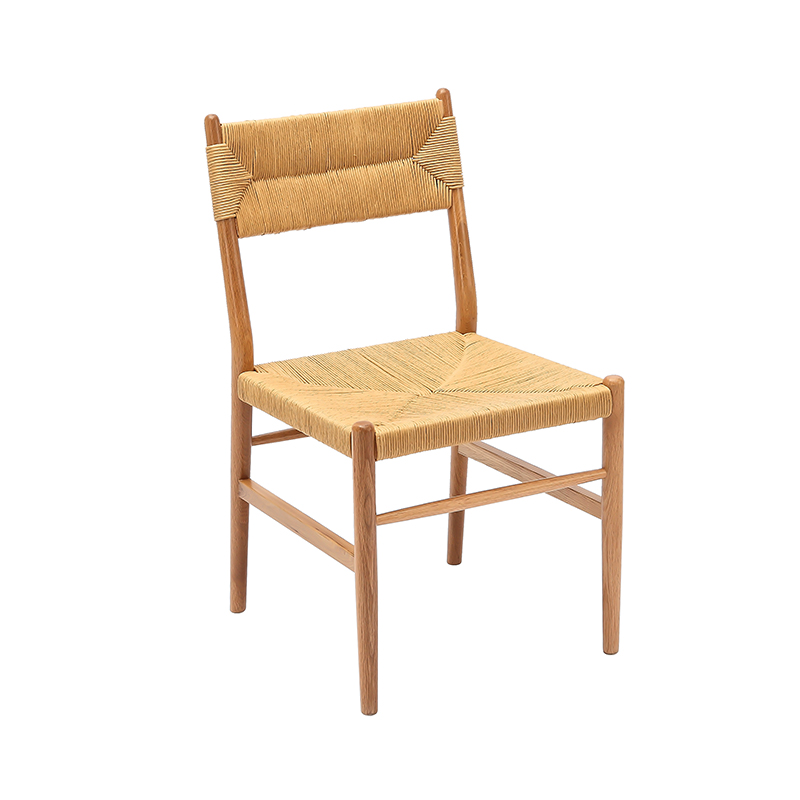
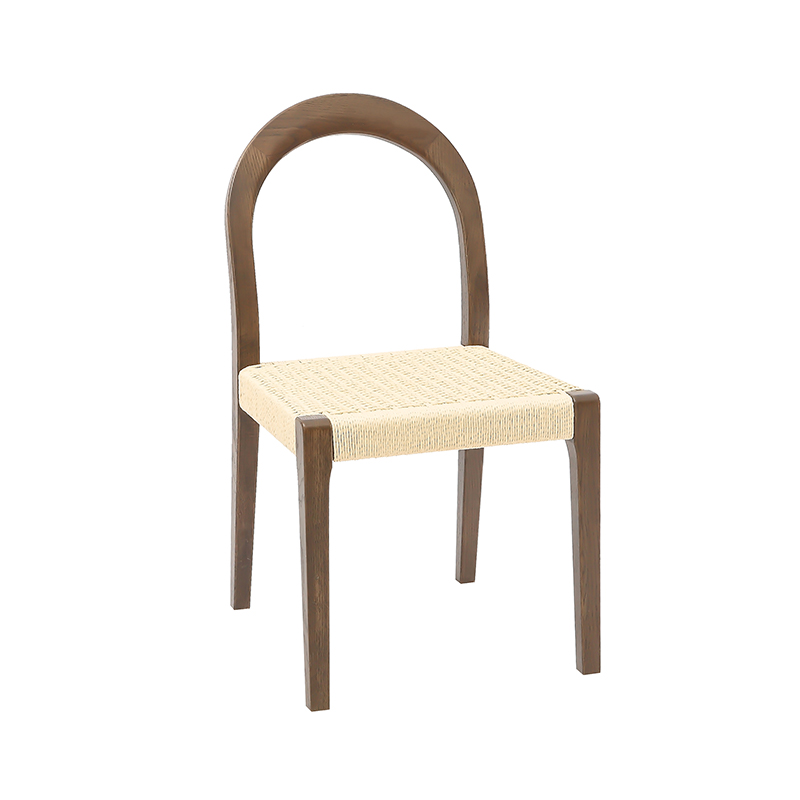
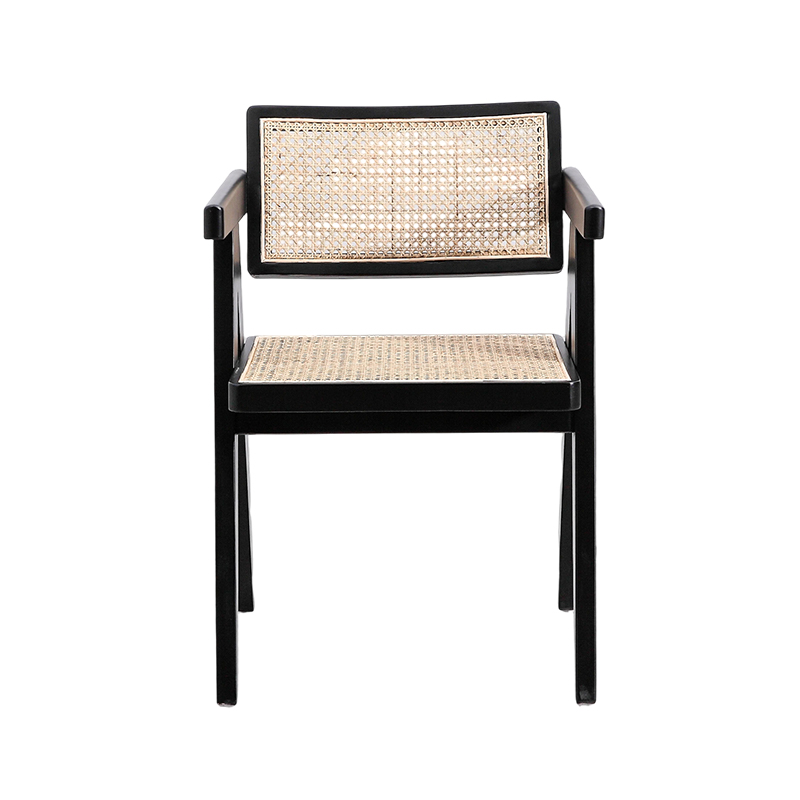
Rope weaving transforms the seat into a ventilated, flexible platform that adapts to body shape without the firm edge of a solid wood perimeter. Natural paper rope or cotton-blend cord woven in a Danish-inspired herringbone or grid pattern creates hundreds of small air gaps that prevent heat and moisture buildup during warm-weather sitting—a distinct advantage over non-porous leather in kitchens without air conditioning. The weave tension is critical: too loose, and the rope sags irreversibly within 6–12 months; too tight, and the seat loses its responsive give. Properly tensioned rope seats deflect 5–8 mm under a 70 kg load and return to flat when unloaded, a balance achieved by pre-stretching the cord under 15–20 kg tension during weaving. The visual result is a seat that reads as handcrafted and artisanal, pairing naturally with light oak or ash frames in coastal, Japandi, or transitional kitchens.
Leather on a bar stool serves two purposes: it provides a warmer initial contact temperature than bare wood—noticeable during winter mornings when kitchen surfaces are cold—and it develops a patina that personalizes the stool over years of use. Full-grain or top-grain leather with a thickness of 1.0–1.4 mm withstands the sliding and friction that bar stool seating generates, as users frequently pivot on and off the stool rather than settling into a single position. Curved leather backrests that wrap around the lumbar area combine the material's flexibility with ergonomic shaping; the leather conforms to subtle spinal variations that a rigid wood backrest cannot accommodate. The maintenance trade-off is real: leather requires conditioning every 6–8 months to prevent drying and cracking, especially in kitchens with radiant heat or direct sunlight. However, a well-maintained leather seat can last 12–15 years, outlasting many fabric upholstery options by a significant margin.
The most common installation error is pairing a stool of incorrect height with an existing counter, resulting in cramped thigh clearance or an uncomfortably low seating position. The measurement protocol is straightforward:
Wood bar stools influence how a kitchen or social space is perceived and used. Stools without backrests tuck completely under the counter overhang, preserving sightlines and making a small galley kitchen feel less obstructed—an important consideration when the counter faces a walkway. Stools with curved leather backs create a stronger visual presence and define the counter zone as a distinct seating area, suitable for open-plan layouts where the kitchen island serves as the room's social anchor. The wood finish should relate to existing cabinetry without matching it exactly: stools in a tone one shade lighter or darker than the surrounding millwork create depth, while an exact match flattens the visual field. Rope-woven stools pair effectively with white or light-gray cabinets and stone countertops, where the texture prevents the seating from disappearing against a pale background. In homes with underfloor heating, solid wood stools remain dimensionally stable as long as the floor surface temperature stays below 27°C; prolonged exposure above this threshold can dry the wood and loosen joints over multiple heating seasons.
Bar stools experience more concentrated wear than most dining furniture because users slide on and off them from a standing position, often with shoes on. A few maintenance habits significantly extend the stool's serviceable life. Wood frames benefit from quarterly inspection of all visible joints; any gap between the leg and the seat rail should be addressed with wood glue and clamping before the movement enlarges. Felt pads under each leg prevent the micro-scratches on tile or hardwood that accumulate into a dull, cloudy ring around the stool's footprint within a year. Rope seats can be cleaned by vacuuming with a brush attachment every two weeks to remove debris before it abrades the fibers; for deeper cleaning, a damp cloth with mild soap solution restores brightness without saturating the cord. Leather seats require a pH-balanced leather cleaner applied every two to three months, followed by a conditioner that replaces the fats and oils lost to ambient heat. Avoid placing leather-upholstered stools within 1 meter of a radiator or baseboard heater, where sustained temperatures above 30°C accelerate the leather's drying and eventual cracking.




Innovation Oriented, Quality As Life.
Feel free to reach our if you want to collaborate with us, or simply have a chat.
Become a Client 
Product Category
Wood Upholstered Chair
Woven Wood Chair
Wood Bar Stools
Wood Table
FSC Certified Wood Chairs
Wooden Rattan Chairs
Solid Wood Dining Chair
Modern Wooden Dining Chair
Contact Information
 +86-571-63521858
+86-571-63525898
 furniture@hzchangshun.com
emilypeng@hzchangshun.com
 No. 88, Zhumufan, Yushan Township, Fuyang District, Hangzhou City, Zhejiang Province, China


 EN
EN

 English
 中文简体
中文简体 Español