2026/11/23
Content
A sudden rain shower on a restaurant terrace is a useful test. The wicker chairs under the awning dry quickly and keep their shape. The chairs at the edge take water on the arms, the seat rails and the cushion seams. Two days later, one set smells faintly of damp reed while the other looks unchanged. The difference is not luck. It is material, frame construction and drying speed.
Conclusion: Wicker can get wet, but survival depends on the weave material, the frame underneath, and how fast the cushion and joints dry. Natural rattan, reed and seagrass absorb water and can swell, stain or smell; synthetic resin wicker usually tolerates rain, but trapped water still attacks wood or metal frames and foam cushions.
The word “wicker” describes a weave, not one material. That is why a simple yes-or-no answer misleads buyers. A natural woven chair in a covered sunroom and a resin woven stool beside a pool may share a look but not a service life. For procurement, the practical question is not “Can wicker get wet?” but “What happens in the first 24 hours after it gets wet?”
Water damage starts in three places: the woven skin, the frame, and the cushion. The weave decides how much water enters. The frame decides whether the piece stays structurally true. The cushion decides whether mold appears long after the surface looks dry.
Rattan, reed, seagrass and banana leaf are plant fibers. When rain sits on them, the fibers absorb moisture, expand slightly and lose stiffness. Repeated wet-dry cycles can loosen bindings, raise grain, leave water marks and create a musty smell. A single light splash is manageable. A soaked seat that stays damp for two days is a different risk.
Resin wicker is usually made from high-density polyethylene or PVC strands. It resists rain well and dries fast on the surface. The weakness is underneath: water passes through open weave gaps, collects on wood or steel frames, and reaches cushion foam. A rusted steel joint or a swollen particle-board seat panel can fail even when the outer weave looks perfect.
Absorbs water, swells, dries slowly and can develop odor if air cannot move through the seat.
Sheds rain quickly, but loose ends, cracks and hidden frames can trap water for days.
Untreated wood wicks moisture; steel rusts at scratches; staples and screws create tight wet spots.
Fabric may resist surface water while open-cell foam holds it, creating the conditions for mold.
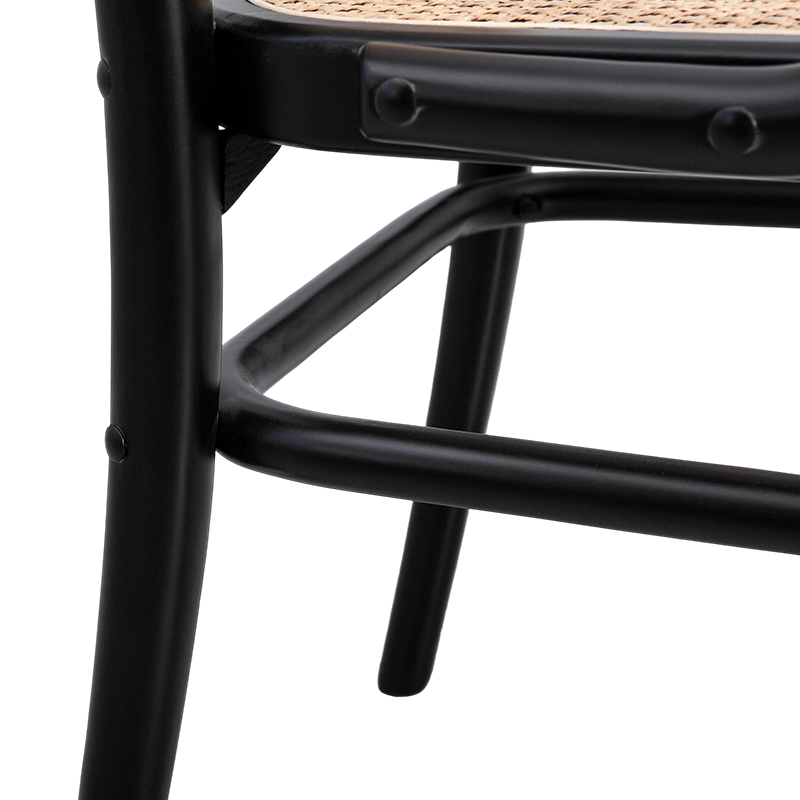 Black Frame Woven Rattan Wood ChairWoven rattan seat and back with black metal frame and solid wood arms and legs; check frame joints and drying after rain.View Product →
In our chair line, woven rattan surfaces are often paired with solid wood frames. That combination needs a dry seat deck and good airflow because the weave and the frame react to moisture at different speeds. A black frame woven rattan chair can look dry on the surface while the frame joint remains damp after a storm.
The table below is a quick procurement screen. Risk levels are relative indicators for regular rain exposure, not laboratory certifications. A low-risk material can still fail if the frame or cushion package is wrong.
Most inspections happen on the surface. A better check looks at weight gain, smell, joint tightness and cushion compression. The bar chart below uses a simple 1–5 risk index for common wet-exposure problems over a 24-hour period.
The highest hidden risk is not the visible weave. It is a cushion that looks dry outside but still holds water in the core. A close second is a frame joint that stays wet because the weave blocks airflow. If a piece feels heavier than normal or smells musty near the seat rail, move it to a dry, shaded area with fans before mold establishes.
Exposure is not evenly distributed across a property. A practical project map helps specify the right weave and cushion package. The pie chart below shows typical wet-exposure scenarios in mixed residential and hospitality furniture planning.
Poolside and open terrace settings need the strongest frame protection and removable cushions. Covered sunrooms can accept natural woven surfaces if humidity stays moderate and air moves freely.
The lowest-cost choice is rarely the lowest-risk choice. A buyer should match the weave, frame finish and cushion construction to the actual weather path, not to a showroom photograph.
Ask whether the piece sees driving rain, splash, pool water or only occasional damp air. Open terrace exposure is a different specification from a covered balcony.
Confirm resin type, UV additive and weave tightness. For natural rattan, check whether the finish is sealed and whether the supplier recommends covered use.
Look for sealed end grain, powder-coated metal, drainage gaps and corrosion-resistant fasteners. A good weave cannot rescue a frame that stays wet.
Choose quick-dry foam, removable covers and breathable covers that keep rain off without trapping condensation. The ROI comes from fewer replacements, not just a lower unit price.
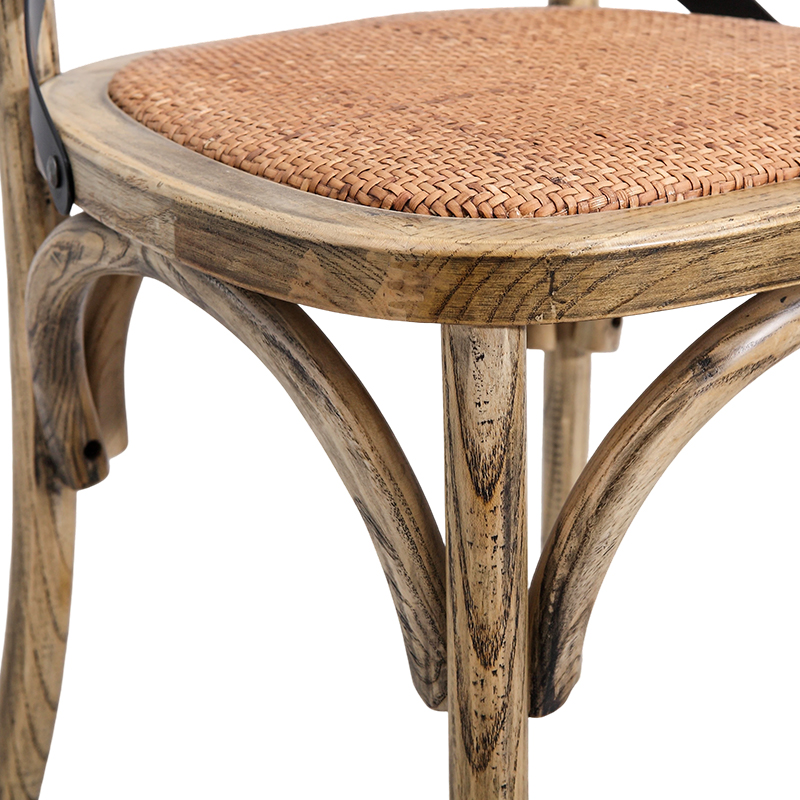 Cross Back Dining Chair with Rattan MatSolid oak frame and breathable rattan seat suit covered dining rooms or semi-protected verandas; wood or stackable versions available.View Product →
For covered dining rooms and semi-protected verandas, a cross-back dining chair with a rattan mat offers the natural look without putting the woven seat directly in standing water. For fully open sites, specify synthetic weave and a frame finish that can survive repeated wet-dry cycles.
Fast action after rain prevents most permanent damage. The goal is to remove standing water, separate wet surfaces and move air through the weave and cushion core.
For a deeper step-by-step routine, see our wood patio furniture cleaning guide. Buyers who need material traceability can review our sustainability approach before specifying woven surfaces.
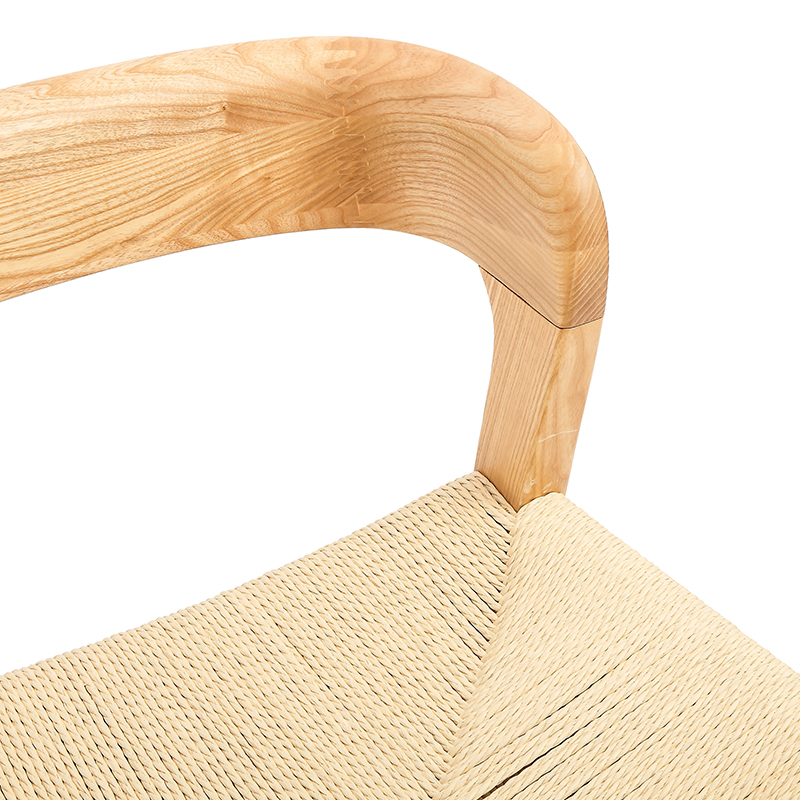 Rope Woven Bar Stool with Lumbar SupportRubberwood frame, fabric seat and lumbar-support backrest in compact sizes; request care and material details before commercial use.View Product →
Commercial buyers should require written care instructions, frame material declarations, cushion foam specifications and a clear statement of indoor versus covered outdoor suitability. For hospitality projects, add a drying protocol to the maintenance manual and keep spare cushion cores for high-exposure seats. Wicker can get wet, but a specification that ignores drying time, frame protection and cushion construction will fail long before the weave does.
Related Products




Innovation Oriented, Quality As Life.
Feel free to reach our if you want to collaborate with us, or simply have a chat.
Become a Client 
Product Category
Wood Upholstered Chair
Woven Wood Chair
Wood Bar Stools
Wood Table
FSC Certified Wood Chairs
Wooden Rattan Chairs
Solid Wood Dining Chair
Modern Wooden Dining Chair
Contact Information
 +86-571-63521858
+86-571-63525898
 furniture@hzchangshun.com
emilypeng@hzchangshun.com
 No. 88, Zhumufan, Yushan Township, Fuyang District, Hangzhou City, Zhejiang Province, China


 EN

 English
 中文简体
 Español