2026/06/22
Content
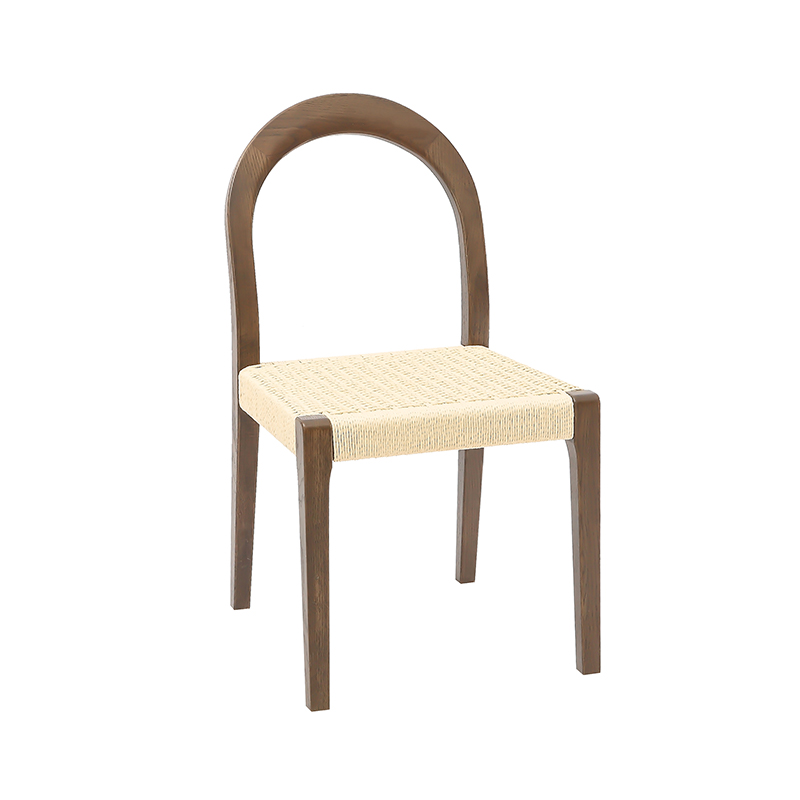
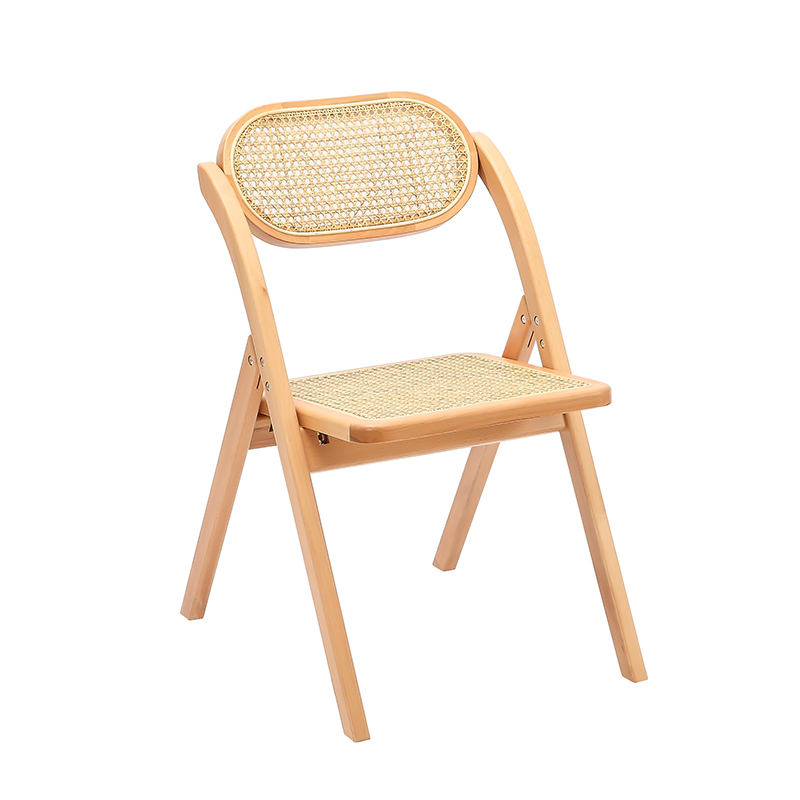
The most enduring wood chair designs share a common starting point: they do not disguise what they are made from. Solid wood is left to show its grain. Rattan retains its natural texture. Rope weaving follows patterns that make the material's tension visible. This commitment to material honesty is not a stylistic preference so much as a structural discipline. When the design works with the properties of each material rather than against them, the result is a chair that performs well, ages gracefully, and communicates something genuine about the craft behind it.
Wood chair design in this tradition celebrates the authenticity of craftsmanship and the tactile beauty of natural materials. The goal is not to produce a chair that looks impressive in a catalog image but to produce one that rewards daily contact, that feels right underhand, that sits solidly on the floor, and that earns its place in a room through presence rather than novelty. Understanding how this is achieved requires looking closely at the individual decisions that accumulate into a finished piece.
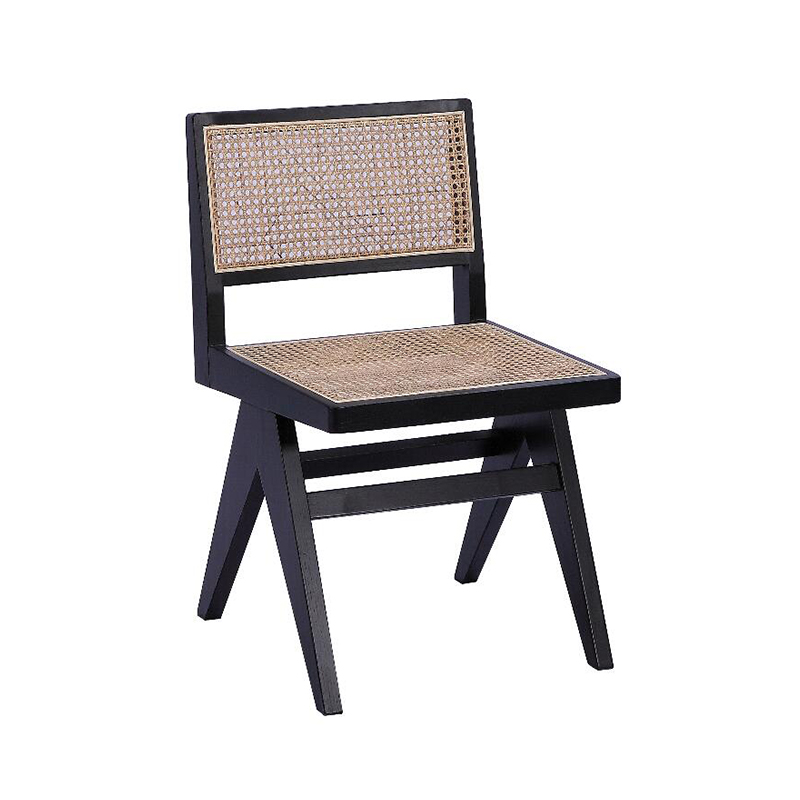
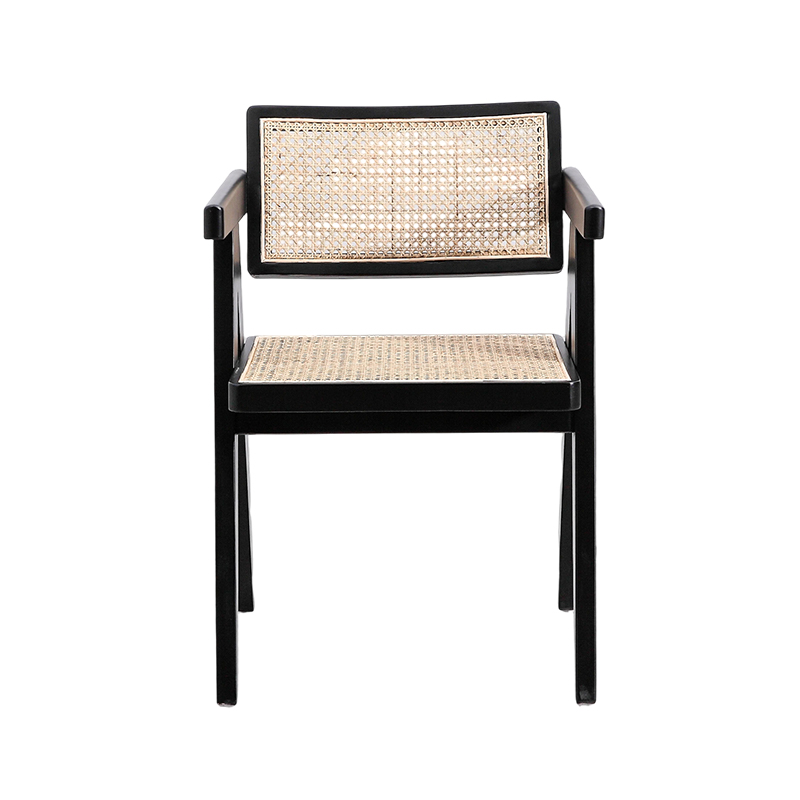
Every wood chair design that incorporates rattan, rope, or upholstered elements still depends on a solid wood frame to hold everything together under load. The frame takes the compressive force of the seated person, the lateral racking stress of shifting weight, and the repeated impact of someone sitting down firmly. Choosing the right species and processing the timber correctly before construction are prerequisites that no amount of good joinery can compensate for if they are skipped.
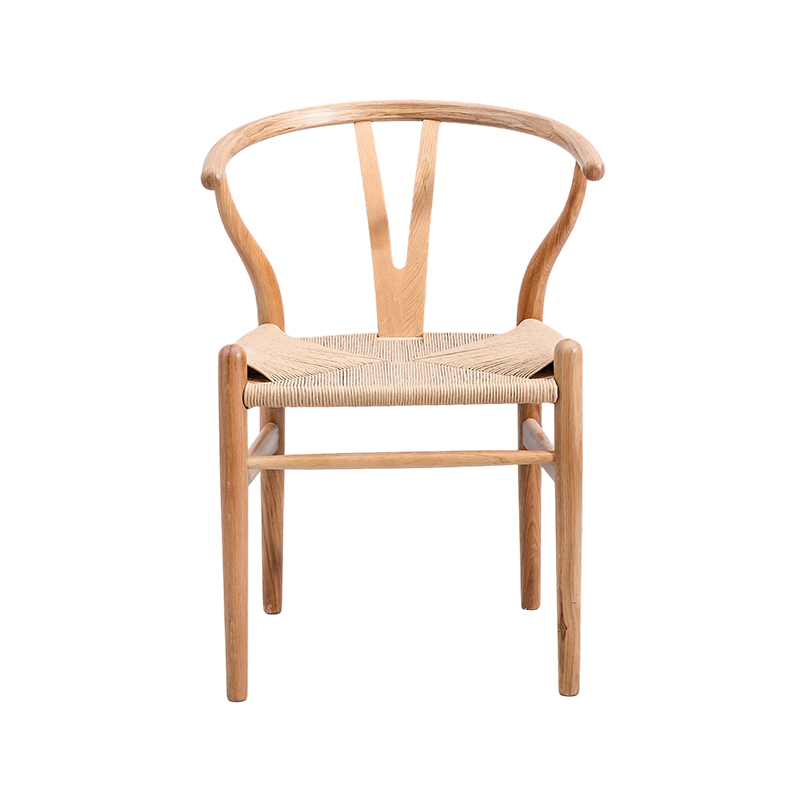
Ash, beech, oak, and rubberwood are the species most commonly used in quality wood chair production. Each has distinct working properties. Ash is exceptionally tough and bends well with steam, making it a traditional choice for curved back bows and bent components. Beech mills cleanly, accepts glue reliably, and finishes to a consistent tone, which is why it has been the default European chair timber for more than a century. Oak brings pronounced grain figure and high tannin content that improves its resistance to moisture and fungal attack. Rubberwood, a plantation hardwood derived from rubber trees at the end of their latex-producing life, offers a sustainable option with adequate density for most chair applications and good dimensional stability after kiln drying.
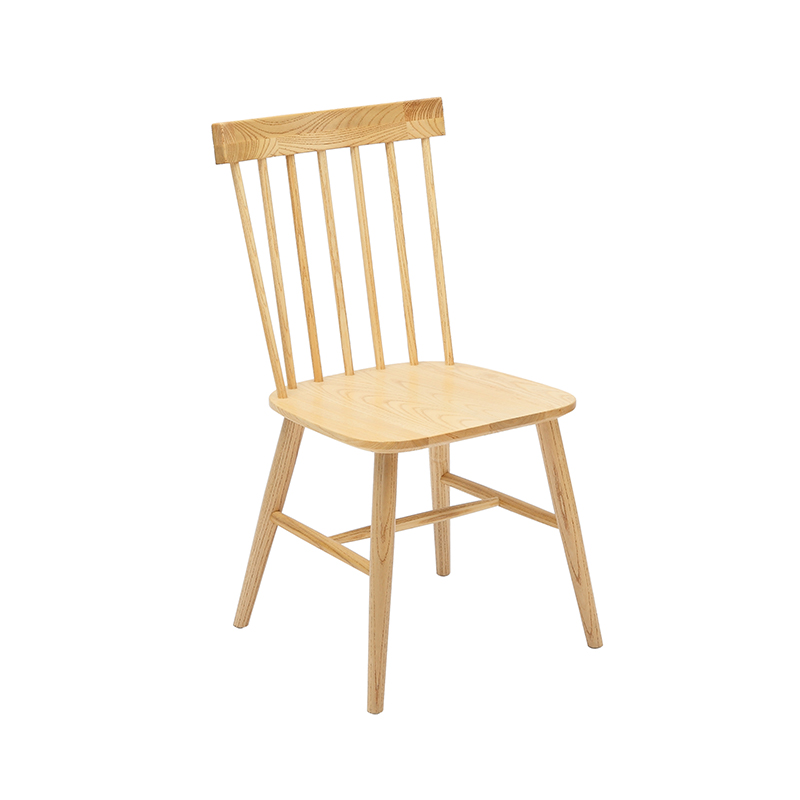
The chair frame must embrace the inherent elegance of solid wood, which means keeping cross-sections refined rather than bulky. Oversized legs and rails signal a lack of confidence in the joinery. A well-designed frame uses timber efficiently, with members sized to carry their actual loads rather than padded out as a substitute for proper construction. This restraint is what gives minimalistic silhouettes their visual authority.
The connection between wood members is where a chair's structural integrity is either established or compromised. Mortise-and-tenon joinery remains the benchmark for wooden chair construction because it creates a mechanical interlock between components that works in combination with adhesive rather than relying on adhesive alone. A properly fitted mortise-and-tenon joint, with the tenon shouldered to resist rotation and glued with a high-strength PVA or epoxy adhesive, produces a connection stronger than the surrounding timber.
Dowel joints are faster to produce and acceptable in lower-stress locations, but they rely entirely on glue surface area and are vulnerable to the racking forces that chairs experience when someone leans sideways or backward. Chairs assembled exclusively with dowels tend to loosen at the seat-to-leg joints within a few years of daily use. Corner blocks, glued and screwed into the internal corners of the seat frame, significantly improve resistance to this racking without adding visible bulk to the design.
The structure and form of a well-jointed chair communicates itself subtly. Joints that fit well sit flush. Components align without gaps. The finished piece does not flex when lifted by a single leg. These are the indicators that an experienced buyer or specifier looks for when evaluating whether a design has been engineered for longevity or assembled to a price.
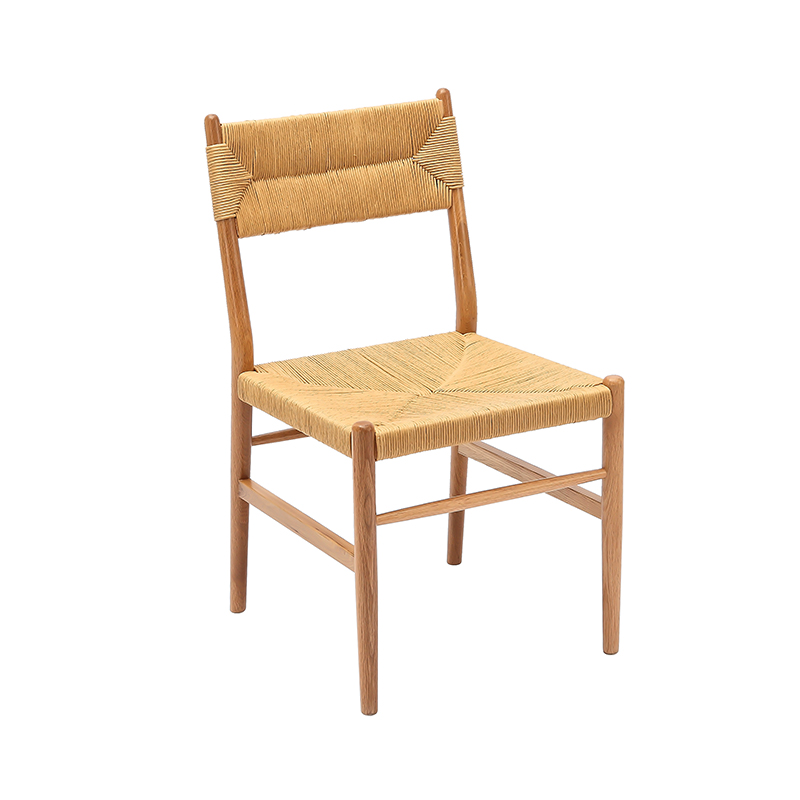
One of the defining characteristics of contemporary wood chair design is the integration of secondary materials into the solid wood frame. Rattan, rope, cane webbing, and woven rush each bring different visual and tactile qualities, and each imposes specific requirements on the frame design that must be resolved before the weaving begins.
Rattan is the stem of a climbing palm and is available in several forms for furniture use. Full rattan poles are used for structural elements in rattan furniture, but in wood chair design, it is most commonly used as flat reed for weaving seat and back panels, or as cane webbing applied in pre-woven sheets to routed grooves in the frame. Hand-woven rattan produces a raw texture that varies slightly across each panel, which is precisely what gives it its character. The contrasting textures of smooth finished wood and woven rattan create visual rhythm that purely wooden designs cannot achieve.
Rope seating, which experienced a significant revival in Scandinavian and Japanese-influenced design directions from the 2010s onward, works on a different principle. The rope is wound under tension around a frame, with each pass locked against the previous one. The resulting surface has a regular geometric pattern that suits minimalistic silhouettes and works particularly well in chairs where the frame is a strong visual element and the seat is intended to read as a secondary plane rather than the dominant form.
The following table summarizes how the main secondary materials compare across the properties most relevant to wood chair design decisions.
| Material | Visual Character | Tactile Quality | Durability in Daily Use | Design Contexts |
| Hand-woven rattan | Organic, irregular | Rough, natural | Good with indoor use | Rustic, coastal, natural-themed |
| Cane webbing | Regular, geometric | Smooth, firm | Very good | Traditional, transitional |
| Rope weaving | Linear, structured | Firm, textured | Excellent | Scandinavian, minimalist |
| Woven rush | Warm, artisanal | Soft, yielding | Moderate | Country, folk-influenced |
A wood chair design that looks resolved in elevation must also work as a seat. Ergonomic comfort in daily use depends on several geometric relationships that are easy to get wrong and difficult to correct after the frame has been built.
Seat height measured from the floor to the top of the seat surface should fall between 430 mm and 460 mm for a standard dining chair intended for use with a 740 mm to 760 mm table. Lower seat heights, in the range of 380 mm to 420 mm, suit lounge and occasional chairs where a more relaxed posture is appropriate. Gently dipped seats that conform to the body are formed either by shaping the solid wood seat board with a curved router profile, by building a seat frame with a woven surface that deflects slightly under load, or by combining both approaches. A seat that is completely flat concentrates pressure under the ischial tuberosities and becomes uncomfortable within thirty minutes for most users.
Back angle relative to the seat plane is the single most important variable for back support. A perpendicular back at 90 degrees to the seat requires the sitter to maintain active muscle tension to stay upright. Reclining the back between 5 and 10 degrees from vertical allows the lumbar spine to adopt a more natural curve without the sitter feeling as though they are falling backward. This small adjustment transforms the perceived comfort of a design without changing its visual character significantly.
The details that give a wood chair design its individual character are often the ones that take the most time to develop and are the hardest to copy successfully. Each chair showcases a unique personality through subtle design distinctions that accumulate into a coherent whole.
Leg taper is one such detail. A leg that is the same width from top to bottom reads as static. A leg that tapers toward the floor reads as light and resolved. The rate of taper, whether it begins immediately below the seat rail or only in the lower third of the leg, changes the visual balance of the entire frame. Similarly, the radius applied to the edges of seat rails and back slats affects how the chair reads from across a room. Sharp arrises look crisp and modern. Slightly rounded edges look warmer and more approachable.
The choice of finish influences perceived quality as much as any structural decision. A finish that sits too heavily on the surface obscures the wood grain and makes the chair look plastic. A finish that is applied too lightly leaves the wood unprotected. The best finishes for daily-use wood chairs are those that penetrate slightly into the surface fibers while leaving a controlled film thickness that can be felt as a slight sheen rather than seen as a coating.
One of the practical strengths of well-executed wood chair design is its ability to work across a wide range of interior contexts. Chairs that maintain minimalistic silhouettes while incorporating natural material combinations sit comfortably in modern interiors without looking out of place, and their rustic charm and cultural undertones connect equally well to natural-themed settings, whether that means a Japandi dining room, a Provencal kitchen, or a coastal hospitality environment.
For buyers specifying chairs across a project, this versatility reduces the risk of a purchasing decision that works in one context but creates problems in another. A chair collection that can move between a lobby seating area and a restaurant dining space, or between a boutique hotel room and a terrace, gives specifiers flexibility without requiring multiple product families.
The following application contexts are where wood chair designs built on the principles described in this article consistently perform well:
Hangzhou Changshun Furniture Co., Ltd., based in Fuyang, Zhejiang, produces FSC-certified wood chair collections that apply these design principles across their Wood Chair and Wood Upholstered Chair ranges. With more than twenty years of manufacturing experience in wooden and rattan furniture, their production reflects the combination of traditional weaving techniques and structural rigor that distinguishes furniture built to last from furniture built to sell.




Innovation Oriented, Quality As Life.
Feel free to reach our if you want to collaborate with us, or simply have a chat.
Become a Client 
Product Category
Wood Upholstered Chair
Woven Wood Chair
Wood Bar Stools
Wood Table
FSC Certified Wood Chairs
Wooden Rattan Chairs
Solid Wood Dining Chair
Modern Wooden Dining Chair
Contact Information
 +86-571-63521858
+86-571-63525898
 furniture@hzchangshun.com
emilypeng@hzchangshun.com
 No. 88, Zhumufan, Yushan Township, Fuyang District, Hangzhou City, Zhejiang Province, China


 EN
EN

 English
 中文简体
中文简体 Español