2026/07/02
Content
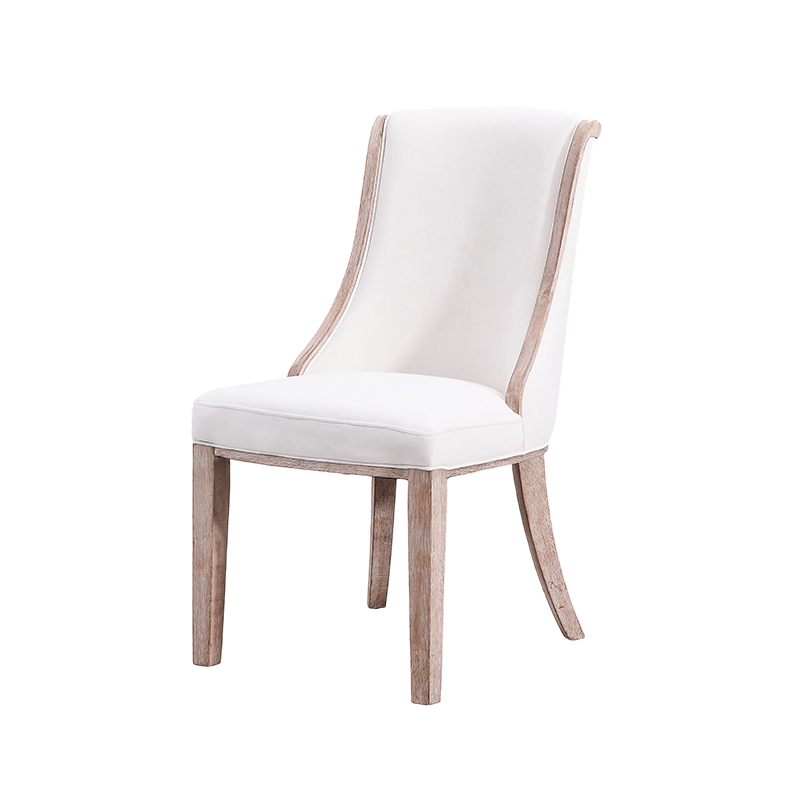
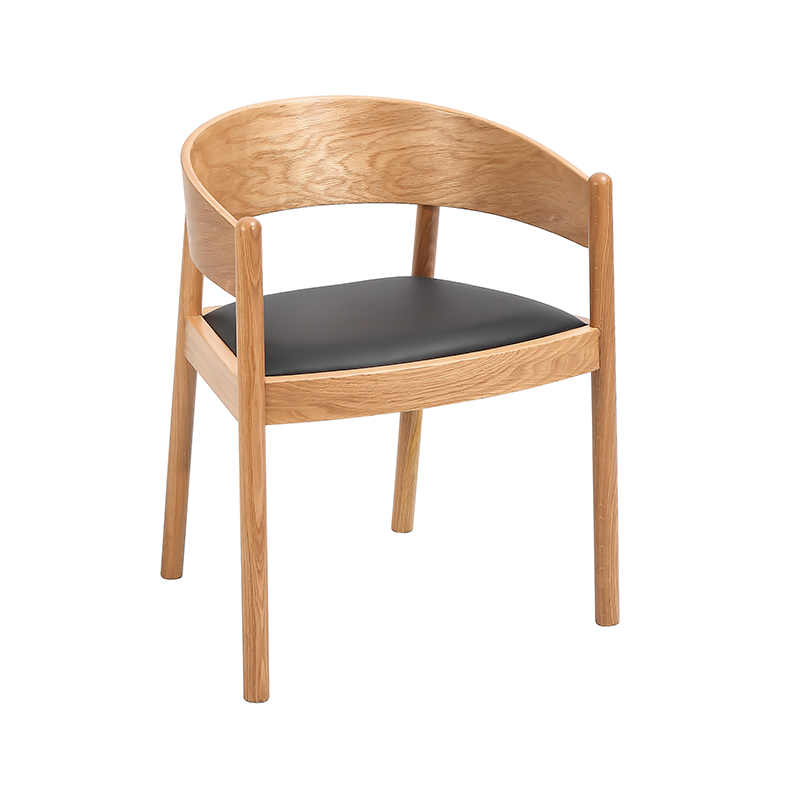
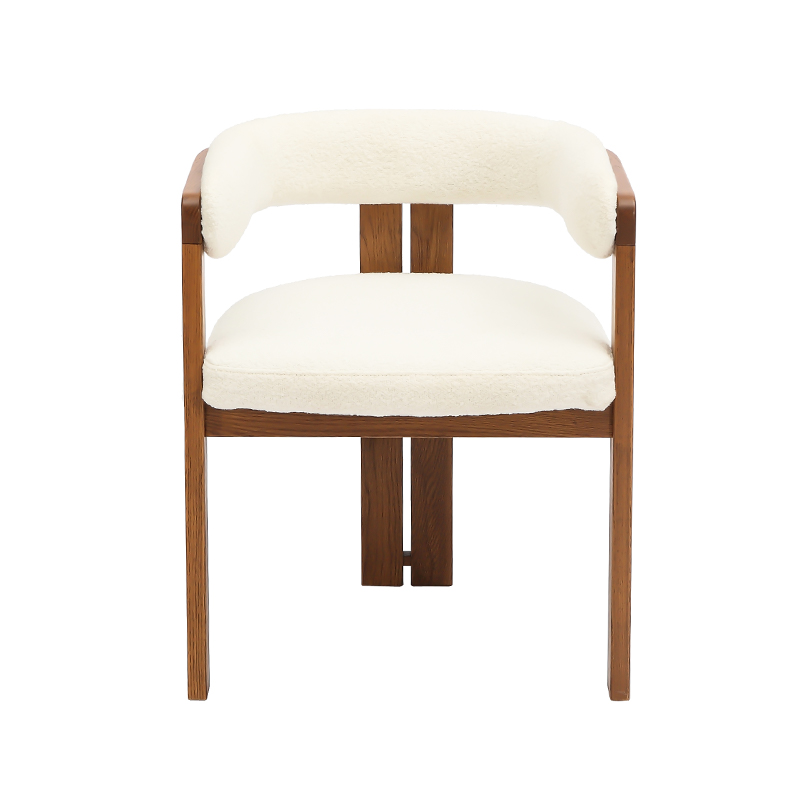
A dining upholstered chair is not simply a wooden dining chair with fabric stapled over foam. It is an engineered assembly where the frame must withstand repeated lateral and torsional loading from people sitting, shifting, and standing, while the upholstery system—fabric, foam, and underlying support—must maintain its appearance and comfort through thousands of meals, spills, and cleaning cycles. The difference between a chair that looks tired after two years and one that remains structurally sound and visually appealing after a decade comes down to frame joinery method, foam density and type, and fabric abrasion rating. A chair with doweled and glued corner blocks in the front rail-to-leg joints will outlast a chair assembled with screws alone by a factor of three to five times. A seat cushion built on a 2.4-pound-density high-resilience polyurethane foam core will maintain its support for over 100,000 compression cycles, while a 1.5-pound conventional foam will lose 30% of its thickness within three years of daily use. Understanding these hidden specifications transforms a purchase from a style decision into an informed durability calculation.
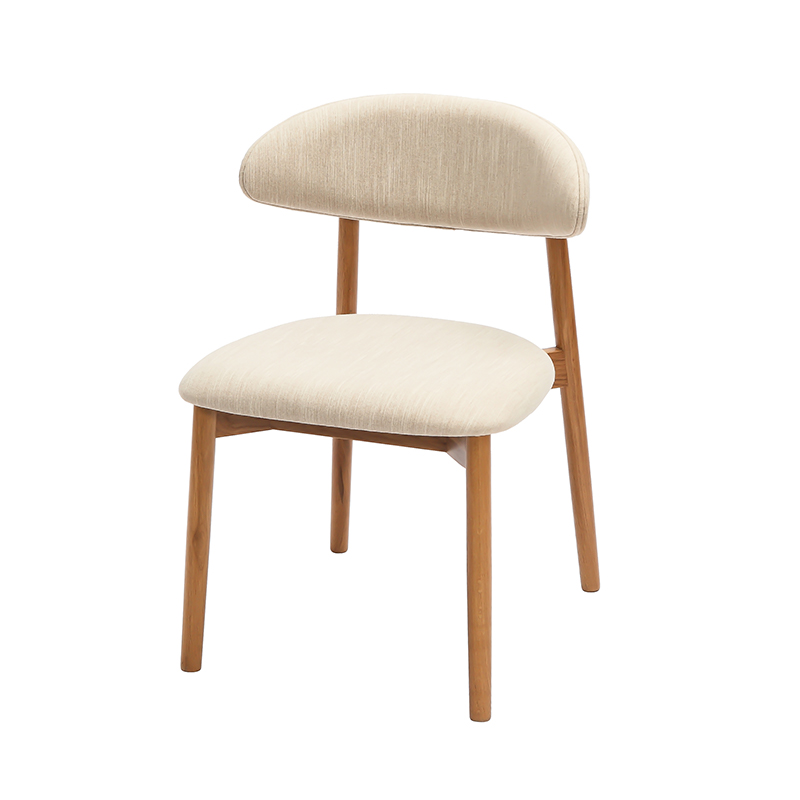
The frame of a dining upholstered chair is subjected to forces that are often underestimated. When a person sits, the front rail experiences a downward bending moment. When they lean back, the rear legs act as cantilevers resisting a combined compression and bending load. When they shift sideways to reach for something, the entire frame twists. These loads are repetitive—a chair used for three meals a day experiences over 3,000 load cycles per year on the joint between the side rail and the front leg alone. The joinery method determines whether the chair tightens under these loads or gradually loosens.
The gold standard for dining chair frame construction is a mortise and tenon joint at each rail-to-leg connection, supplemented by a glued and screwed triangular corner block. The tenon provides glue surface area—typically 15 to 25 square centimeters per joint in a properly sized tenon—while the corner block converts the racking force that would peel the joint apart into a shear load that the glue line resists far more effectively. Kiln-dried hardwood with a moisture content of 6% to 8% is the standard frame material because it remains dimensionally stable through seasonal humidity changes, preventing the joint loosening that occurs when softwood frames shrink and swell.
Dowel joinery, when executed with at least two 10-millimeter-diameter dowels per joint and a minimum dowel penetration of 25 millimeters into each member, approaches mortise-and-tenon strength. The failure mode for dowel joints in dining chairs is dowel shear—where the dowel itself snaps under lateral loading—and this occurs most often when a single dowel is used at a high-stress connection like the front leg-to-side rail. Quality construction uses spiral-grooved dowels that allow excess glue to escape during assembly, preventing the hydraulic lock that can prevent the joint from closing fully and leaving a glue-starved connection that will fail early in the chair's life.
The foam cushion on a dining upholstered chair is the component most directly responsible for the user's immediate comfort impression, and it is the component most likely to degrade in a way that is visible and uncomfortable. Foam quality is specified by two numbers: density, measured in kilograms per cubic meter or pounds per cubic foot, and indentation load deflection, which measures firmness. A dining chair seat should use foam with a minimum density of 35 kilograms per cubic meter for standard use and 45 kilograms per cubic meter or higher for heavy-use commercial dining environments. The ILD should fall in the range of 30 to 45 for a seat that feels supportive during a meal without being so firm that it creates pressure points during a long dinner conversation. High-resilience foam, which returns to its original shape immediately after compression, outperforms conventional polyurethane foam in dining chair applications because it resists the progressive thinning that creates a visible dent in the seat cushion after repeated use by the same person in the same position.
A quality dining upholstered chair adds a polyester fiber wrapping layer over the foam core before the upholstery fabric is applied. This wrapping, typically 6 to 12 millimeters thick and bonded polyester with a density of 200 to 400 grams per square meter, serves multiple functions: it smooths the sharp edges of the foam core so the fabric does not wear through at corners, it provides a slight crown to the seat surface that improves the visual fullness of the upholstered panel, and it acts as a sacrificial wear layer that compresses slightly over time while protecting the underlying foam from direct abrasion against the fabric backing. Chairs that omit this wrapping layer show fabric wear at the foam edges within 18 to 24 months of use.
The fabric on a dining chair endures a specific and demanding combination of challenges: food and beverage spills, abrasive contact with clothing rivets and belt buckles, oil transfer from skin, and direct sunlight through dining room windows. The standardized test for fabric durability is the Martindale abrasion test, which rubs a fabric sample against an abrasive wool standard under a specified pressure and counts the number of cycles before the fabric shows thread breakage or unacceptable appearance change. For a domestic dining chair, a fabric should achieve a minimum Martindale rating of 20,000 cycles. For commercial dining or a household with young children, 40,000 cycles and above provides a meaningful durability margin. The rating is not a guarantee—a fabric that meets the cycles but has a loose weave will still snag and pull—but it is the single most informative specification when comparing upholstery options.
| Martindale Cycles | Suitability | Typical Fabric Types | Expected Service Life |
|---|---|---|---|
| Below 15,000 | Decorative only, occasional use | Delicate linens, silks, viscose blends | 1–3 years before visible wear |
| 15,000–25,000 | Light domestic dining use | Cotton blends, light chenille | 3–5 years |
| 25,000–40,000 | General domestic, daily dining | Polyester, polyester-cotton, microfiber | 5–8 years |
| 40,000+ | Heavy domestic, commercial dining | Commercial-grade polyester, nylon, olefin | 8–15+ years |
Dining upholstered chairs encounter a broader range of staining agents than any other upholstered furniture in the home: red wine, coffee, tomato sauce, oil-based dressings, and chocolate all make regular appearances. The fabric's stain resistance depends on the fiber chemistry and any applied protective finish. Solution-dyed acrylic and solution-dyed polyester fabrics have the color pigment integrated into the polymer before the fiber is extruded, making the color part of the fiber itself rather than a surface dye. This means that stain-removal cleaning agents cannot strip the color from the fiber, a critical advantage for a dining chair that will be cleaned aggressively. Performance velvet and performance linen fabrics, typically made from polyester with a soil-release finish, provide the visual texture of natural fibers with the cleanability of synthetics. The protective finish matters as much as the fiber: a fluorocarbon-based finish repels both water-based and oil-based spills by lowering the fabric's surface energy below that of the liquids, causing them to bead on the surface rather than wicking into the fiber structure. This finish is not permanent—it degrades with cleaning and abrasion—but it provides a crucial window of time to blot a spill before it penetrates.
Beneath the foam and fabric of a dining upholstered chair seat lies a support system that determines how the cushion performs over time. The two predominant systems are a solid panel—typically plywood or engineered wood—and an elastic webbing suspension. A solid panel provides consistent, non-deflecting support that prevents the foam from bottoming out and eliminates the hammocking effect where the center of the seat sags deeper than the edges. This is the standard for traditional and formal dining chairs. An elastic webbing system, using interwoven strips of rubberized fabric or Pirelli webbing, provides a more forgiving sit with visible flex, preferred in contemporary and mid-century designs where the chair's aesthetic calls for a lighter visual profile and the user expects a more lounge-like feel. The webbing must be tensioned to a specific deflection standard—typically 15 to 20 millimeters of deflection under a 50-kilogram point load—to provide support without allowing the cushion to over-compress. A solid panel with ventilation holes drilled to allow air to escape from the foam during compression prevents the pneumatic effect where a sealed seat base traps air and creates a stiff, unyielding feel.
The dimensions of a dining upholstered chair directly determine whether a user is comfortable for 30 minutes or for a three-hour dinner party. The critical measurements are seat height, seat depth, backrest height, and backrest angle. A standard dining chair seat height of 460 to 480 millimeters from the floor positions the average adult's thighs parallel to the floor when their feet are flat, with the seat front edge falling 250 to 300 millimeters below the table underside for adequate thigh clearance. Seat depth—the horizontal distance from the front edge of the seat to the backrest face—should measure 400 to 440 millimeters for a chair without arms; deeper than this and shorter users cannot sit with their backs against the backrest while maintaining knee clearance at the front edge. The backrest angle from the seat plane, typically 95 to 100 degrees, provides a slight recline that opens the hip angle and reduces lower back pressure during a long meal. An upholstered backrest that curves to support the lumbar spine at approximately 200 to 250 millimeters above the seat surface transforms a chair from a perch into a supportive seat that encourages lingering at the table.
The longevity of a dining upholstered chair depends as much on maintenance as on initial construction quality. Spills should be blotted, never rubbed, within seconds of contact—rubbing drives the liquid into the fiber structure and abrades the fabric surface, creating a double mechanism of staining and wear. A quarterly vacuuming with an upholstery brush attachment removes the abrasive dust and skin oils that accumulate in the fabric and act as a cutting compound, wearing through fibers at the seat edge and armrest contact points. Rotating the position of chairs around the dining table every three to six months distributes the wear pattern so the same chair is not always subjected to the heaviest user or the most direct sunlight. For fabric-protected chairs, reapplication of a fluorocarbon-based fabric protector every 12 to 18 months after professional cleaning restores the spill-beading surface energy that degrades with use. The cost of this maintenance regimen over a decade is a fraction of the cost of reupholstery or replacement.
A well-constructed dining upholstered chair with a solid hardwood frame can be reupholstered multiple times over its service life, making the initial frame investment a long-term value proposition. The reupholstery process strips the old fabric, inspects and replaces the foam and wrapping if degraded, and applies new fabric over the restored seat and back. The cost of professional reupholstery typically runs 50% to 70% of the cost of a new chair of equivalent frame quality, making it economically viable for chairs with frame values above a certain threshold. Chairs assembled with stapled softwood frames and minimal joinery are generally not worth reupholstering; the frame will likely fail before the second upholstery cycle is complete. The reupholstery decision point is usually when the fabric shows visible wear, the foam has compressed to less than 60% of its original thickness, or the user desires a style change. At that point, inspecting the frame joints for looseness and the corner blocks for cracks determines whether the chair receives new fabric or is retired.
Related Products




Innovation Oriented, Quality As Life.
Feel free to reach our if you want to collaborate with us, or simply have a chat.
Become a Client 
Product Category
Wood Upholstered Chair
Woven Wood Chair
Wood Bar Stools
Wood Table
FSC Certified Wood Chairs
Wooden Rattan Chairs
Solid Wood Dining Chair
Modern Wooden Dining Chair
Contact Information
 +86-571-63521858
+86-571-63525898
 furniture@hzchangshun.com
emilypeng@hzchangshun.com
 No. 88, Zhumufan, Yushan Township, Fuyang District, Hangzhou City, Zhejiang Province, China


 EN
EN

 English
 中文简体
中文简体 Español