2026/04/21
Content
In an era when furniture trends cycle through metal frames, molded plastics, and upholstered foam stacks, wood bar stools have maintained a consistent and growing presence across kitchen counters, home bars, and commercial hospitality spaces. The reason is not nostalgia — it is performance. Solid wood construction offers a structural density that absorbs vibration and resists the gradual loosening of joints that plagues hollow metal alternatives. A well-built wooden bar stool, jointed with mortise-and-tenon construction and finished with a hardwax oil or water-based lacquer, can withstand decades of daily use without developing the creaks and wobbles that signal imminent failure in lower-grade seating.
Beyond durability, wood carries an inherent thermal quality that other materials cannot replicate. Metal seats conduct cold uncomfortably; hard plastic feels clinical. Wood — particularly species like white oak, beech, and ash — warms quickly to body temperature and retains a tactile surface character that feels considered rather than manufactured. This sensory dimension is increasingly valued in residential kitchen design, where the bar counter or kitchen island has become a primary social zone rather than a purely functional workspace. The seating that surrounds it is expected to hold its own aesthetically while functioning reliably across casual breakfasts, evening drinks, and everything in between.
Choosing wooden bar stools without accounting for counter or bar height is one of the most common — and easily avoidable — purchasing errors. The seated thigh clearance between the top of the stool seat and the underside of the counter should be a minimum of 25 cm to allow comfortable leg positioning and relaxed posture. Working backward from common counter heights produces the following stool seat height targets:
| Counter / Bar Height | Recommended Stool Seat Height | Typical Application |
|---|---|---|
| 85–90 cm | 60–65 cm | Standard kitchen counter / island |
| 100–105 cm | 73–78 cm | Bar counter / raised kitchen peninsula |
| 110–115 cm | 82–88 cm | High bar / commercial bar top |
Footrest positioning is equally important and often underspecified in product listings. For bar stools at 73–78 cm seat height, the footrest rung should sit approximately 20–25 cm below the seat surface. A rung positioned too low forces the legs to dangle, causing fatigue within twenty to thirty minutes — a meaningful consideration for stools used during extended social gatherings. Most quality wooden bar stool designs integrate this detail correctly, but it is worth confirming the rung height measurement before placing orders, particularly for commercial quantities.
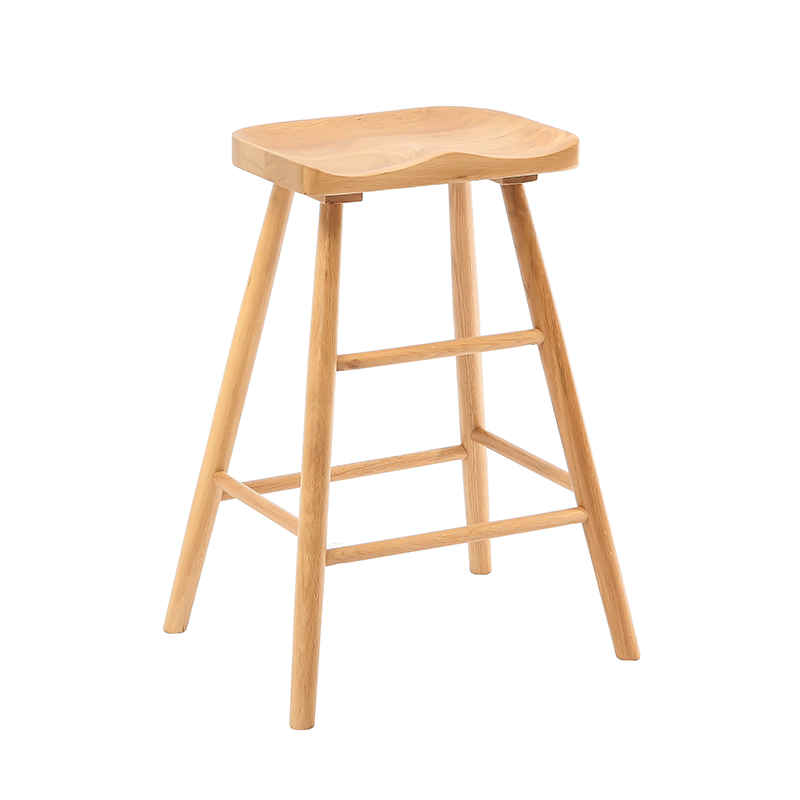
The ergonomic gap between a basic four-leg wood bar stool and a thoughtfully designed one is larger than it appears from photographs. Several specific design features translate directly into comfort across extended seating periods, and understanding them enables more precise product evaluation.
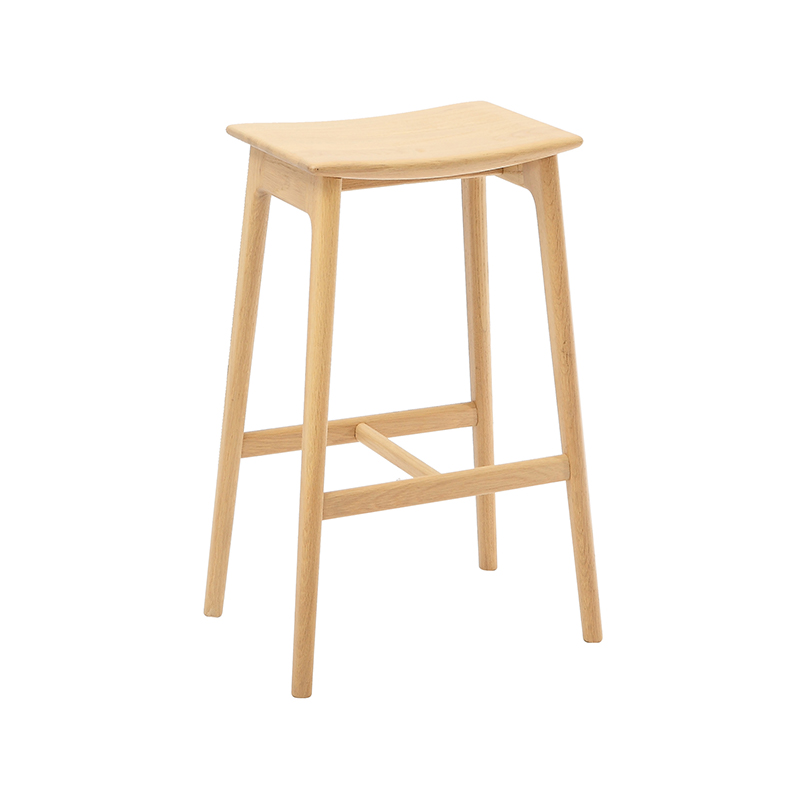
A flat seat distributes pressure unevenly, concentrating load at the sit bones (ischial tuberosities). A seat with a gentle dip or saddle contour — typically 8–12 mm of relief at the center — redistributes this pressure across a broader surface area, significantly reducing fatigue during use over 30 minutes or longer. This shaping is achieved through CNC routing on solid wood seats and represents a relatively low-cost manufacturing step that delivers noticeable comfort improvement. The Wood Bar Stool series incorporates gently dipped seat profiles precisely to address this, making the collection suitable for spaces where seating durations are unpredictable.
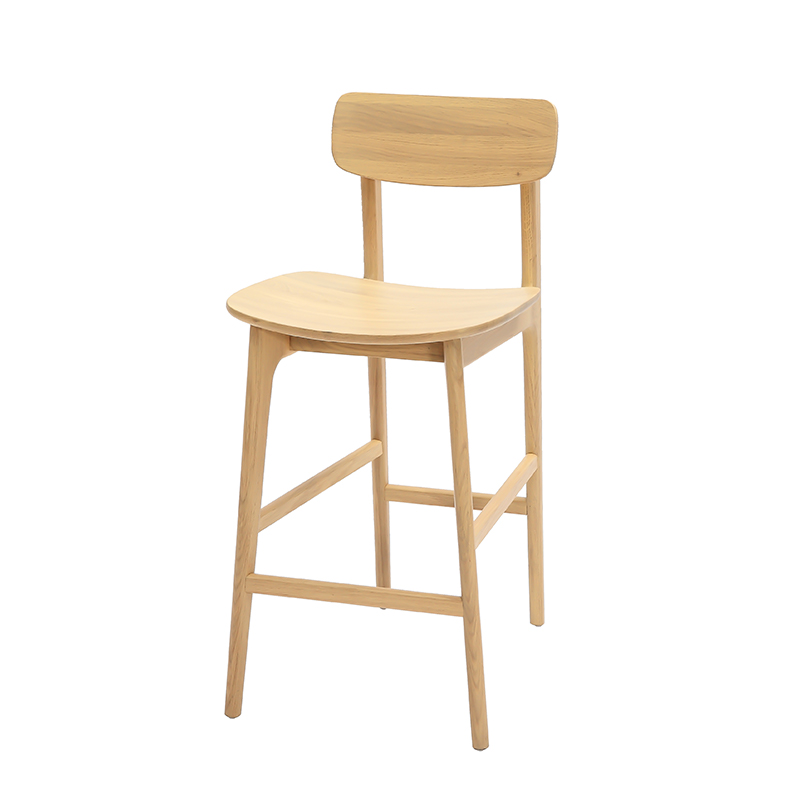
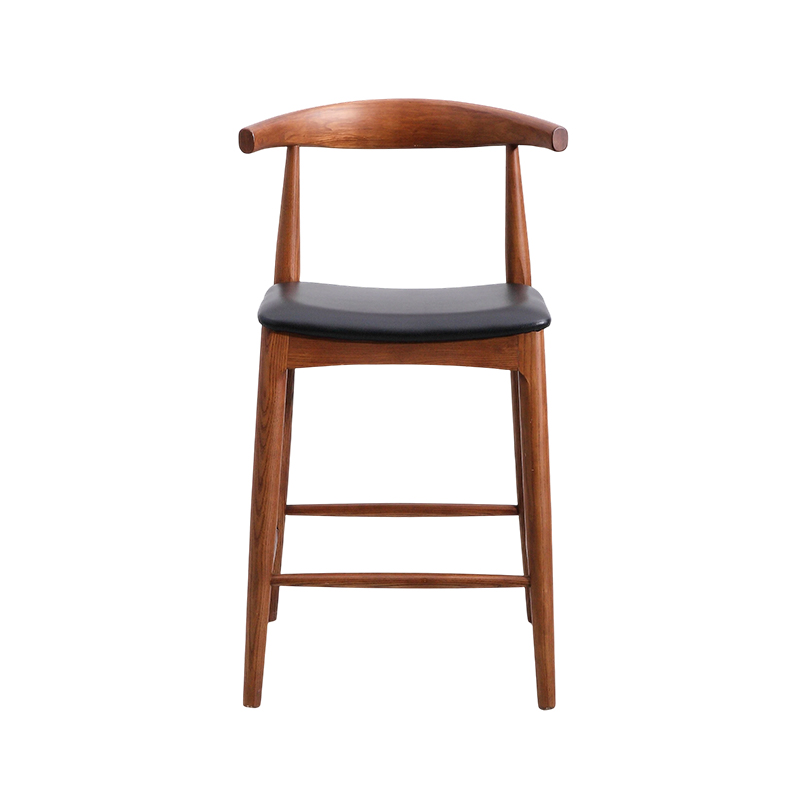
Not all bar stool backrests are created equal. A low-profile back that contacts only the mid-to-upper back provides postural cueing but limited lumbar support — adequate for casual use but tiring over longer periods. A backrest that extends to reach the lumbar curve (typically a backrest height of 35–45 cm from seat surface) provides meaningful spinal support and allows the user to relax the core musculature. Wooden bar stools with curved backrests — particularly those with a slight forward bow to match the natural curvature of the spine — outperform flat slab backs significantly in this regard. For hospitality environments where guests may be seated for an hour or more, this detail directly affects customer comfort perception.
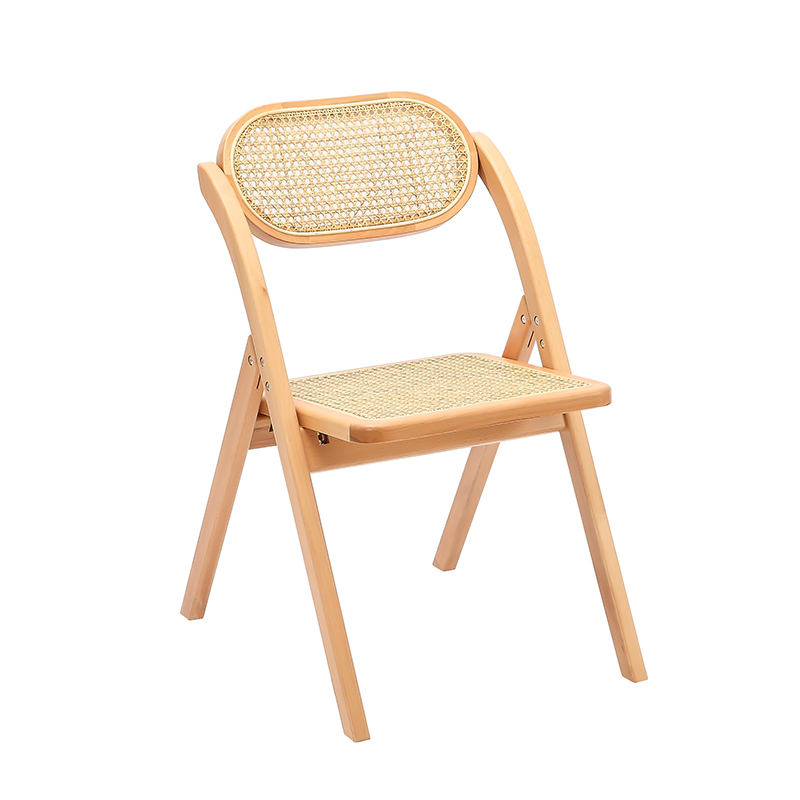
Solid wood seats offer natural breathability and ease of cleaning. Rope-woven seats — a material choice explored in contemporary wooden bar stool collections — add a layer of textural interest while maintaining airflow beneath the seated user, which is a practical comfort advantage in warm interior environments. Leather seat pads add cushioning and a premium visual cue but require more careful maintenance and are less suitable for high-humidity settings. The choice of seat surface should align with the operational context: solid wood or rope weave for casual residential and hospitality use; leather or upholstered pads for lower-volume premium dining or lounge settings.
Contemporary wooden bar stools have moved well beyond the utilitarian pub stool archetype. The integration of mixed materials — rope weaving, leather seating surfaces, metal footrest hardware — has introduced a level of material dialogue that gives individual pieces a sculptural quality without straying into impracticality. When executed with restraint, these combinations reinforce rather than contradict the natural warmth of the wood base.
Rope weaving applied to the seat or backrest of a wood bar stool introduces handcraft texture that reads as intentional and artisanal. The technique originated in Mediterranean and Scandinavian chair-making traditions, where locally available natural cordage was used to create flexible, supportive seating surfaces on wooden frames. Modern versions use synthetic paper cord or natural seagrass — both of which offer good durability and a visually consistent weave pattern. The contrast between a tightly woven rope seat and a smooth, oiled oak frame creates a tactile and visual tension that elevates the overall piece.
Leather, when used as a seat pad or back panel on wooden bar stools, introduces a material that improves with age — developing a patina that plastic and synthetic upholstery cannot replicate. Full-grain leather is the appropriate specification for seating intended to last beyond five years of regular use; top-grain leather is an acceptable mid-range choice; bonded leather should be avoided for any application where durability is expected. The stitching detail where leather meets the wood frame is worth inspecting closely — exposed stitching with a contrasting thread color is a design detail that signals craft attention and affects how the piece reads at close range.
The context in which wooden bar stools will be used should drive specification decisions more than aesthetic preference alone. Different environments impose different demands on materials, construction, and finish.
Regardless of setting, the floor protection detail at the base of each leg deserves attention. Felt glides are appropriate for wood and tile floors; rubber feet for stone and polished concrete. For bar stools that will be moved frequently, a recessed metal foot cap provides the most durable floor-contact solution and prevents the wear and splitting that occurs when bare wood legs are repeatedly dragged across hard surfaces.
Solid wood seating requires periodic care to remain in good condition, but the maintenance burden is far lower than commonly assumed — and considerably simpler than caring for upholstered alternatives. The specific routine depends on the finish type applied at manufacture.
For oil-finished wooden bar stools, a light application of the same hardwax oil or furniture oil once or twice per year is sufficient to replenish the surface and maintain water resistance. This process takes approximately five minutes per stool and requires no sanding or stripping. Lacquer-finished wood bar stools are more resistant to daily spills but require professional refinishing if the film layer is scratched through to bare wood. For most residential and light commercial applications, a quality water-based lacquer applied at sufficient film thickness (minimum 80 microns dry film) will remain intact for three to five years before any attention is needed.
Rope-woven seats should be brushed periodically to remove dust from the weave and kept away from prolonged direct moisture exposure, which can weaken natural fiber cordage over time. Synthetic paper cord is more moisture-tolerant and better suited to environments where occasional spills are likely. Leather seat surfaces benefit from a leather conditioner applied two to three times per year to prevent drying and cracking, particularly in air-conditioned interiors where ambient humidity is consistently low.
Joint integrity should be checked annually on wooden bar stools subject to heavy use. A joint that has begun to loosen can usually be re-glued with woodworking PVA adhesive and clamped overnight — a straightforward repair that restores full structural integrity and extends the usable life of the piece by years. Addressing this early, before the joint fails completely, avoids the more complex repair scenario of a broken tenon or cracked mortise wall.




Innovation Oriented, Quality As Life.
Feel free to reach our if you want to collaborate with us, or simply have a chat.
Become a Client 
Product Category
Wood Upholstered Chair
Woven Wood Chair
Wood Bar Stools
Wood Table
FSC Certified Wood Chairs
Wooden Rattan Chairs
Solid Wood Dining Chair
Modern Wooden Dining Chair
Contact Information
 +86-571-63521858
+86-571-63525898
 furniture@hzchangshun.com
emilypeng@hzchangshun.com
 No. 88, Zhumufan, Yushan Township, Fuyang District, Hangzhou City, Zhejiang Province, China


 EN
EN

 English
 中文简体
中文简体 Español